People book venues after they have stood in the room. Learn how to run a private site tour that ends with a date hold, host planner familiarization visits that put you on their shortlist for years, and stage an open house whose cost you can measure against the bookings it produces.
Read the transcript
Planner tours, open houses and familiarization visits.
Photos get a venue onto a shortlist.
Standing in the room gets it booked.
Three kinds of visit.
The private site tour.
Design the route to tell the story of the event, in the order guests would experience it.
Do not start in your office or the room that is easiest to reach.
Planner familiarization visits.
A familiarization visit, often called a FAM, is a tour for planners without their clients.
Its purpose is not to win one event but to become one of the three or four venues a planner proposes every time a suitable client appears.
Worked example: what an open house is worth.
The figures here are illustrative.
Larkspur Hall holds a January open house for engaged couples, with 12 partner vendors styling the room.
Making an open house convert.
Require registration, so that you know who is coming and can follow up personally
Set the room for real events, not a vendor trade show: a ceremony set, a reception set and a cocktail area
That is the lesson. The worksheet and the quiz are just below this video.
What you will be able to do
- Plan a site tour route and script that answer objections and end with a clear next step
- Host a planner familiarization visit with a planner pack that makes your venue easy to propose
- Calculate the cost per booking of an open house and design one that converts
Photos get a venue onto a shortlist. Standing in the room gets it booked. Couples feel whether a space is right within a few minutes of walking in, and planners decide in the same few minutes whether they could run a smooth event there. Every visit is a performance with a beginning, a middle and an end, and the end should always be a next step.
Three kinds of visit
| Visit | Who comes | Goal | Measure of success |
|---|---|---|---|
| Private site tour | A couple, a host family or a corporate client, sometimes with their planner | Win this event | Date hold or signed contract |
| Planner familiarization visit | One or several planners, without clients | Become a venue they propose for years | Planner-sourced inquiries and bookings over the following year |
| Open house or showcase | Many couples or clients at once, often with vendors | Generate tours and bookings from people early in their search | Tours and bookings per open house, and cost per booking |
The private site tour
Design the route to tell the story of the event, in the order guests would experience it. Do not start in your office or the room that is easiest to reach.
- Arrival. Meet them where guests would arrive: the parking lot, the drop-off or the front door. Point out parking, transit and the accessible entrance.
- First impression. Walk them through the entrance and into the cocktail or ceremony space. Pause and let them look.
- The main room. If possible, show it set for a similar event, or show photos of their layout on a tablet while standing in it. Say where the head table, dance floor, stage and bar would go for their guest count.
- The practical places. Washrooms, coat check, bridal suite or green room, the kitchen access for caterers and the loading dock for vendors.
- The photo spots. Show where photographers like to work, at the time of day the client’s event would be.
- The sit-down. End in a quiet space with water or coffee, the floor plan for their guest count and a printed or digital quote.
Ask questions throughout. What matters most about the day? Who else needs to see the venue before you decide? What other venues are you considering, and what do you like about them? The answers tell you what to emphasize and what objections to answer.
Close every tour with a specific offer. A script you can adapt: Based on what you have told me, the Main Hall in the rounds layout fits your 140 guests with room for the dance floor you want. The quote in front of you is all-in before HST. Your date is open today. I can hold it for seven days at no cost while you talk it over with your families. Would you like me to put the hold in now? A courtesy hold gives the client time and gives you a reason to follow up on a specific day.
Planner familiarization visits
A familiarization visit, often called a FAM, is a tour for planners without their clients. Its purpose is not to win one event but to become one of the three or four venues a planner proposes every time a suitable client appears. One good planner relationship can bring a venue several events a year.
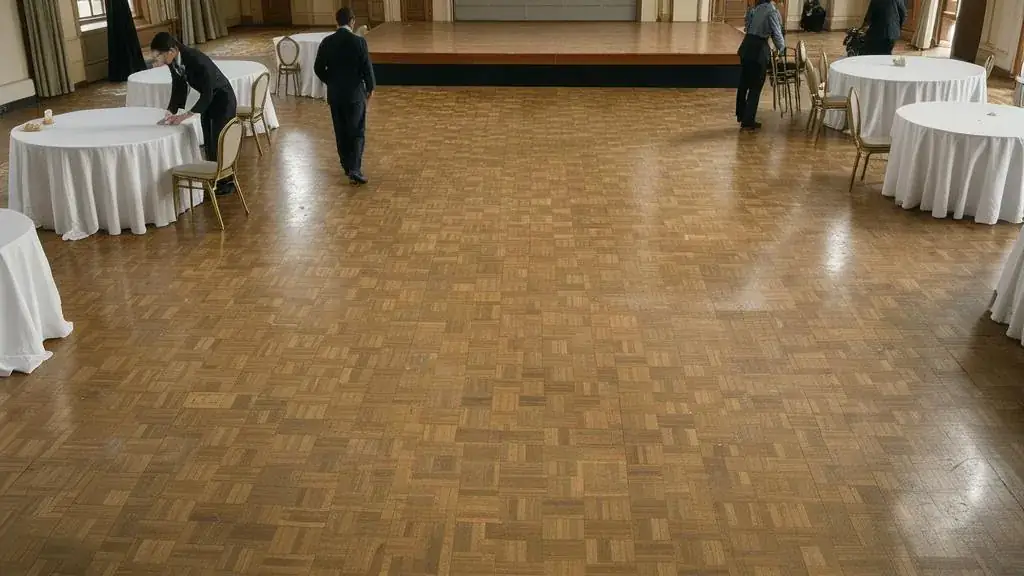
Invite planners whose clients fit your venue. A corporate venue near the airport wants planners who run sales meetings and conferences; a farm venue wants wedding planners who serve couples looking for rustic or garden settings. Keep groups small, from one to six planners, so that the visit feels personal.
A planner FAM agenda of about 90 minutes:
- Welcome, ten minutes. Coffee and a short introduction from the owner or general manager: what the venue is for and which events it does best.
- The working tour, forty minutes. Show the route planners care about: load-in, power, rigging, kitchen access, storage, green rooms, the times of day light changes and the room flip between ceremony and reception.
- Your team, fifteen minutes. Introduce the coordinator, the head of catering and the operations lead who will be on site. Planners want to know who they will work with.
- The planner pack, ten minutes. Walk through the pack and how you work with planners.
- Questions, fifteen minutes. Ask what makes a venue easy for them, and listen.
The planner pack is a digital folder planners can draw on when they propose your venue: floor plans and scale drawings, capacity charts, high-resolution photos with credit lines, a 360 tour link, vendor policies, load-in and end-time rules, insurance requirements, packages and pricing, a sample run of show and your coordinator’s direct contact. Update it every season and send planners a note when it changes.
Worked example: what an open house is worth
The figures here are illustrative. Larkspur Hall holds a January open house for engaged couples, with 12 partner vendors styling the room.
Costs: staff time of 40 hours at $30 an hour, $1,200; food and drink samples, $1,100; printing, signage and advertising, $900; extra cleaning and security, $400. Total: $3,600. Vendors each contribute $150 toward costs, or $1,800, so the venue’s net cost is $1,800.
Results: 85 couples register and 62 attend. Of those, 24 book private tours within a month, and 8 book weddings at an average venue revenue of $9,800. The open house produces $78,400 in bookings at a net cost of about $225 per booking.
The owner also checks the counterfactual. Some of those couples might have booked anyway; three had already inquired before the open house. Counting only the five who first heard of the venue there, the cost per booking is $360, still excellent. Next year she will hold two open houses, one in January and one in early autumn.
Making an open house convert

- Require registration, so that you know who is coming and can follow up personally
- Set the room for real events, not a vendor trade show: a ceremony set, a reception set and a cocktail area
- Station your coordinator where couples can book a private tour on the spot
- Give every couple a printed floor plan and an all-in price sheet
- Follow up within two days with a personal note and two tour times
In Canada and the GTA
Alcohol at open houses and FAM visits. If you serve alcohol at an open house, it must be under a licence or permit that covers the event. Under the AGCO’s Registrar’s Interim Standards and Requirements for Liquor, licensees shall not advertise the availability of complimentary liquor except in limited customer-relations situations, and contests involving buying or drinking liquor, or free liquor as a prize, are not permitted. So invitations should not promise free cocktails or open bars, and draws at the open house should offer prizes that are not liquor. The AGCO’s advertising guidelines also prohibit advertising that promotes excessive consumption or appeals to people under the legal drinking age. Read the AGCO’s standards on safe and responsible sale and service before you plan the drinks.
Registrations and business cards under CASL and PIPEDA. A couple who registers for your open house is giving you personal information, and PIPEDA requires you to say why you are collecting it and to protect it. If you want to send them marketing emails beyond the event itself, ask for express consent with an unticked box, or rely on implied consent from an inquiry, which lasts six months. A planner who hands you a business card at a FAM visit can support implied consent; the CRTC suggests a follow-up email that mentions the visit and the date. Every commercial message needs your identification and an unsubscribe link. The CRTC’s guidance on consent explains these routes.
Sharing registrant lists with vendors. Vendors at your open house will want the attendee list. Sharing it is a disclosure to third parties, which the OPC says generally requires express consent. Ask registrants directly whether they would like to hear from participating vendors, and share only the names of those who say yes.
Vendor fees and recommendations. If vendors pay to take part in your open house or to appear on your preferred list, that is a material connection. Under the Competition Act, a representation that is false or misleading in a material respect is reviewable, and the Competition Bureau treats undisclosed material connections as relevant even when an opinion is honest. If you describe participating vendors as recommended, make the arrangement clear, for example by describing them as participating vendors who contribute to the event.
Accessibility. Under the AODA’s Customer Service Standard, organizations with one or more employees must welcome service animals and support persons, allow assistive devices and give notice of temporary disruptions, such as an elevator out of service during an open house. Include the accessible entrance on the invitation and ask registrants whether they need anything to take part.
Timing in the GTA. Couples’ open houses work best in January and February, after holiday engagements, with a second wave in September and October. Corporate planner FAM visits suit September, when planners are sourcing venues for the following year, and late January, when new budgets are approved. Avoid the peak wedding weekends from June to September, when planners are working. Industry associations for planners and meeting professionals hold events across the GTA; offering to host one is an efficient way to reach many planners at once. Hotels and venues near Pearson and along the Highway 427 and 401 corridors can also invite corporate planners for a working lunch on a weekday, when a short visit fits into their schedule.
Photos at your open house. If you photograph the open house for marketing, tell guests at registration and keep close-ups of identifiable people out of your marketing unless they agree.
This is general information, not legal advice. Check the official source or a lawyer for your own situation.
Worksheet
Download the worksheet and complete it for your own business, using Lantern & Lane as the model where it helps. Keep it with your marketing plan. It takes about 10 minutes.
Check your understanding
Related guides, venues and vendors
Newsletters people open
Module 10: Email, CRM and Follow-Up · 15 min
How to write an email newsletter that past clients, subscribers and partners actually read, and that brings in inquiries. Covers choosing a…
Read more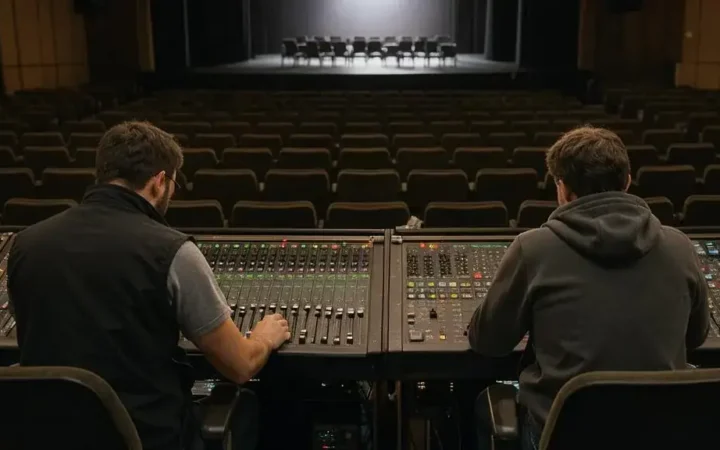
Front of house
Production & AV
The area and the technical position facing the stage where sound and lighting are controlled; also the guest-facing side of an operation.
Read more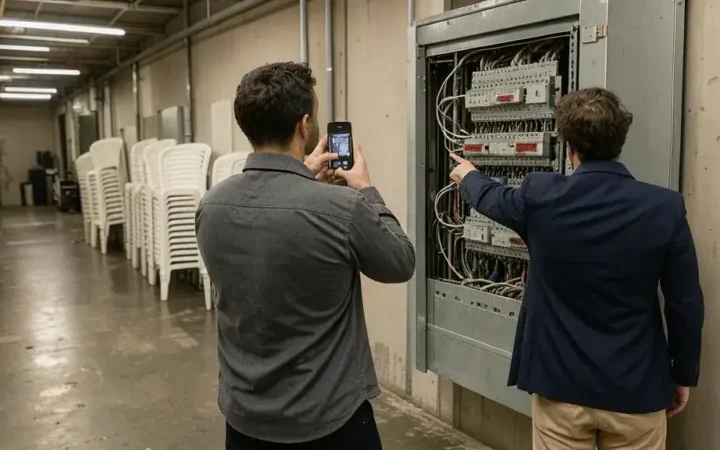
Site visits: the 25 questions
Module 4: Venues · 15 min
Walk a venue with the tour checklist. Learn what to photograph, what to measure, and which answers change the budget.
Read more