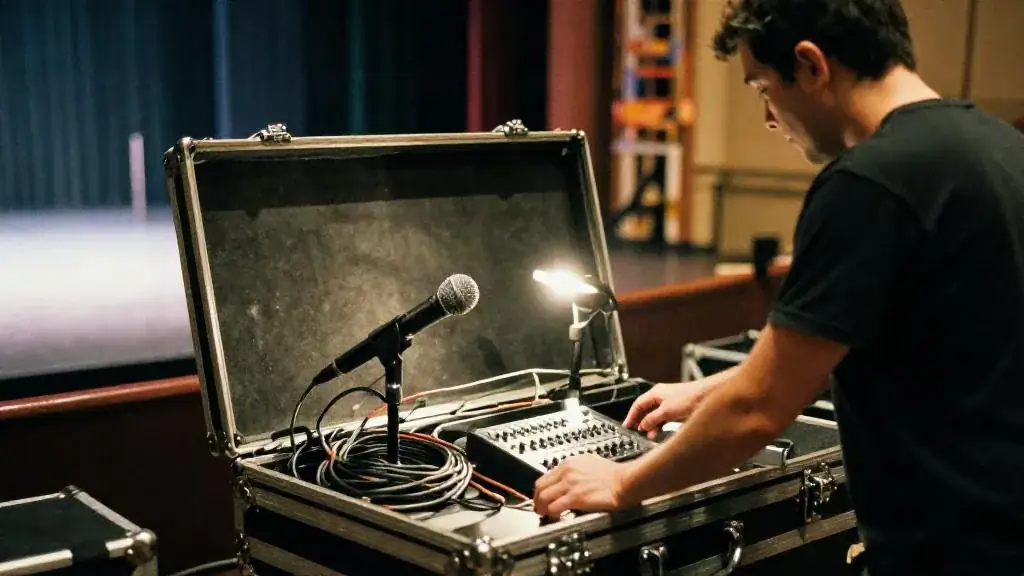
A tech rider stops the two most common event-day arguments: “we didn’t know you needed that” and “that’s not what we agreed.” Performers send it; planners forward it to the venue the same day.
Template
- Act and contact: name, act type, on-site cell number.
- Set: length, number of sets, earliest and latest start, reset time between sets.
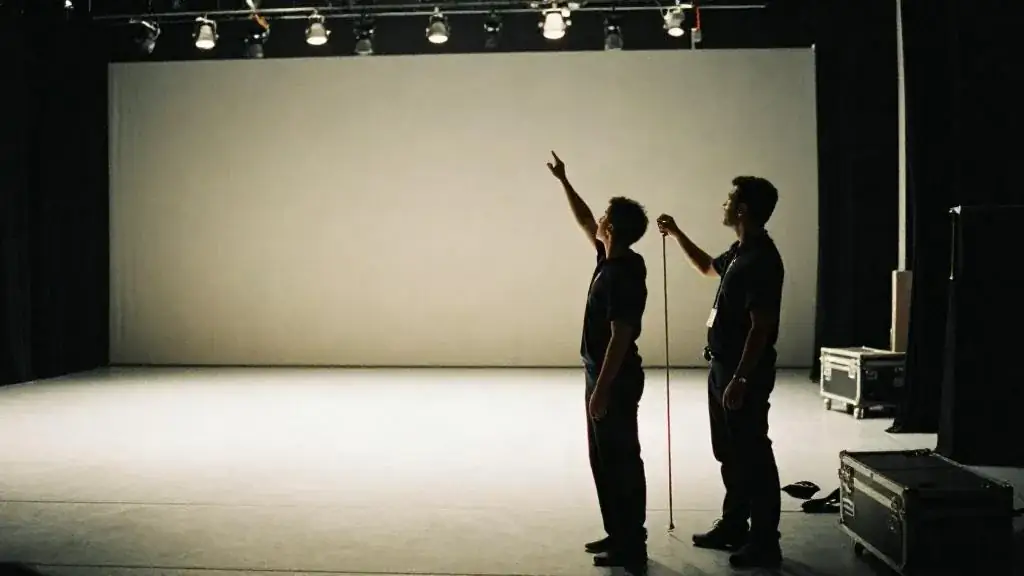
- Stage: minimum dimensions (e.g. 4 m × 3 m), height, stairs, clear sightlines, no pillars.
- Ceiling and rigging: minimum clear height; certified rigging points and load rating (aerial acts).
- Sound: wireless lapel or headset mic, aux/Bluetooth input for music, monitor if available.
- Lighting: stage wash, blackout capability, follow spot (yes/no).
- Power: number of 15 A circuits within 5 m of stage.
- Dressing room: private, lockable, mirror, water, within 60 seconds of the stage.
- Load-in: arrival time, parking, dock or elevator, assistance required.
- Safety: fire, pyro, confetti, water, animals: what is used and what permits exist.
- Audience: age range, language, anything the act should avoid.
- Hospitality: meal, water, parking reimbursed.
How to use the template
If you are a performer, fill in every heading even when the answer is none or not required; a blank line leaves the venue guessing. Write in plain terms that a banquet manager without a theatre background can follow, and give measurements in metres. Keep it to one or two pages and put the essentials, such as stage size, ceiling height and power, at the top. If you have several formats, such as a strolling set and a stage show, write a short rider for each rather than one long document with exceptions.
If you are a planner, ask every act for a rider when you book, not the week before. Read it against the venue's floor plan and specifications, mark anything the venue cannot provide, and resolve those gaps with the performer before the contract is final.
Reading a rider as a planner
Some items are firm safety requirements and some are preferences. Ceiling clearance and certified rigging for aerial acts, clear floor space for acrobatics, and fire or pyrotechnic approvals are not negotiable. A private dressing room or a particular microphone model may have workable alternatives. If you are unsure which is which, ask the performer directly. Most will explain their reasons and suggest a substitute where one exists.
Common gaps
- No mention of the route from the loading area to the stage, including stairs, narrow doors and elevator size.
- Power listed without specifying how close outlets must be or whether circuits are shared with catering.
- Music cues described but not supplied in advance to the DJ or AV technician.
- Arrival time given without allowing for parking, security check-in or hotel loading-dock schedules.
- No contact number for someone who can answer questions on the day.
When it fits in the timeline
Collect riders during booking, forward them to the venue the same day, and confirm every item at the final walk-through. Add the act's cues and timing to the run of show, and record arrival times and the rider status on the vendor contact sheet. The Academy lesson on technical riders covers the topic in depth, and the article on ceiling height for aerialists explains why clearance requirements are as strict as they are.
Related guides, venues and vendors

Venue matchmaker
Quizzes & Finders
Guest count, event type, area and one must-have, straight into the filtered venue directory.
Read more
Post-event survey template
Templates
Ten questions that produce a usable number and a usable quote.
Read more
Cost per guest calculator
Calculators
All-in cost per guest including HST and gratuity, and the break-even guest count.
Read more