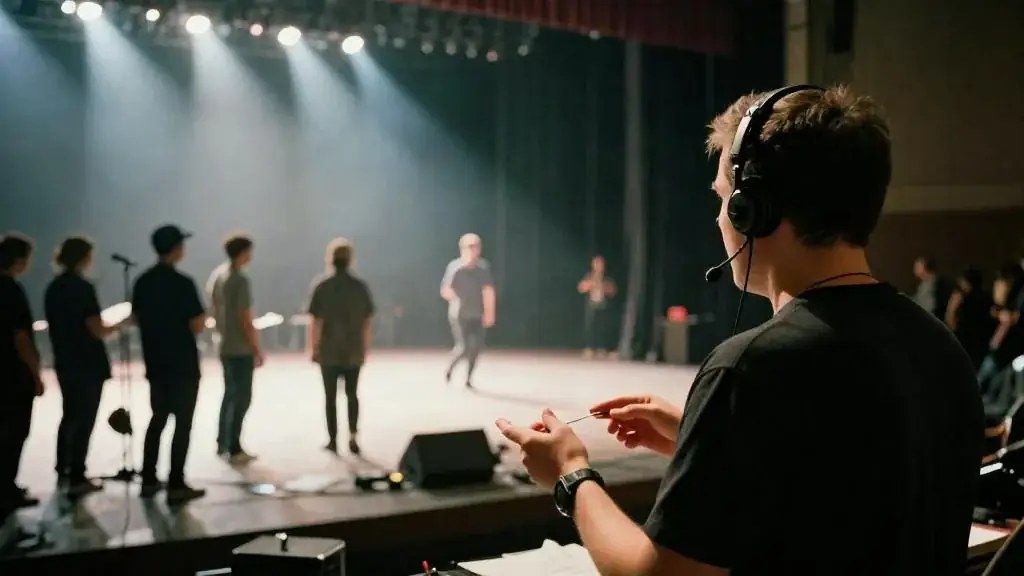
The run of show (ROS) is the single document every vendor works from on the day. Copy the table below into a spreadsheet, one row per cue.
| Time | Duration | Cue | Who | AV / lighting | Notes |
|---|---|---|---|---|---|
| 16:00 | 120 | Load-in: AV, décor, entertainment | Production | Work lights | Dock closes 17:45 |
| 18:00 | 60 | Doors; cocktail hour; roaming magicians | MC / Ent | Playlist A, uplights amber | Two performers, 60–80 guests each |
| 19:00 | 5 | Call to dinner; welcome | MC | Mic 1 live, walk-up sting | |
| 19:05 | 60 | Dinner service | Catering | Playlist B at -12 dB | Dietary codes on seating chart |
| 20:05 | 30 | Headline act | Ent | Stage wash, follow spot | 10-minute reset before |
| 20:40 | 15 | Remarks and awards | Exec | Slides, mic 2 | Names phonetically on cue card |
| 21:00 | 120 | Dance floor opens | DJ | Dance look | Last call 22:30 |
| 23:00 | 60 | Strike | All | Work lights | Out by midnight curfew |
Rules
- One owner per cue. Never “everyone”.
- Times are the moment the cue starts, not when to start getting ready.
- Print it. Phones die and Wi-Fi fails.
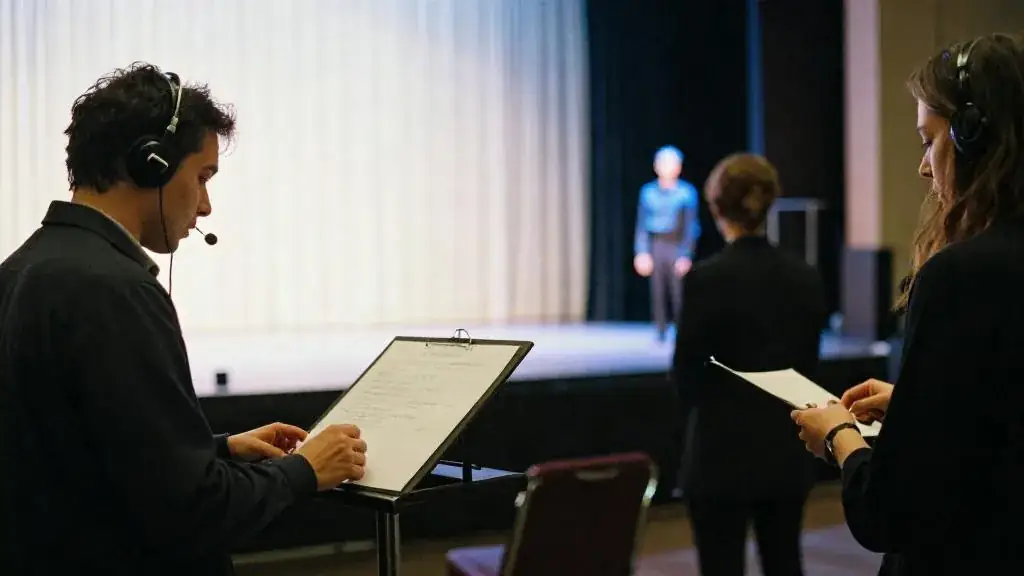
How to build yours from the template
Start with the fixed points you cannot move: the venue access time, the doors, the meal service time agreed with the caterer, and the curfew. Enter those first. Then add the program around them, one row per cue, working forward from load-in. For each row, fill in the start time, how long it lasts, what happens, the single person responsible and what the AV and lighting team need to do. Use the notes column for anything a vendor must know at that moment, such as a microphone handover or a dietary flag.
Once the draft is complete, read it aloud from top to bottom with the stopwatch running. Gaps, overlaps and impossible transitions become obvious very quickly when you have to say them in sequence.
Versions and sign-off
A run of show changes many times before the event. Put a version number and date in the header of every copy, and send the full document to everyone each time it changes rather than sending only the edits. Ask the venue, the caterer, the AV team, the MC and the performers to confirm they have the latest version in the final week. On the day, the event lead holds the master copy and announces any change on the radio channel or in person, never by text alone.
Common mistakes
- Scheduling speeches during meal service, when cutlery and servers drown out the speaker.
- Leaving no time between a performance and the next cue for the stage to be reset.
- Forgetting to schedule a sound check and a walk-through before doors open.
- Writing vague owners such as the team or staff instead of a named person or role.
- Not building in a buffer before the curfew for strike and load-out.
When to use it
Draft the first version once the venue and the main vendors are booked, usually a couple of months out. Refine it after the final walk-through with the venue, and lock it a week before the event. The Academy lesson on writing the run of show explains each column in detail, the encyclopedia entry defines the term, and the vendor contact sheet is the natural companion document to print alongside it.
Related guides, venues and vendors
Bar & alcohol calculator
Calculators
Drinks, bottles, ice, bartenders, a hosted-bar estimate and the alcohol permit rules for your province.
Read more
Timeline generator
Calculators
A backward-planned milestone list from your event date, by event type and scale.
Read more
Cost per guest calculator
Calculators
All-in cost per guest including your province's sales tax and the service charge, and the break-even guest count.
Read more