The dismantling and removal of everything after an event, by the venue curfew.
Read the transcript
Strike.
The dismantling and removal of everything after an event, by the venue curfew.
How it works in practice.
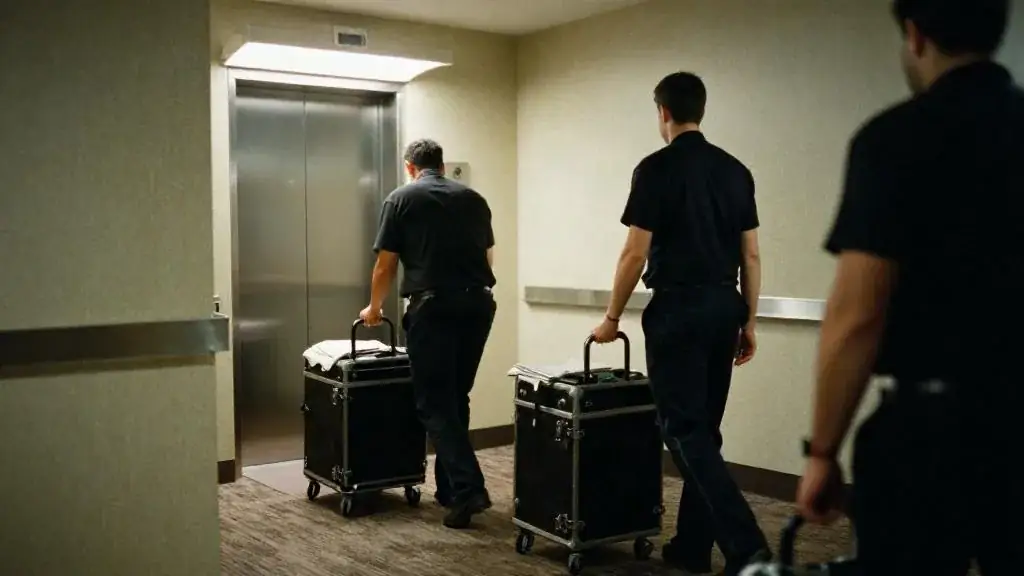
Strike is load-in in reverse, done tired and late.
It starts the moment the last guest leaves the room, or earlier for anything that can come out while the party runs: the photo backdrop after the last photos, the ceremony set in a separate space, display tables in the foyer.
In Ontario and the GTA.
Many GTA venues set a midnight or 1 a.m. curfew, and hotels with residential guests above the ballroom may limit noisy work late at night.
If the event serves alcohol under a Special Occasion Permit, service ends by 2 a.m. at the latest, with last call at 1:45, and the permit holder must still remove leftover liquor and keep receipts.
How to handle it.
Find the curfew and the overtime rate in the venue contract before you plan the program.
Work back from curfew: if strike needs 60 minutes, music ends at least 75 minutes before it.
More detail, examples and common mistakes are on this page, below the video.
How it works in practice
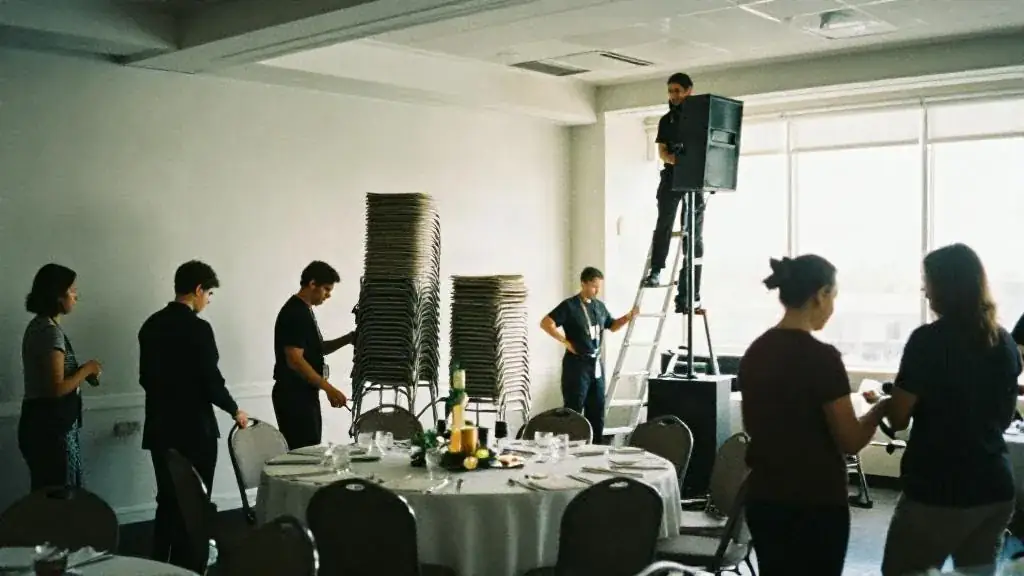
Strike is load-in in reverse, done tired and late. It starts the moment the last guest leaves the room, or earlier for anything that can come out while the party runs: the photo backdrop after the last photos, the ceremony set in a separate space, display tables in the foyer. It ends when the room is empty and handed back by the curfew in the contract.
The order runs the opposite way to set-up. Guest items and valuables first, then decor and florals, then tables and rentals, then sound and lighting, then staging, then truss and rigging last. Rental companies often pick up the next morning, so check whether the venue allows overnight storage.
In Ontario and the GTA
Many GTA venues set a midnight or 1 a.m. curfew, and hotels with residential guests above the ballroom may limit noisy work late at night. If the event serves alcohol under a Special Occasion Permit, service ends by 2 a.m. at the latest, with last call at 1:45, and the permit holder must still remove leftover liquor and keep receipts. Outdoors, Toronto’s noise bylaw is stricter from 11 p.m. to 7 a.m., which affects generators and trucks as well as music.
How to handle it
- Find the curfew and the overtime rate in the venue contract before you plan the program.
- Work back from curfew: if strike needs 60 minutes, music ends at least 75 minutes before it.
- Assign one person to collect gifts, cards, signage and client items before vendors start.
- Walk the room with the venue at the end and note any damage in writing.
Worked numbers
| Item | Time |
|---|---|
| Last song | 22:45 |
| Guests out, strike begins | 23:00 |
| Rentals stacked, AV down | 23:40 |
| Room handed back | 23:59 |
Overtime past curfew is typically billed per hour or part-hour for room and staff, and it adds up fast. Put the strike in the production schedule with the same care as the load-in.
Related tools
The run-of-show template has strike rows, and the day-of emergency kit list includes what you need at the end of the night.
Why it matters
Strike time is in the contract; overtime is expensive.
Example
Strike begins at 23:00 for a midnight curfew.
Common mistakes
- Guests still in the room when strike starts
Related guides, venues and vendors
Comp ratio
Business & Legal
The number of complimentary rooms or tickets a venue grants per number booked.
Read more
Close-up magic
Entertainment
Magic performed within arm's reach, with cards, coins and borrowed objects, for groups of 2–12.
Read more
Ketubah
Weddings & Cultural
The Jewish marriage contract, signed before the ceremony.
Read more