Rooftops photograph like nothing else in the city and fail in exactly four ways. Plan for the four and you are fine.
Read the transcript
Best rooftop venues in Toronto for events.
Rooftops photograph like nothing else in the city and fail in exactly four ways.
Plan for the four and you are fine.
The four failure modes.
A rooftop without an indoor room of equal capacity is a gamble; June and September are the safest months.
Linens, florals, stage drape and sound all suffer above 25 km/h. Ask for the venue's wind policy.
Entertainment that works up high.
Roaming magicians, acoustic trios, LED acts after dusk.
Skip aerial and fire unless the venue has a specific approval.
There is more on this page, just below the video.
The four failure modes
- Weather. A rooftop without an indoor room of equal capacity is a gamble; June and September are the safest months.
- Wind. Linens, florals, stage drape and sound all suffer above 25 km/h. Ask for the venue’s wind policy.
- Sound. Toronto’s noise bylaw limits amplified sound outdoors after 11 p.m.; most rooftops move music indoors by 10.
- Load-in. Elevator size decides your bar, your stage and your florals.
Entertainment that works up high
Roaming magicians, acoustic trios, LED acts after dusk. Skip aerial and fire unless the venue has a specific approval.
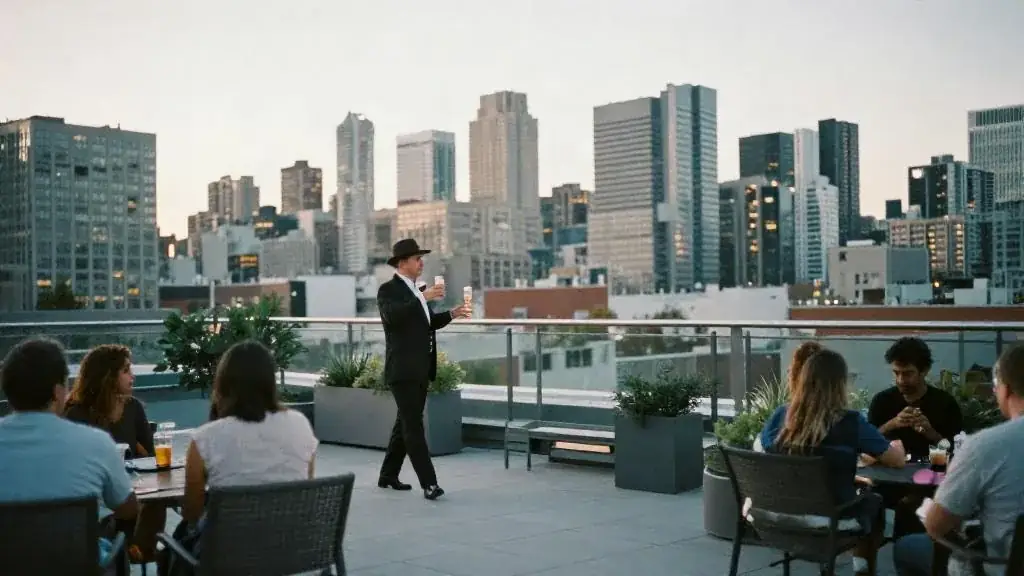
Browse rooftop venues in the Directory and filter by capacity and rain backup.
What to check on a site visit
Visit a rooftop at the same time of day and, if possible, the same time of year as your event. A space that is pleasant at noon can be in full sun at five o'clock or exposed to a cold wind after dark. Stand where the bar, the stage and the guests will be, and listen to the street noise and any mechanical equipment on neighbouring roofs. Look at the railings and sightlines for photographs, and ask where the sun sets relative to the main view.
- How many guests can the elevators move at arrival, and how long will the queue be?
- How many washrooms are on the roof level, and are any accessible?
- Is there an accessible route from the street to the roof for guests using wheelchairs or walkers?
- Are heaters, shade structures or umbrellas provided, and who decides when to use them?
- Does the liquor licence cover the rooftop area, and until what time?
- Can décor be fixed to railings or walls, and are candles or open flames allowed?
The rain decision
The most useful clause in a rooftop contract is the one that explains when and how the event moves indoors. Agree who makes the call, how many hours before the event it must be made, and whether any rental or décor costs change if you move. Some venues make the decision on the morning of the event; others wait until a few hours before. Know which, and make sure your caterer, florist and entertainment can adapt to the indoor room at short notice.
Planning for comfort
Rooftops are often warmer and brighter than guests expect during the day and colder after dark. Mention the setting on the invitation so guests can dress for it, especially in footwear, since heels can catch on decking. Provide water freely in summer, and plan for wraps or blankets in shoulder seasons. Guests feel the wind more when they are standing still, so seated dinners need more protection than cocktail receptions.
Using the tools
Run the venue capacity calculator for both the rooftop and the indoor backup, since the smaller of the two is your real capacity. The venue tour checklist covers the remaining questions, and the Academy lesson on outdoor events explains weather planning in more depth.
Related guides, venues and vendors
Holiday party checklist
Corporate Holiday Parties
Printable corporate holiday party checklist.
Read more
Conference checklist
Conferences & Conventions
The printable conference planning checklist, grouped by phase. Progress saves in your browser.
Read more
Wedding etiquette & FAQs
Weddings
Canadian wedding etiquette: invitations, plus-ones, gifts, tipping, dress codes and the questions couples ask most.
Read more