A conference is a logistics project with a content problem attached. Solve the content first (who speaks, why people come) and the logistics follow.
Read the transcript
Conferences and Conventions.
A conference is a logistics project with a content problem attached.
Solve the content first, meaning who speaks and why anyone would give up a working day to listen, and the logistics follow a known sequence.
Start here.
If you have a date range, a target attendance and a rough idea of who pays (delegates, sponsors, the organization, or all three), open the conference planning timeline and the budget guide.
If you do not yet know whether the event makes money, run the numbers in the event ROI calculator before you sign anything.
What makes a Toronto conference different.
Venues come in three families with different rules: purpose-built convention centres (Metro Toronto Convention Centre, Enercare Centre at Exhibition Place, the International Centre near Pearson), downtown and airport hotels with their own meeting floors, and non-traditional spaces such as university campuses, theatres and large lofts. The big centres and the unionized hotels have load-in and labour rules that first-time planners routinely underestimate.
AV is usually an in-house or exclusive supplier. You can often bring your own production company, but you will pay for house technicians or a patch fee regardless.
The sequence, in the order that works.
Goal, audience and format. Write one sentence that says what a delegate should be able to do on Monday that they could not do on Friday.
Avoid the weeks that compete with your audience's own calendar (fiscal year-end, the big industry show, school breaks). Hold space in two venues while you confirm the programme.
Numbers planners ask for first.
Theatre seating needs roughly 0.75 square metres per person and classroom seating 1.85 square metres per person under Ontario Building Code Table 3.1.17.1; the posted occupant load set by the fire authority is a legal maximum. Use the venue capacity calculator to turn a floor area into a realistic seat count.
HST in Ontario is 13 percent and vendors habitually quote before it. Hotels commonly add an 18 percent service charge on food and beverage, and the service charge is itself taxable.
Who this hub is for.
Association staff running an annual meeting, in-house marketing teams producing a customer conference, a university department hosting an academic meeting, a startup planning its first user summit, and the volunteer who was handed the whole thing on a Tuesday.
The pages are written by Toronto planners who have loaded in at the MTCC at 5 a.m. and argued over a drayage invoice at 5 p.m., and they assume you would rather have the real number than a reassuring one.
Tools you will use.
The event budget sheet, the run of show template, the vendor contact sheet, the risk register, the post-event survey and the entertainment finder.
All free, all built for GTA events.
The full guide, with tables and checklists, continues below this video.
The sequence
- Goal, audience, date, format (in person, hybrid).
- Venue by capacity in theatre and classroom, breakout rooms, and AV house rules.
- Registration platform and pricing tiers.
- Call for speakers; sponsors tied to visible moments (lanyards, coffee, the opening act).
- Program with 15-minute transitions and one real break per 90 minutes.
- Entertainment between sessions: a 10-minute mentalist or illusionist set resets the room better than a video.
- Conference planning timelineTwelve months out to the week after: what to book when for a Toronto conference, with…
- Conference checklistThe printable conference planning checklist, grouped by phase. Progress saves in your browser.
- Conference budget guide: GTA price rangesWhat a Toronto conference costs by category, with typical GTA ranges for venue, AV, catering, registration,…
- Conference venue guideHow to choose a conference venue in Toronto: convention centres, hotels and non-traditional spaces, AV house…
- Conference entertainment ideasEntertainment that earns its place at a conference: the opening, the post-lunch reset, sponsor moments and…
- Conference food & drinkCatering for breaks, lunch and the reception at a Toronto conference: formats, timings, dietary planning, the…
- Conference themes & décorTheming a conference without wasting money: the stage, the wayfinding, the sponsor surfaces and the reception,…
- Conference etiquette & FAQsSpeaker, sponsor and delegate etiquette for Toronto conferences, the AODA accessibility checklist, privacy rules for registration…
- Related articles & toolsArticles, tools and Academy lessons for conferences and conventions in Toronto and the GTA, in the…

Frequently asked questions
How far ahead should I book a conference venue in Toronto?
Nine to fourteen months for a downtown hotel on a spring or fall weekday with 300+ delegates; large convention centre halls are often committed two or more years out.
What does a one-day conference cost in Toronto?
In our experience, roughly $55,000 to $110,000 all-in for 200 people in a downtown hotel once AV, catering, registration fees and labour are counted.
Do I need a hybrid option?
Only if your audience will pay for it or a sponsor will fund it; a hybrid stream adds a separate crew and a second run of show.
Related guides, venues and vendors
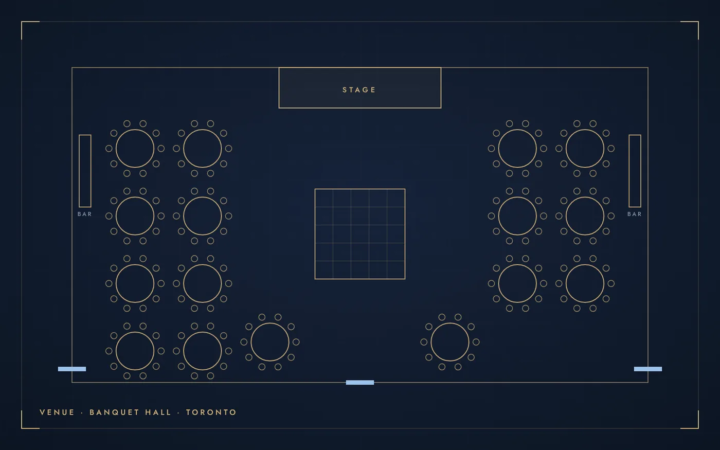
Arcadian
Downtown, Toronto · up to 1,400 guests
In-house catering
Arcadian is on the eighth floor of the Simpson Tower at 401 Bay Street.
Read more
Related articles & tools
Team Building
Articles, tools and Academy lessons for team building in Toronto and the GTA, in the order planners use them.
Read more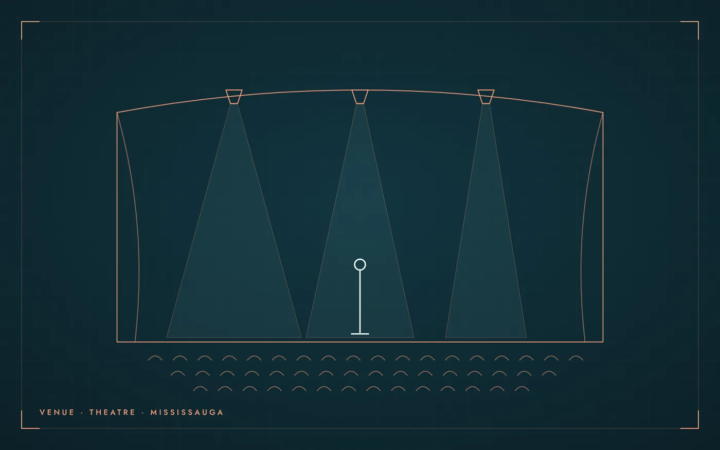
Living Arts Centre
Mississauga · 300+ guests
In-house catering · Near transit
The Living Arts Centre is a City of Mississauga arts facility in the downtown core near Square One.
Read more