Most conference etiquette comes down to respecting other people’s time: the speaker’s slot, the sponsor’s contract and the delegate’s working day. The rest is Ontario law, and it is shorter than you think.
Read the transcript
Conference etiquette and FAQs.
Most conference etiquette comes down to respecting other people's time: the speaker's slot, the sponsor's contract and the delegate's working day.
The rest is Ontario law, and it is shorter than you think.
Speakers.
Brief speakers in writing eight weeks out: slot length, slide format, the deadline, the AV in the room, and whether the session is recorded or streamed. Get written consent for recording.
Pay travel and accommodation for invited speakers; a fee is a separate conversation and depends on the market. Industry peers often speak for exposure; professional speakers do not.
Sponsors.
Deliver exactly what the contract says and photograph it. The fulfilment report with photos, sent within two weeks, is what gets next year's renewal.
Sponsor speaking slots should be labelled as such in the programme. Delegates forgive a sponsored session; they do not forgive a disguised one.
Delegates.
Publish the dress code, the start time and the transit directions in the know-before-you-go email. Business casual is the default for Toronto professional conferences.
Name badges with first name large, organization smaller, and pronouns if the delegate chose to add them.
Accessibility (AODA).
The Accessibility for Ontarians with Disabilities Act applies its customer service and information-and-communication standards to organizations, which includes the organization running the conference.
The practical checklist: a step-free route from accessible parking and transit to every room; accessible washrooms; reserved seating with companion seats; captions and ASL interpretation on request; service animals allowed; an accessible registration process; a quiet space; and dietary and sensory needs collected on the registration form.
Privacy and photography.
pipeda governs private-sector collection of personal information in Canada, and Ontario has no private-sector privacy law of its own.
Collect only what the event needs, say why on the form, get consent, protect the data, and delete it when the event is done.
The full guide, with tables and checklists, continues below this video.
Speakers
- Brief speakers in writing eight weeks out: slot length, slide format, the deadline, the AV in the room, and whether the session is recorded or streamed. Get written consent for recording.
- Pay travel and accommodation for invited speakers; a fee is a separate conversation and depends on the market. Industry peers often speak for exposure; professional speakers do not.
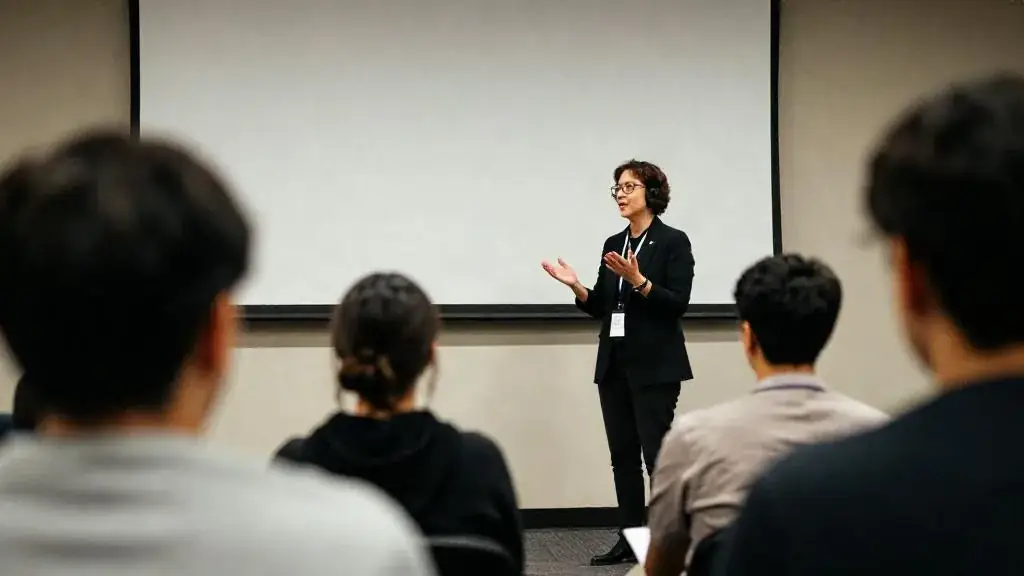
- Hold speakers to time with a countdown clock they can see. The MC, not the organizer, cuts a session that runs over.
- Thank every speaker by name from the stage and in writing within a week.
Sponsors
- Deliver exactly what the contract says and photograph it. The fulfilment report with photos, sent within two weeks, is what gets next year’s renewal.
- Sponsor speaking slots should be labelled as such in the programme. Delegates forgive a sponsored session; they do not forgive a disguised one.
- Do not sell the attendee list. Offer sponsors opt-in lead capture at their booth instead.
Delegates
- Publish the dress code, the start time and the transit directions in the know-before-you-go email. Business casual is the default for Toronto professional conferences.
- Name badges with first name large, organization smaller, and pronouns if the delegate chose to add them.
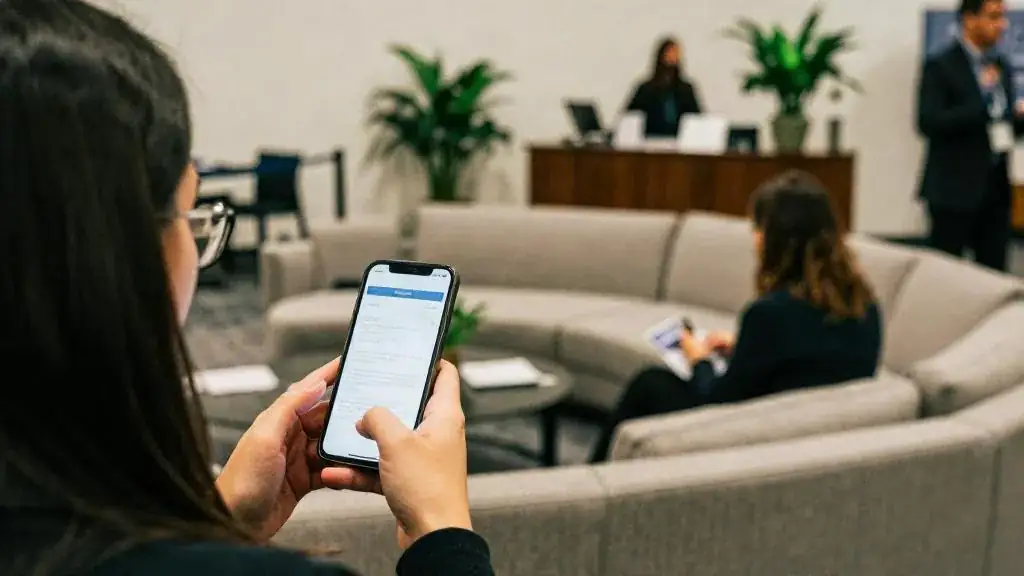
- Phones silent in sessions, and a signed quiet room for calls.
Accessibility (AODA)
The Accessibility for Ontarians with Disabilities Act applies its customer service and information-and-communication standards to organizations, which includes the organization running the conference. The practical checklist: a step-free route from accessible parking and transit to every room; accessible washrooms; reserved seating with companion seats; captions and ASL interpretation on request; service animals allowed; an accessible registration process; a quiet space; and dietary and sensory needs collected on the registration form. Browse wheelchair-accessible venues.
Privacy and photography
PIPEDA governs private-sector collection of personal information in Canada, and Ontario has no private-sector privacy law of its own. Collect only what the event needs, say why on the form, get consent, protect the data, and delete it when the event is done. For photography and video, give notice in the registration wording and on signage at every entrance, and honour opt-outs with a visible badge marker or a seating area outside the camera line.
Frequently asked questions
How early should registration open?
Six to nine months out, with the keynote confirmed and an early-bird tier that closes in six to eight weeks. Registration without a known keynote sells slowly.

Can I bring my own AV company into a Toronto hotel or convention centre?
Usually yes, but the house may charge a patch fee, require house technicians for certain tasks, and reserve electrical and rigging for its own crews. Ask for the AV house rules in writing before you sign.
Do I need a Special Occasion Permit for the reception?
Not at a licensed venue. At an unlicensed venue, yes: apply at least 10 days ahead for a private event and 30 days for a public one, with Smart Serve-certified servers and liquor bought under the permit.
What is a reasonable no-show rate?
In our experience five to ten per cent for a paid conference and considerably more for a free one. Set the catering guarantee accordingly.
How many breakout rooms do I need?
One per track plus one spare for a sponsor session or an overflow. A room that holds the whole audience in theatre plus three breakouts covers most 200–400 delegate programmes.
Is a hybrid stream worth it?
Only if you will sell virtual tickets or a sponsor funds it. The stream costs the same whether 40 or 400 people watch, and it needs its own crew and run of show.
Who owns the recordings?
The organizer, provided speakers consented in writing. Say in the speaker agreement where recordings will be published and for how long.
What happens to the registration data afterwards?
Keep what you need for accounting and next year’s invitation, with consent, and delete the rest. Write the retention decision down before the event so it is not forgotten after.
Related guides, venues and vendors

Deerhurst Resort
Muskoka
In-house catering
Deerhurst is a resort on about 760 acres near Huntsville in Muskoka.
Read more
Conference entertainment ideas
Conferences & Conventions
Entertainment that earns its place at a conference: the opening, the post-lunch reset, sponsor moments and the reception, with timing and booking…
Read more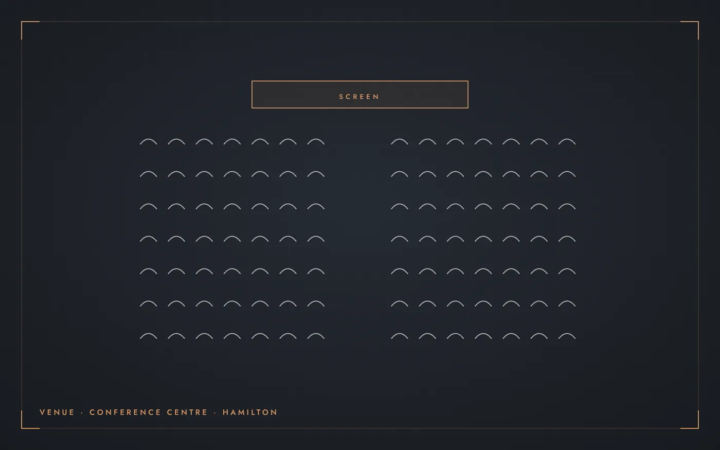
Hamilton Convention Centre
Hamilton · up to 1,280 guests
In-house catering · Near transit
The centre is operated by Carmens Group and has been running in downtown Hamilton for more than three decades.
Read more