A conference theme is a sentence, not a colour. It is the line on the stage backdrop that tells delegates why this year is different, and everything else, from the badge to the reception, is that sentence applied consistently.
Read the transcript
Conference themes and décor.
A conference theme is a sentence, not a colour.
It is the line on the stage backdrop that tells delegates why this year is different, and everything else, from the badge to the reception, is that sentence applied consistently.
Where the money shows.
Every photo, every stream frame and every speaker shot includes it. A printed or LED backdrop with the theme line and the sponsor logos, two screens, a lectern that is not the hotel's wooden one, and a lighting wash that separates the speaker from the backdrop.
Delegates who cannot find the breakout room arrive late and annoyed. Floor decals, a large printed agenda board at registration, and a sign at every door with the session title and time.
Where it does not.
Centrepieces at a lunch with no programme. Delegates move them to talk.
Elaborate décor in breakout rooms. A clean room with good signage and working AV beats a themed one with a projector problem.
Room sets that support the theme.
The set is décor too.
Theatre rows say "listen"; cabaret rounds (half-rounds facing the stage) say "discuss"; classroom tables say "work".
Lighting.
Lighting is the highest-return décor line at a conference.
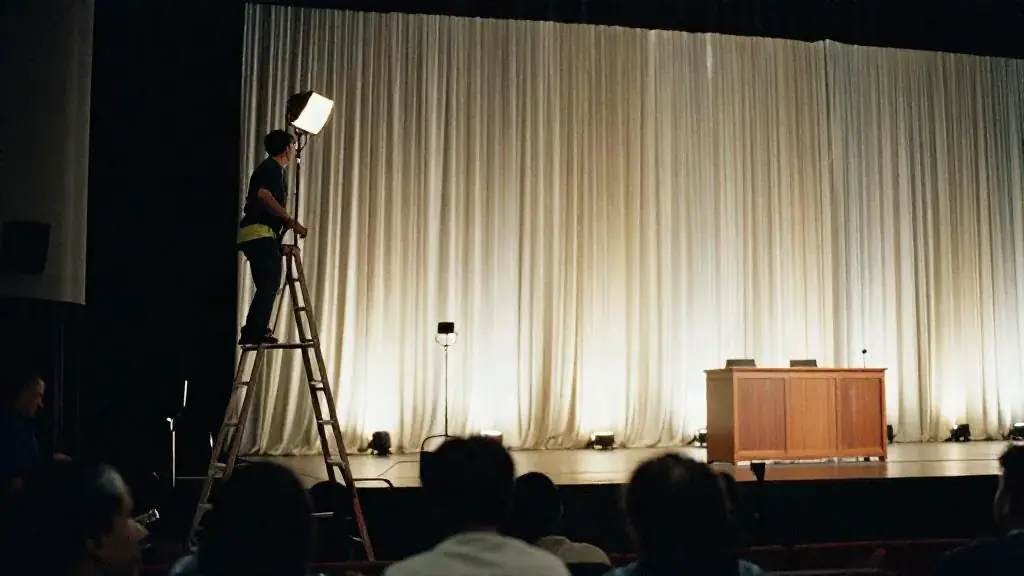
A stage wash, a few uplights on the backdrop and the walls in the theme colour, and a lower house level during sessions make a hotel ballroom look like a produced event.
Awards dinners and receptions.
If the conference ends with an awards dinner or a sponsored reception, that is where a true theme earns its place.
Black and Gold suits a formal awards night; Gatsby suits a hotel ballroom with a band; Neon and Glow suits a tech audience in a loft; Masquerade suits an association dinner that wants people to mix.
Accessibility is part of the design.
Design choices affect who can use the event.
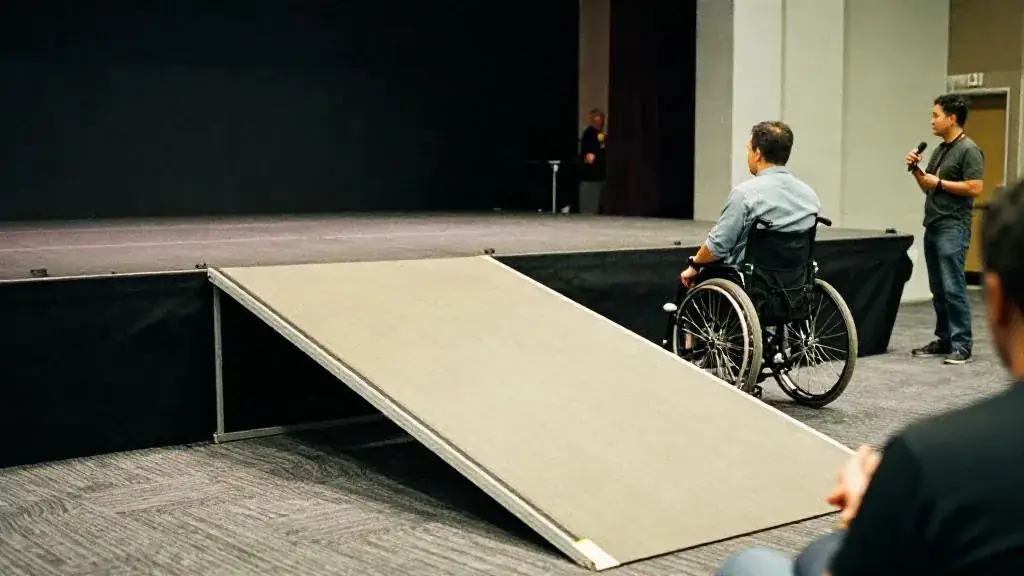
Signage with high contrast and large type; a step-free route that is not blocked by a sponsor banner or a décor piece; reserved seating near the front with companion seats; a quiet room signed from the registration desk; and captions on the screens as a default rather than on request.
The full guide, with tables and checklists, continues below this video.
Where the money shows
- The stage. Every photo, every stream frame and every speaker shot includes it. A printed or LED backdrop with the theme line and the sponsor logos, two screens, a lectern that is not the hotel’s wooden one, and a lighting wash that separates the speaker from the backdrop. This is where to spend.
- Wayfinding. Delegates who cannot find the breakout room arrive late and annoyed. Floor decals, a large printed agenda board at registration, and a sign at every door with the session title and time. Signage is cheap compared with the cost of a half-empty room.
- The registration desk. The first thing delegates see. A branded counter, a clean queue, pre-printed badges in alphabetical banks, and a staffed help point for problems.
- Sponsor surfaces. Lanyards, the coffee station, the charging table, the app. Design them as part of the theme so the sponsor branding looks intended rather than stuck on.
Where it does not
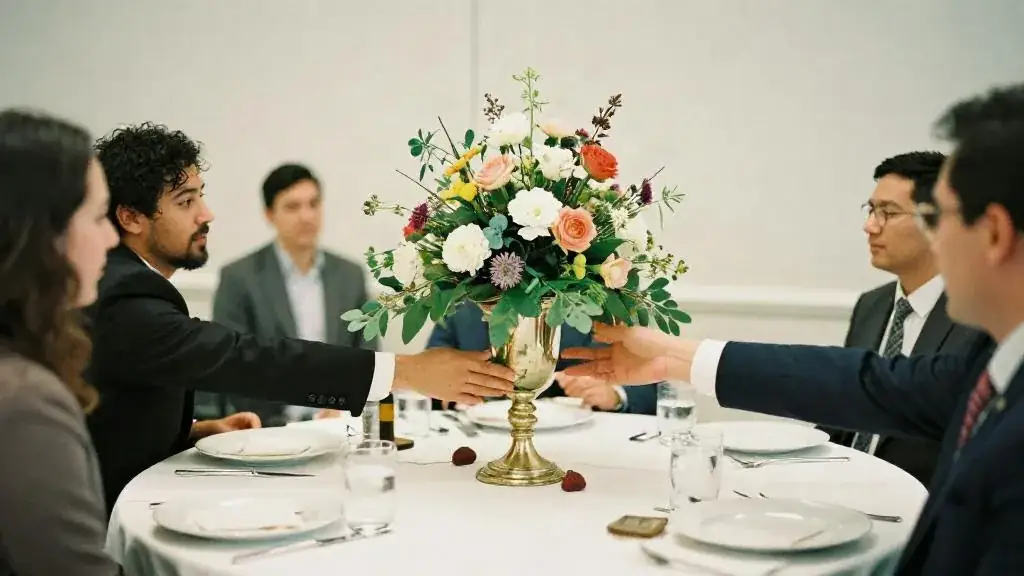
- Centrepieces at a lunch with no programme. Delegates move them to talk.
- Elaborate décor in breakout rooms. A clean room with good signage and working AV beats a themed one with a projector problem.
- Printed programmes beyond a one-page agenda and a floor plan once there is an app.
Room sets that support the theme
The set is décor too. Theatre rows say “listen”; cabaret rounds (half-rounds facing the stage) say “discuss”; classroom tables say “work”. A plenary in theatre with the afternoon workshops in cabaret signals the shift in the day without a single banner. Check the occupant load for each set with the venue capacity calculator, because cabaret uses far more floor area than theatre.
Lighting
Lighting is the highest-return décor line at a conference. A stage wash, a few uplights on the backdrop and the walls in the theme colour, and a lower house level during sessions make a hotel ballroom look like a produced event. Typical GTA range, 2026: 20 uplighting fixtures run $600–$1,200. Confirm with the venue whether the house AV supplier must install them.
Awards dinners and receptions
If the conference ends with an awards dinner or a sponsored reception, that is where a true theme earns its place. Black & Gold suits a formal awards night; Gatsby suits a hotel ballroom with a band; Neon & Glow suits a tech audience in a loft; Masquerade suits an association dinner that wants people to mix. Each theme page covers décor, food, entertainment, dress code and invitation wording. The galas hub covers the awards programme itself.
Accessibility is part of the design
Design choices affect who can use the event. Signage with high contrast and large type; a step-free route that is not blocked by a sponsor banner or a décor piece; reserved seating near the front with companion seats; a quiet room signed from the registration desk; and captions on the screens as a default rather than on request. These are AODA obligations for the organization, and a designer who knows that will build them in rather than bolting them on.
Briefing a designer
Write a one-page creative brief: the theme sentence, the audience, the three colours, the sponsor hierarchy, the rooms and sets, and the budget. Ask for a stage render and a signage schedule, not a mood board. Sustainability matters to many Toronto audiences; reusable signage frames, digital agendas and no single-use swag are easy wins that also save money.
Related guides, venues and vendors
Evergreen Brick Works
Toronto · 300+ guests
Outdoor space
The site was home to the Don Valley Pressed Brick Works Company, which operated for over 100 years and closed in 1984.
Read more
Hart House
Downtown, Toronto · up to 350 guests
Near transit
Hart House is a University of Toronto building that opened in 1919 and was designed by architect Henry Sproatt.
Read more
Living Arts Centre
Mississauga · 300+ guests
In-house catering · Near transit
The Living Arts Centre is a City of Mississauga arts facility in the downtown core near Square One.
Read more