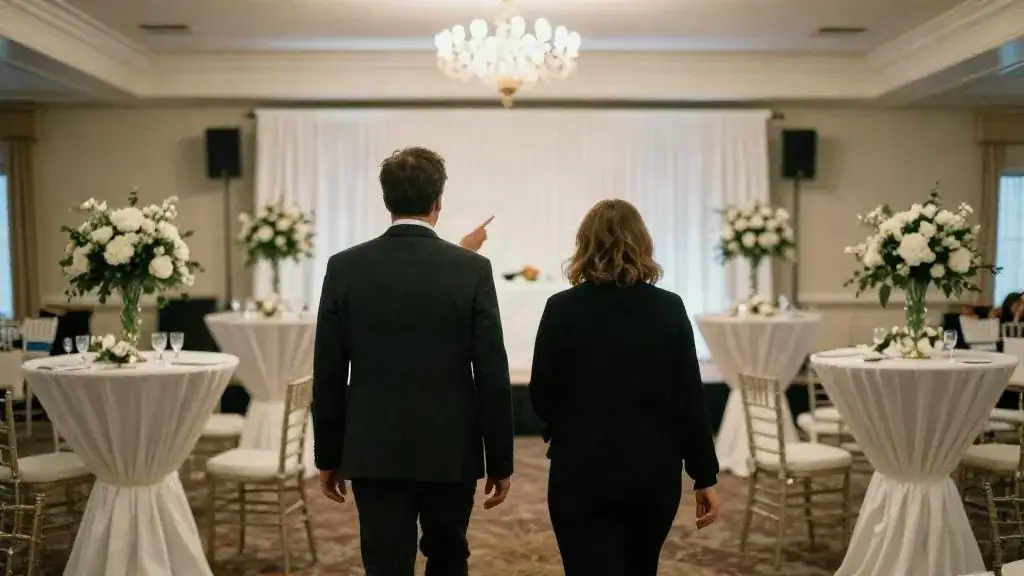
A proposal is a decision document, not a brochure. Eight sections, four pages.
- Understanding: restate the goal and the audience in the client’s words.
- Concept: the theme or format in one paragraph and one image.
- Guest journey: arrival to departure in five beats.
- Venue options: two or three, with capacity, cost and the trade-off.
- Entertainment and vendors: who, why, and the alternative.
- Budget: by category, with contingency and HST shown separately.
- Timeline: the milestones to the day.
- Fee and terms: how you charge, deposits, cancellation.
Pair with the budget calculator and the timeline generator.

Writing each section well
The understanding section is where most proposals are won. Repeat the client's goal in their own words, name the audience, and state the one or two measures of success they gave you in the discovery meeting. If you cannot write this section clearly, you are not ready to write the rest. The concept should be short enough to read aloud in thirty seconds; if it needs a page, it is not yet a concept.
In the venue and vendor sections, always show a trade-off. Two or three options with an honest note on what each gains and loses is more persuasive than a single recommendation, and it shows the client you have done the comparison for them. Name categories and reasons rather than relying on brand names, and say what you would choose and why.
Presenting the money
Show the budget by category with subtotals, then contingency, then HST at 13 percent as a separate line. Clients in Ontario are used to seeing tax added at the end, and hiding it inside line items makes comparisons with other proposals difficult. If catering or bar quotes include a service charge, show that too, and note that service charges are themselves subject to HST. The budget calculator will give you a defensible starting split for the event type.
Fees, terms and timing
Be explicit about how you charge: a flat fee, a percentage of event spend, or hourly. State the deposit, when the balance is due, what happens if the client cancels, and what is not included, such as additional site visits or day-of hours beyond a set limit. The Academy lesson on pricing your fee covers the merits of each model.
Common mistakes
Proposals fail most often because they are too long, too vague about cost, or sent too late. Aim to deliver within a week of the discovery meeting while the conversation is fresh. Avoid padding with stock photography and generic promises. Close with a clear next step and a date: a call to review, a deadline for a decision, or a hold on a venue that expires. The proposals lesson walks through a complete example.
Related guides, venues and vendors
Tent size calculator
Calculators
Tent area and frame size for seated, cocktail, ceremony or mixed layouts, plus the 60 m² permit threshold.
Read more
What entertainment fits my event?
Quizzes & Finders
Answer four questions and get the entertainment categories that fit your format, goal, ceiling and budget.
Read more
Post-event survey template
Templates
Ten questions that produce a usable number and a usable quote.
Read more