A minute-by-minute schedule of every cue at an event, with one named owner per cue.
Read the transcript
Run of show.
A minute-by-minute schedule of every cue at an event, with one named owner per cue.
How it works in practice.
A run of show is a table, not a narrative.
Each row carries a clock time, the cue, the duration, who owns it, and what the technical team needs at that moment: which mic is live, which slide is up, what the lights are doing.
How to handle it.
Draft the run of show from the master timeline about three weeks out, once the program is fixed.
Send it to every vendor and ask each one to check only their own rows and reply in writing.
Questions to ask.
Of the caterer: how long from "clear plates" to dessert on the table for this headcount?
Of the AV team: how much time does each changeover need between a speaker and an act?
More detail, examples and common mistakes are on this page, below the video.
How it works in practice
A run of show is a table, not a narrative. Each row carries a clock time, the cue, the duration, who owns it, and what the technical team needs at that moment: which mic is live, which slide is up, what the lights are doing. The owner column is the one people skip, and it is the one that saves you. “Dinner service begins” means nothing until you write “Catering captain, on the planner’s call”.
Build it backwards from the moments that cannot move: the hard stop in the venue contract, the bar close on the BEO, a speaker’s flight. Then place the program blocks, then the transitions between them. Transitions are where events lose time. A five-minute walk from the reception to the ballroom for 200 people is rarely five minutes.
How to handle it
- Draft the run of show from the master timeline about three weeks out, once the program is fixed.
- Send it to every vendor and ask each one to check only their own rows and reply in writing.
- Reconcile it with the venue BEO and the production schedule. Times that disagree get fixed now, not on the night.
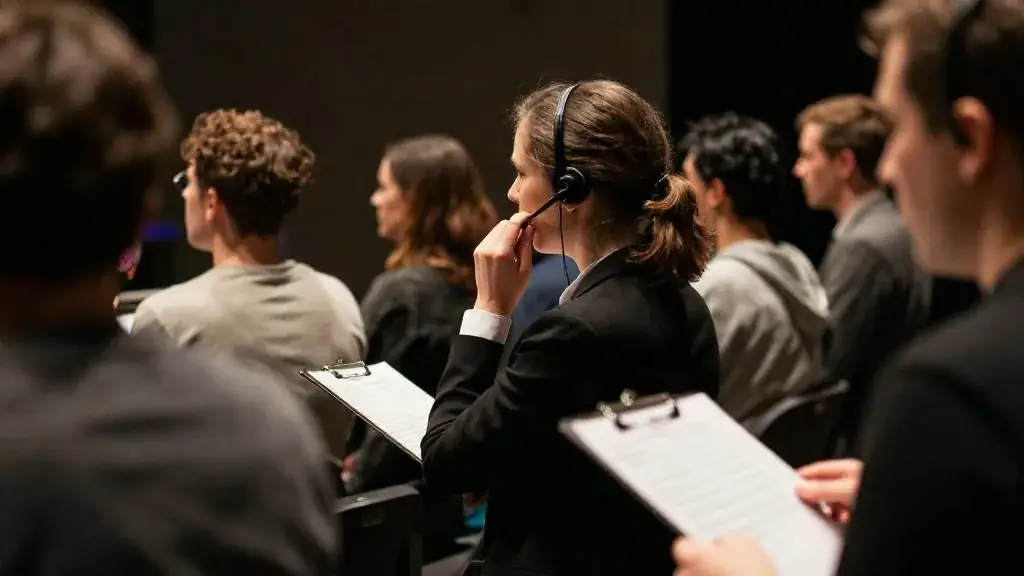
- Hold a walk-through with the AV lead, catering captain, MC and entertainment lead. Read every cue aloud.
- Lock a final version with a version number and date in the header. Print copies for the stage manager, FOH, kitchen and green room.
- On the day, one person calls cues. Changes go through that person and nobody else.
Questions to ask
- Of the caterer: how long from “clear plates” to dessert on the table for this headcount?
- Of the AV team: how much time does each changeover need between a speaker and an act?
- Of performers: what is the walk-on cue, the walk-off cue and the exact set length?
- Of the client: which items can be cut if the evening runs 15 minutes late?
That last answer belongs in the document itself. Mark two or three rows as “cut if late” so nobody has to negotiate during service.
Related tools
Start from the run-of-show template, which has the owner and AV columns built in, and use the timeline generator to rough out the blocks before you go minute by minute.

Why it matters
It is the single document every vendor works from on the day. If something is not on it, it does not happen.
Example
At a 200-guest gala: 19:05 dinner service begins (catering); 20:05 headline act (entertainment, stage wash, mic 1); 20:40 awards (exec, slides).
Common mistakes
- Listing 'everyone' as the owner of a cue
- Writing the time you should start preparing instead of the time the cue happens
- Keeping it on a phone instead of printing it
Related guides, venues and vendors
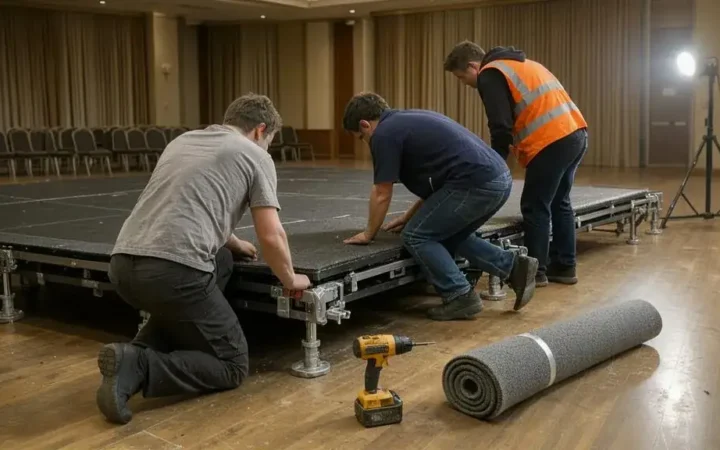
Riser
Production & AV
A modular platform section used to build a stage, typically 4 × 8 ft and 8–48 inches high.
Read more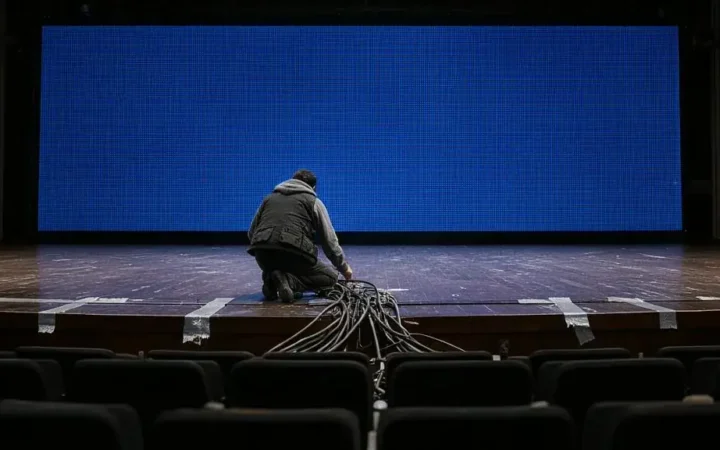
LED wall
Production & AV
A modular display built from LED panels, brighter and more flexible than projection.
Read more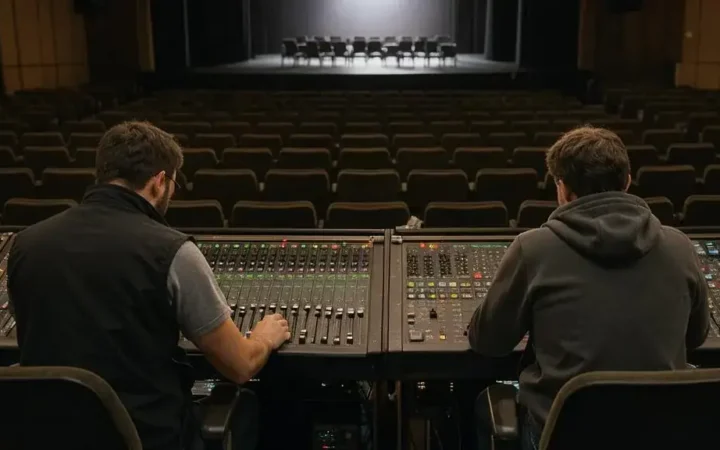
Front of house
Production & AV
The area and the technical position facing the stage where sound and lighting are controlled; also the guest-facing side of an operation.
Read more