The holiday party is the one event every employee has an opinion about. Plan it like a product launch: a date, a budget per head, a venue that fits, and a program that ends on time.
Read the transcript
Corporate Holiday Parties.
The holiday party is the one event every employee has an opinion about.
Plan it like a product launch: a date, a budget per head, a venue that fits, and a program that ends on time.
The calendar problem.
Toronto venues book out the first three Thursdays and Fridays of December by late September.
The fixes: book in June, move to the second week of January ("new year kick-off"), or pick a Wednesday.
Budget per head.
GTA companies spend 90 to 250 dollars per person all-in.
Under 120 dollars means a restaurant buyout or an office party with catering; 150 to 250 dollars buys a venue, open bar, a stage act and a DJ.
What people remember.
Whether there was enough food in the first 45 minutes.
One surprise: a stage magician, an aerialist over the dance floor, a photo moment with a real set.
The full guide, with tables and checklists, continues below this video.
The calendar problem
Toronto venues book out the first three Thursdays and Fridays of December by late September. The fixes: book in June, move to the second week of January (“new year kick-off”), or pick a Wednesday.
Budget per head
GTA companies spend $90–$250 per person all-in. Under $120 means a restaurant buyout or an office party with catering; $150–$250 buys a venue, open bar, a stage act and a DJ. One number to know before you set the budget: the CRA treats an in-person staff party as a non-taxable benefit only when it costs $150 or less per person including tax (up to six events a year, open to all employees). Spend $151 and the whole amount becomes a taxable benefit on each T4, so many companies either hold the line at $150 or accept the tax hit knowingly.

What people remember
- Whether the speeches were short.
- Whether there was enough food in the first 45 minutes.
- One surprise: a stage magician, an aerialist over the dance floor, a photo moment with a real set.
- Holiday party planning timelineJune to December: what to book when for a corporate holiday party.
- Holiday party checklistPrintable corporate holiday party checklist.
- Holiday party budget guideGTA price ranges for corporate holiday parties by headcount.
- Holiday party venue guideHow to choose a corporate holiday party venue in Toronto and the GTA: venue types by…
- Holiday party entertainment ideasEntertainment that works for 50 to 500 colleagues, and what it needs from the room.
- Holiday party food & drinkCatering styles, quantities, dietary planning, bar packages and Ontario alcohol rules for corporate holiday parties, with…
- Holiday party themes & décorCorporate holiday party themes that work for mixed teams in Toronto, where décor money actually shows,…
- Holiday party etiquette & FAQsThe questions Toronto companies ask about holiday parties: the CRA $150 taxable-benefit rule, partners, attendance, alcohol…
- Related articles & toolsArticles, tools and Academy lessons for corporate holiday parties in Toronto and the GTA, in the…
Budget per head, line by line
Most GTA holiday parties fall into one of four tiers. The figures below are typical ranges, they vary with date, headcount and menu, and they follow the line items on the holiday party budget guide. The first figure is what you will see on quotes before tax and service; the second is closer to what finance will actually pay.
| Tier | What the money buys | Per person, before HST and service | Per person, all-in |
|---|---|---|---|
| Catered office party | Catering delivered to the office, a modest bar under a permit or with licensed bartenders, a playlist or DJ | $50–$80 | $65–$105 |
| Restaurant buyout or private dining room | Set menu against a food and beverage minimum, wine and beer, one roaming act | $70–$90 | $90–$120 |
| Banquet hall dinner | Plated or buffet dinner, open bar, DJ and AV, light décor | $110–$160 | $150–$210 |
| Hotel ballroom dinner | Plated dinner, four-hour open bar, stage act and roaming entertainment, DJ, coat check, photo moment | $150–$190 | $200–$250, more with a premium menu |
Three things turn the quoted figure into the real one. HST at 13 per cent applies to almost every line. Venues and caterers add a service charge, commonly around 18 per cent, to food and bar, and that charge is itself taxable, so a $90 menu lands near $120. Entertainment, DJ and décor usually carry HST but no service charge, which is why the all-in column is approximate rather than a fixed multiple.
Then there is the tax line most planners hear about late. The CRA treats an employer-paid social event that is open to all employees as a non-taxable benefit when it costs $150 or less per person, including taxes, for up to six events a year; transportation home and overnight accommodation are not counted toward that amount. Check the current CRA guidance before you set the number, because the policy is administrative and can change. In practice the first two tiers sit comfortably under the line, a banquet hall dinner can be held at $150 with care, and a hotel ballroom dinner usually goes over, which makes the entire per-person cost a taxable benefit. Decide which side of the line you are on at the start, not after the final invoice.
The checklist in brief
The full holiday party checklist has twenty-five items. These are the milestones that hold the rest together.
- June to July: settle headcount, partners, the all-in budget per head and three candidate dates; book the venue and confirm the bar package, minimum spend, service charge and curfew in writing.
- August to September: book entertainment and the DJ, confirm AV for remarks, and name one owner for venue, communications and program.
- October: send the save-the-date with dietary and accessibility questions; choose the theme and photo moment; send printed and branded items to production by November 1.
- November: invitation with a firm RSVP cut-off two weeks out; draft the run of show; arrange shuttles or rideshare credits.
- Two weeks out: final numbers and dietary list to the venue, guaranteed at 85 to 90 per cent of RSVPs; awards and remarks finalised.
- Week of: final run of show to every vendor, arrival times confirmed, MC briefed, emergency kit packed, contact sheet printed.
- The week after: thank-you note from leadership, a short survey within 48 hours, invoices and gratuities reconciled, and notes on what to book earlier next year.
A sample run of show
This is a plated dinner for about 150 guests, doors at 6 p.m. and lights up at 11 p.m. The principle behind the timings: food arrives before the bar has done its work, remarks happen while people are seated and attentive, the stage act follows mains rather than competing with service, and the bar closes well before the room does. Adapt it in the run of show template.
| Time | Cue | Owner |
|---|---|---|
| 3:30 p.m. | Load-in for DJ, AV and décor; sound check for the lectern microphone | Venue captain, DJ |
| 5:15 p.m. | Performers arrive; walk the stage, sightlines and walk-on music cue | Event lead, performers |
| 5:45 p.m. | Staff briefing: coat check, bar, accessible entrance, emergency contacts | Venue captain |
| 6:00 p.m. | Doors; bar opens with a visible non-alcoholic menu; passed hors d'oeuvres within five minutes | Bartenders, caterer |
| 6:00–7:00 p.m. | Roaming magician or mentalist works the reception | Performers |
| 7:00 p.m. | DJ lowers music; MC invites guests to their seats | MC, DJ |
| 7:10 p.m. | Welcome and leadership remarks, ten minutes at most; servers hold and the bar pauses table service | MC, senior leader |
| 7:20 p.m. | First course; wine poured at tables | Caterer |
| 8:15 p.m. | Mains cleared; service pauses | Venue captain |
| 8:25 p.m. | Stage act, 25 minutes, house lights down, wireless microphone ready | MC, performer, DJ |
| 8:55 p.m. | Awards or recognition, names checked in advance | MC, event lead |
| 9:15 p.m. | Dessert and coffee; dance floor opens | DJ, caterer |
| 10:00 p.m. | Late-night snack out; rideshare codes reminded on screen | Caterer, event lead |
| 10:30 p.m. | Last call; bar closes 10:45 | Bartenders |
| 10:55 p.m. | Last song; coat check fully staffed | DJ, venue captain |
| 11:00 p.m. | Lights up; event lead stays until the last guest has a ride | Event lead |
If you choose cocktail-style service instead, open stations 30 to 45 minutes in, hold remarks just after, and put the stage act once the stations have run for an hour. Either way, one sober senior person should hold the run of show and make the calls on the night.
Inclusive planning for mixed teams
A holiday party in Toronto gathers people of many faiths, ages, abilities and habits. A few decisions made early let everyone attend as a guest rather than as an exception.
Non-alcoholic options. Put two proper mocktails, a zero-alcohol beer and something warm on the printed bar menu, at the same price tier as the cocktails, and have bartenders offer them rather than wait to be asked. Do not build the program around toasts or drinking games.
Dietary needs. Collect them on the RSVP form with names, send the list to the caterer at final numbers, and ask for allergen labels on every station, a hot vegan main, and sealed, labelled halal or kosher meals where they are brought in. The holiday party food and drink guide covers quantities and labelling.
A multi-faith calendar. Christmas, Hanukkah and other observances move or fall at different points of December, and Friday evenings conflict with Shabbat for observant Jewish colleagues. Check an inclusive calendar before choosing a date, call it a holiday or year-end party, keep décor seasonal rather than religious, and do not make attendance a measure of commitment. A mid-week date or a January celebration avoids most conflicts.
Accessibility. Confirm a step-free route from the accessible entrance to the room, accessible washrooms, seating for those who cannot stand through a reception, captioning or a printed copy of remarks, and a quiet space away from the speakers. Ask about needs on the save-the-date so there is time to act on them.
Getting home safely. Prefer a venue near a subway or GO station, and publish the last convenient trains for the lines your staff use, since late-evening GO service is less frequent on many routes. Provide rideshare codes or taxi credits for everyone, a shuttle to the nearest station for suburban venues, or a hotel rate for those travelling far. Under the CRA guidance noted above, transportation home is not counted toward the $150 per person, so this is a line worth funding in full.
Entertainment that works at company parties
The best acts give colleagues and partners something to talk about without singling anyone out. Close-up magic or mentalism during the reception breaks the ice across departments; plan roughly one roaming performer per 70 guests. A stage act of 20 to 30 minutes after mains works when it is clean, genuinely funny and briefed on what to avoid. A visual moment at the move to dancing, such as an aerialist or an LED act, needs rigging or about six metres of clear height. Casino tables, a caricaturist or a photo booth keep the non-dancers engaged late in the evening. Book in late summer for December, and see holiday party entertainment ideas for what to send the performer.
Frequently asked questions
How much should a company spend per person on a holiday party in Toronto?
Between $90 and $250 per person all-in; $150–$250 covers a venue, open bar, entertainment and a DJ.
When should we book a December venue in Toronto?
By June for a Thursday or Friday in the first three weeks of December.
Is a holiday party a taxable benefit in Canada?
Under CRA administrative policy an in-person social event open to all employees is not a taxable benefit when it costs $150 or less per person including taxes (spouses count as a person), up to six employer-paid events a year; go over and the entire per-person cost becomes taxable.
Related guides, venues and vendors
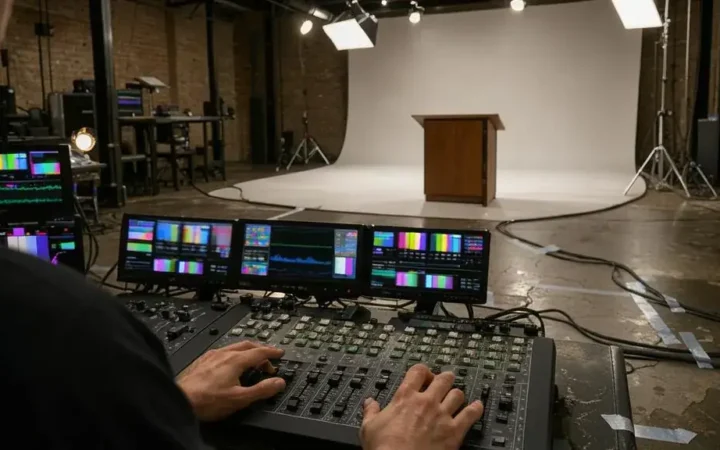
Production for the camera
Specialist · Virtual & Hybrid · 15 min
Studios, lighting, audio, switching, graphics and rehearsal.
Read more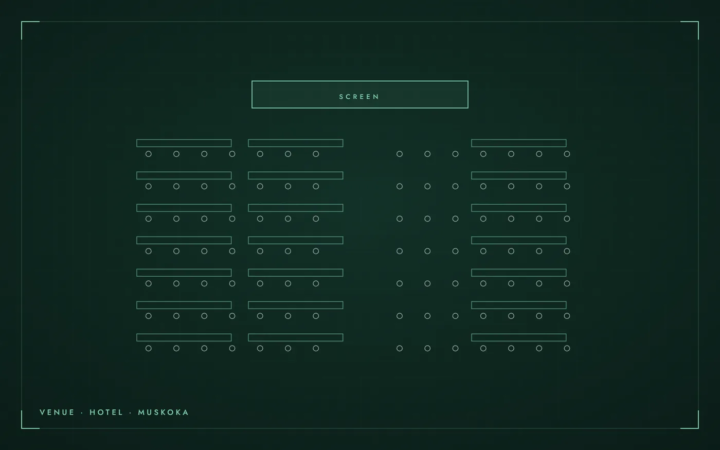
Deerhurst Resort
Muskoka
In-house catering
Deerhurst is a resort on about 760 acres near Huntsville in Muskoka.
Read more
Conference budget guide: GTA price ranges
Conferences & Conventions
What a Toronto conference costs by category, with typical GTA ranges for venue, AV, catering, registration, production and entertainment.
Read more