People forgive a dull room and a long speech. They do not forgive an empty food station at 7:15. Plan the first 45 minutes of food as carefully as the program.
Read the transcript
Holiday party food and drink.
People forgive a dull room and a long speech.
They do not forgive an empty food station at 7:15.
Service style decides the evening.
Passed hors d'oeuvres plus stations (cocktail-style, 2 to 4 hours): the most common GTA holiday format. Guests move, mingle across departments and leave when they like.
Plated dinner (3 hours plus): formal, predictable timing, best for awards nights. Three courses take 60 to 75 minutes to serve; you need final counts, table assignments and dietary codes on a seating chart.
What it costs.
Every quote above gets 13 per cent HST, and food and bar at venues get an 18 per cent service charge on top; the service charge is itself taxable.
A 90 dollars per-person menu is roughly 120 dollars all-in.
Dietary planning for a workforce.
A 200-person Toronto company will typically include vegetarians, vegans, halal and kosher observers, people fasting or abstaining for religious reasons, pregnant staff, and a handful of serious allergies.
Collect dietary needs on the RSVP form, not in a reply-all the week before.
The bar, and the rules around it.
Licensed venue (hotel, hall, restaurant, most lofts with a bar operator): you choose between an open bar per person, a consumption bar billed on what is poured, or drink tickets (two or three per guest, cash after). No permit is needed.
Unlicensed space (the office, a gallery, a warehouse loft without a bar operator): you need an AGCO Special Occasion Permit. A private, no-sale event is 50 dollars per day and the application must go in at least 10 days before.
Timing food against the program.
Doors open: bar open, passed food out within five minutes. Nothing empties a room faster than a 20-minute wait for the first tray.
Stations open 30 to 45 minutes in, before remarks, so people are not eating during the CEO.
Numbers to remember.
10 to 12 hors d'oeuvre pieces per person for a two-hour cocktail reception that leads to stations; 14 to 16 if there are no stations.
One bartender per 75 guests for an open bar; one per 100 for wine and beer only.
The full guide, with tables and checklists, continues below this video.
Service style decides the evening
- Passed hors d’oeuvres plus stations (cocktail-style, 2–4 hours): the most common GTA holiday format. Guests move, mingle across departments and leave when they like. Plan 10–12 pieces per person for the first two hours plus two or three substantial stations (carving, pasta, a dumpling or taco bar, a raw bar if the budget allows) that together replace a meal. Add 20 per cent more floor space than a seated plan for the same headcount.
- Plated dinner (3 hours plus): formal, predictable timing, best for awards nights. Three courses take 60–75 minutes to serve; you need final counts, table assignments and dietary codes on a seating chart. It is the hardest format for a room that wants to dance.
- Buffet: cheapest per plate at banquet halls, flexible for mixed diets, slow for more than 150 people unless the hall runs double-sided lines.
- Restaurant buyout: a set menu with two or three choices per course, usually at a lower all-in cost than a hotel because there is no rental and no outside bar operator.
What it costs
| Line | Typical GTA range, before HST | Notes |
|---|---|---|
| Cocktail-style (hors d’oeuvres + stations), per person | $55–$95 | Caterer or venue; stations drive the top of the range |
| Banquet hall plated dinner, per plate | $65–$120 | Plus 18% service charge at most halls |
| Downtown hotel plated dinner, per plate | $95–$180 | Plus 18% service charge; HST on both |
| Open bar, 4 hours, per person | $35–$65 | Licensed venues; plus 18% gratuity |
| Late-night snack (sliders, poutine, pizza), per person | $8–$15 | Serve 30 minutes before last call |
| Dessert station or doughnut wall, per person | $6–$12 |
Every quote above gets 13 per cent HST, and food and bar at venues get an 18 per cent service charge on top; the service charge is itself taxable. A $90 per-person menu is roughly $120 all-in. Use the food quantity calculator for piece counts and the bar calculator for drinks.
Dietary planning for a workforce
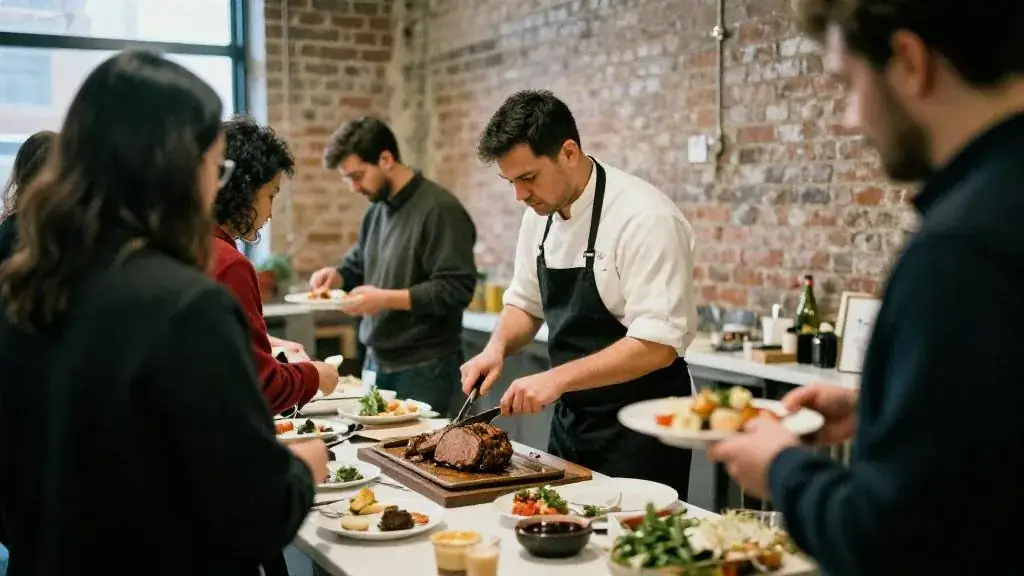
A 200-person Toronto company will typically include vegetarians, vegans, halal and kosher observers, people fasting or abstaining for religious reasons, pregnant staff, and a handful of serious allergies. Collect dietary needs on the RSVP form, not in a reply-all the week before. Give the caterer the numbers and the names, and ask for three things: every station labelled with the common allergens (nuts, dairy, gluten, shellfish, sesame, egg, soy), at least one hot vegan option that is not a side salad, and halal or kosher plates that arrive sealed and labelled if they are brought in. A visible non-alcoholic bar with two proper mocktails is now expected and makes the people who do not drink feel like guests rather than exceptions.
The bar, and the rules around it
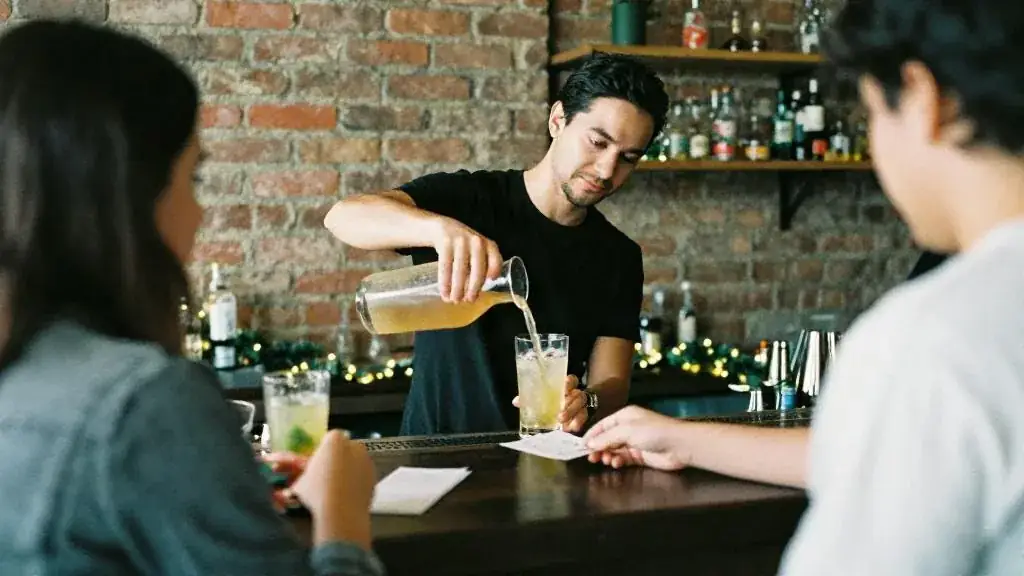
- Licensed venue (hotel, hall, restaurant, most lofts with a bar operator): you choose between an open bar per person, a consumption bar billed on what is poured, or drink tickets (two or three per guest, cash after). No permit is needed. Expect an 18 per cent gratuity on the bar bill.
- Unlicensed space (the office, a gallery, a warehouse loft without a bar operator): you need an AGCO Special Occasion Permit. A private, no-sale event is $50 per day and the application must go in at least 10 days before. All alcohol must be bought from the LCBO, the Beer Store or an Ontario winery under the permit, with receipts kept on site and the permit posted. Everyone serving must be Smart Serve certified (an online course of about four hours). Service hours run 11 a.m. to 2 a.m. with last call at 1:45. See Special Occasion Permit in the Encyclopedia.
- Host responsibility: wherever the party is, the company is the host. Hire certified bartenders rather than letting the social committee pour, stop service 30 minutes before the end, serve food throughout, and give every guest a way home: a rideshare code, a shuttle to the subway, or a hotel rate. Under the CRA $150-per-person rule for non-taxable staff events, transportation home and overnight accommodation are excluded from the $150, so the ride home does not push you over the line.
Timing food against the program
- Doors open: bar open, passed food out within five minutes. Nothing empties a room faster than a 20-minute wait for the first tray.
- Stations open 30–45 minutes in, before remarks, so people are not eating during the CEO.
- Remarks, under ten minutes, while the kitchen holds the second wave.
- Stage act after mains or after the stations have been going for an hour; never over service.
- Dessert and coffee at the transition to dancing; late-night snack 30 minutes before last call.
Numbers to remember
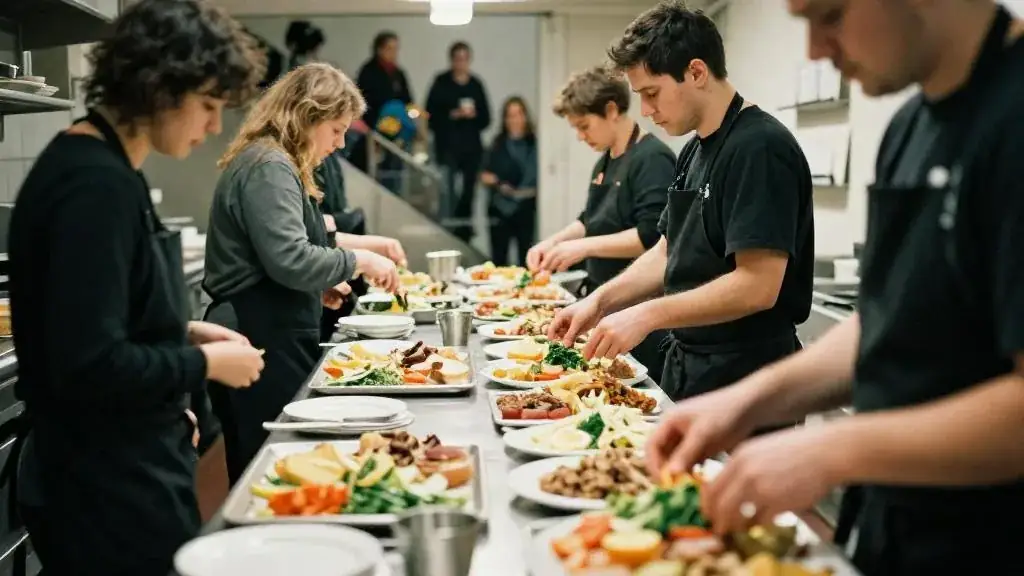
- 10–12 hors d’oeuvre pieces per person for a two-hour cocktail reception that leads to stations; 14–16 if there are no stations.
- One bartender per 75 guests for an open bar; one per 100 for wine and beer only.
- Order 5 per cent over the guaranteed count for stations; venues will not.
- Confirm final numbers 10–14 days out; after that you pay for the guarantee whether they come or not.
Related guides, venues and vendors

Mentalist & mind reader · Magic Magic roster
Entertainment, Mentalists
Mentalist and mind reader for corporate dinners, galas and private parties: predictions, thought-reading and demonstrations that leave executives arguing about how it…
Read more
Château des Charmes
Niagara · up to 250 guests
In-house catering · Outdoor space
Château des Charmes is a winery on the St. Davids Bench in Niagara-on-the-Lake, founded in 1978.
Read more
Holiday party venue guide
Corporate Holiday Parties
How to choose a corporate holiday party venue in Toronto and the GTA: venue types by headcount, the December calendar, capacity math,…
Read more