Open bar: the host pays for drinks, usually per person per hour. Cash bar: guests pay. Toonie bar: guests pay a token amount.
Read the transcript
Cash bar versus open bar.
Open bar: the host pays for drinks, usually per person per hour.
Cash bar: guests pay.
How it works in practice.
There are more than two models.
A package open bar charges per person per hour for a set list of drinks.
In Ontario and the GTA.
In a licensed venue, the venue handles the licence.
In an unlicensed space you need a Special Occasion Permit from the AGCO: 50 dollars per day where no drinks are sold, 150 dollars per day where they are.
Worked numbers.
150 guests, five hours, typical figures for comparison only:
The service charge is itself taxable, which is why the last column is higher than most clients expect.
More detail, examples and common mistakes are on this page, below the video.
How it works in practice
There are more than two models. A package open bar charges per person per hour for a set list of drinks. A consumption bar bills the host for each drink actually poured. A cash bar charges guests full price, and a toonie bar charges them a token amount while the host covers the rest. Drink tickets cap the host at two or three drinks per guest. Many events use a hybrid: open bar for the cocktail hour, wine poured with dinner, then cash or tickets after.
Read what each package includes. A “standard” bar often means rail spirits, two wines and domestic beer. Premium spirits, shots, and sparkling wine for the toast are commonly extra.
In Ontario and the GTA
In a licensed venue, the venue handles the licence. In an unlicensed space you need a Special Occasion Permit from the AGCO: $50 per day where no drinks are sold, $150 per day where they are. Any form of cash or toonie bar is a sale, so confirm the right permit type. Service runs 11 a.m. to 2 a.m. with last call at 1:45, and everyone pouring must hold Smart Serve.
Worked numbers
150 guests, five hours, typical figures for comparison only:
| Model | Before charges | With 18% service charge | With 13% HST |
|---|---|---|---|
| Package at $55 per person | $8,250 | $9,735 | $11,001 |
| Consumption: 6 drinks per guest at $9 | $8,100 | $9,558 | $10,801 |
| Two drink tickets per guest at $9 | $2,700 | $3,186 | $3,600 |
The service charge is itself taxable, which is why the last column is higher than most clients expect. Consumption looks cheaper until a crowd drinks harder than planned; packages are predictable.
Questions to ask
- Is the package priced per hour or for the whole event, and what is the minimum number of hours?
- Is the bar closed during speeches, and does that time still count?
- On consumption, can I see a running tally at set times during the night?
- How many bartenders per 100 guests?
Related tools
The bar and alcohol calculator estimates drinks by guest count and hours. Put each model into the event budget calculator before choosing, and see corkage if you plan to supply wine.
Why it matters
The bar model shapes the mood and 15–25% of the budget.
Example
A 5-hour open bar at $55 per person plus 18% gratuity for 150 guests.
Common mistakes
- Not setting a last call 30 minutes before the end
- Forgetting Smart Serve staffing
Related guides, venues and vendors
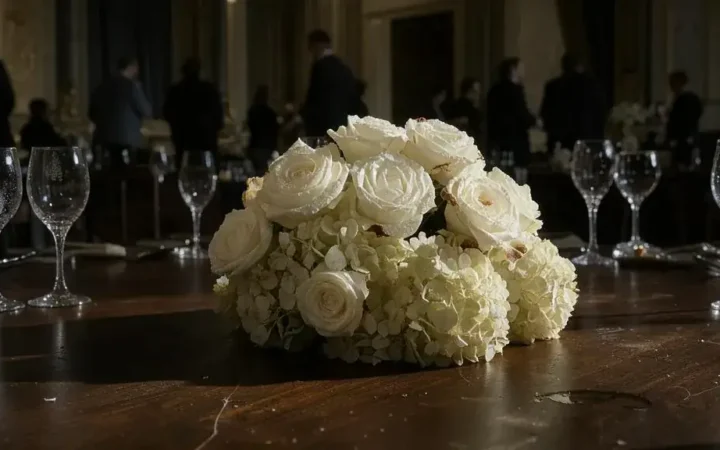
Pin spot
Production & AV
A narrow-beam light aimed at a centrepiece, cake or focal object.
Read more
Proposal
Planning
A planner's decision document for a client: understanding, concept, options, budget, timeline, fee and terms.
Read more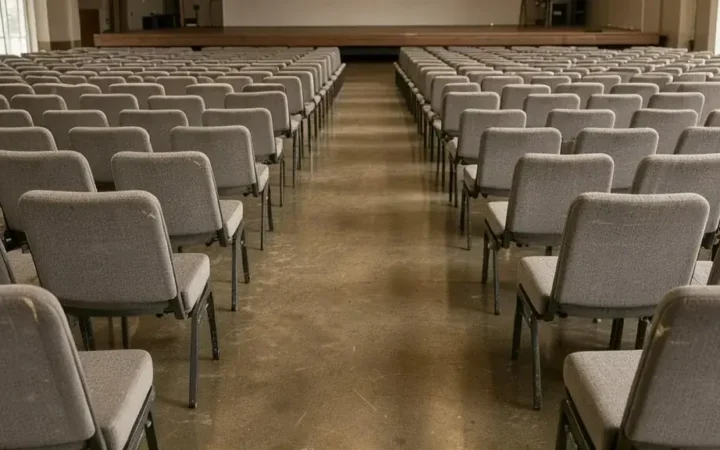
Theatre seating
Venue & Layout
Rows of chairs facing a stage, no tables.
Read more