A booth has one job: start conversations with the right people. Everything on the floor either does that or gets in the way.
Read the transcript
Getting traffic to your trade show booth.
A booth has one job: start conversations with the right people.
Everything on the floor either does that or gets in the way.
Layout.
No table across the front. Put it on the side.
One message readable from 10 m.
Staffing.
Two people at the open edge, never sitting, never on phones.
Scheduled micro-shows.
A sales magician running 8 to 12 minute shows every 30 minutes (off the hour) draws crowds of 20 to 40 and hands them to the reps with a reason to talk.
Lead capture.
Under 20 seconds on a tablet.
Qualify with one question, not five.
There is more on this page, just below the video.
Layout
- No table across the front. Put it on the side.
- One message readable from 10 m.
- A demo or show point visible from the aisle.
Staffing
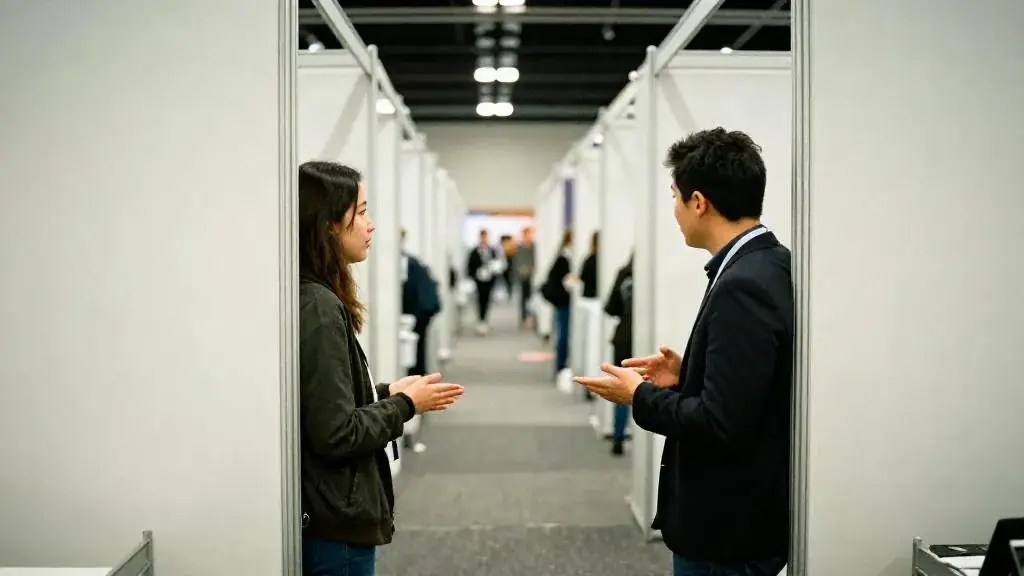
- Two people at the open edge, never sitting, never on phones.
- Shifts of 90 minutes.
Scheduled micro-shows
A sales magician running 8–12 minute shows every 30 minutes (off the hour) draws crowds of 20–40 and hands them to the reps with a reason to talk.
Lead capture
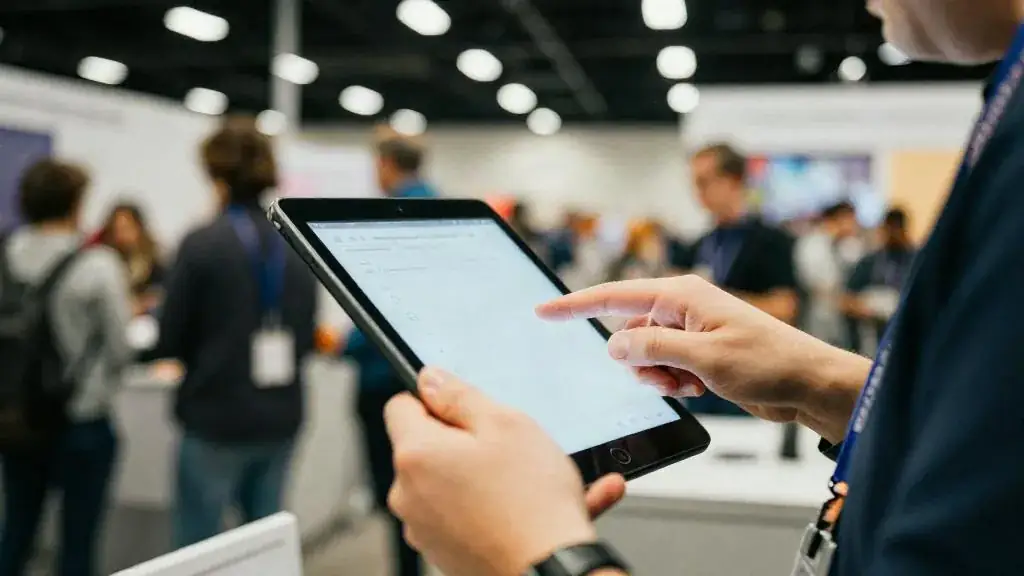
- Under 20 seconds on a tablet.
- Qualify with one question, not five.
- Follow up within 48 hours.
Before the show opens
Booth traffic starts weeks before the doors open. Tell existing clients and prospects which booth number you are in and give them a specific reason to visit, such as a scheduled demonstration, a short meeting slot or a chance to see a new product. Book meetings in advance for the quieter hours, so your team is busy when the aisles are not. Read the show's exhibitor manual carefully: it sets the rules on sound levels, giveaways, food sampling, raffles and anything that extends past the booth line, and breaking them can mean being asked to stop on the first morning.
Reading the floor
Every show has a rhythm. Traffic usually peaks after opening, around keynote breaks and late in the afternoon, and slows during lunch sessions and the final hours of the last day. Watch the flow in the first few hours and adjust. If a scheduled session is drawing everyone to the other side of the hall, use the gap to reset the booth and brief the team. Time any micro-shows or demonstrations to land when the aisles are full, not when they are empty.
Giveaways and contests
- Choose items your actual buyers would keep, and hand them out after a conversation rather than to anyone passing.
- Run a draw only after checking the show's rules; contests involving chance or ticket sales can carry legal requirements in Ontario.
- Collect only the contact details you need and make it clear how you will use them, in line with Canadian privacy and anti-spam law.
- Avoid food or drink sampling unless the show permits it and you have the right handling arrangements.
Measuring what worked
Count more than total scans. Record how many leads were qualified, how many meetings were booked on the floor, and how many became sales conversations within a month. Note which hours and which activities produced the best leads, and keep that record for the next show. The event ROI calculator turns those figures into a cost per lead, the trade show checklist covers the full exhibitor timeline, and the Academy lesson on trade show sales entertainment explains how to script a booth show around your message.
Related guides, venues and vendors
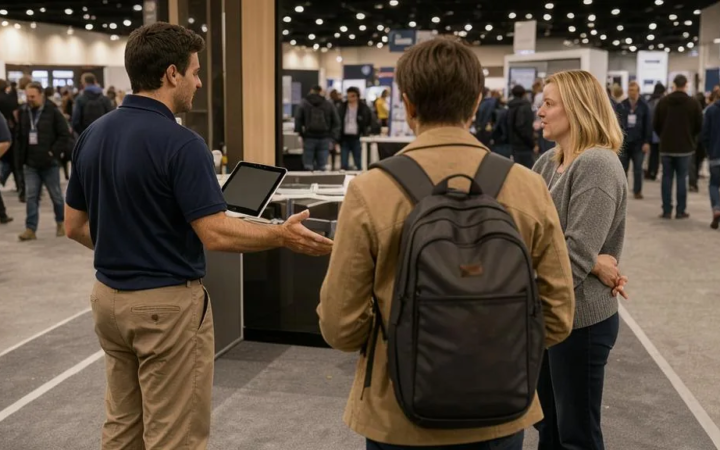
Trade show etiquette & FAQs
Trade Shows & Booth Activations
Exhibitor etiquette on a Toronto show floor, staffing rotations, the lead hand-off, privacy rules for lead capture, and the questions first-time exhibitors…
Read more
Trade show food & drink
Trade Shows & Booth Activations
What you can serve on the show floor, how hospitality suites work at Toronto convention hotels, and how to run client dinners…
Read more
Trade show themes & booth design
Trade Shows & Booth Activations
Booth types and regulations, the message hierarchy, modular versus custom builds, branded environments, flooring, lighting and screens, and what to reuse show…
Read more