Food at a trade show does two jobs: it keeps the booth team standing, and it moves the conversation off the floor to somewhere quieter. The floor itself is the most restricted place you will ever try to serve a coffee.
Read the transcript
Trade show food and drink.
Food at a trade show does two jobs: it keeps the booth team standing, and it moves the conversation off the floor to somewhere quieter.
The floor itself is the most restricted place you will ever try to serve a coffee.
On the show floor.
Most Toronto convention venues hold exclusive catering rights, and the exhibitor manual says what you may bring in.
Typically: individually wrapped, commercially packaged snacks and bottled water are fine; anything prepared, poured or sampled must come from the venue's caterer or be approved in writing.
Feeding the booth team.
Nobody eats in the booth. Build meal breaks into the rotation so each person leaves the floor for thirty minutes, twice a day.
Pre-order catering from the venue for a staff room or back-of-booth storage if the booth has one; the exhibitor lunch options in the hall are slow at peak.
Hospitality suites.
At downtown shows, the hotels attached to the convention centre have suites and small function rooms that exhibitors book for the show week.
A suite with a bar and canapés from 5 to 8 p.m. on the first or second night gives reps a place to bring the ten people they most want to talk to.
Client dinners.
The dinner is where the deal moves.
Book a private room six to eight weeks out for major shows; the private dining rooms near the convention centre and along King West fill during the big weeks.
After-show receptions.
If you host something larger, a reception for fifty to a hundred invited guests after the hall closes, treat it as a small corporate event: a licensed venue so no SOP is needed, two hours, a short welcome from one executive, passed food at roughly eight to twelve pieces per person across two hours, and one piece of entertainment that gives people something to talk about, often the same magician who worked the booth, now doing close-up at the tables.
Use the food quantity calculator and the bar calculator for quantities.
Breakfasts.
A 7:30 breakfast briefing in a hotel room near the hall, with a short presentation and a hot buffet, gets senior buyers before the floor opens and before their day fills; it is cheaper than dinner and nobody has to decline because of another invitation.
The full guide, with tables and checklists, continues below this video.
On the show floor
Most Toronto convention venues hold exclusive catering rights, and the exhibitor manual says what you may bring in. Typically: individually wrapped, commercially packaged snacks and bottled water are fine; anything prepared, poured or sampled must come from the venue’s caterer or be approved in writing. Food and drink companies sampling their own product have a sampling form to file. Check before you order the espresso machine: a barista bar in the booth is one of the best draws there is, but it needs the venue’s sign-off, a water supply or a self-contained unit, and an electrical order to match.
Alcohol on the floor is controlled by the venue’s liquor licence and the organizer. Where a show allows a late-afternoon reception on the floor, the service is almost always the venue’s own, with Smart Serve-certified staff; an exhibitor cannot bring in a case of wine and pour it. If a consumer show runs in an unlicensed space and an organizer takes out a Special Occasion Permit, service hours run 11 a.m. to 2 a.m., every server must be Smart Serve certified, the permit is posted and receipts are kept on site. None of this is something an exhibitor arranges; ask the organizer what is planned and whether you may sponsor it.
Feeding the booth team
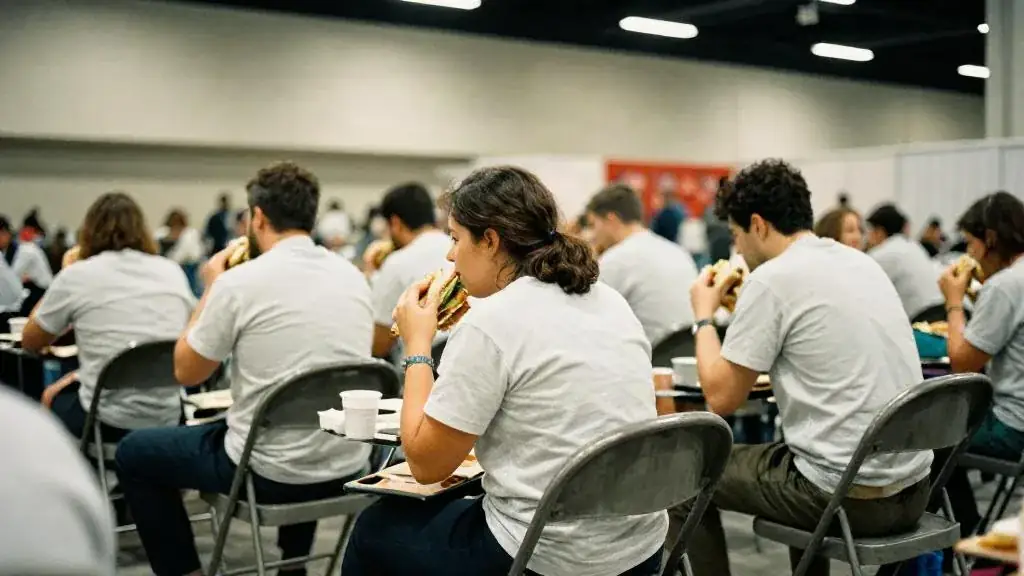
- Nobody eats in the booth. Build meal breaks into the rotation so each person leaves the floor for thirty minutes, twice a day.
- Pre-order catering from the venue for a staff room or back-of-booth storage if the booth has one; the exhibitor lunch options in the hall are slow at peak.
- Water, mints and a plain breakfast delivered to the booth at move-in time are the cheapest morale spend in the budget.
Hospitality suites
At downtown shows, the hotels attached to the convention centre have suites and small function rooms that exhibitors book for the show week. A suite with a bar and canapés from 5 to 8 p.m. on the first or second night gives reps a place to bring the ten people they most want to talk to. What to know:
- The hotel’s food and beverage comes with a service charge, commonly 18%, which is itself subject to HST; ask whether it reaches the staff.
- Bar service is the hotel’s, on its licence; you choose a consumption bar, a package, or beer and wine only.
- Invite by name, in advance, with a time. An open invitation on a flyer fills the room with badge collectors.
- Two hours is the right length. Reps have a 9 a.m. shift.
At the Pearson-area halls, the equivalent is a private room at an airport hotel or a restaurant a short drive away; the venue itself usually has meeting rooms to rent by the hour for quieter conversations during the day.
Client dinners
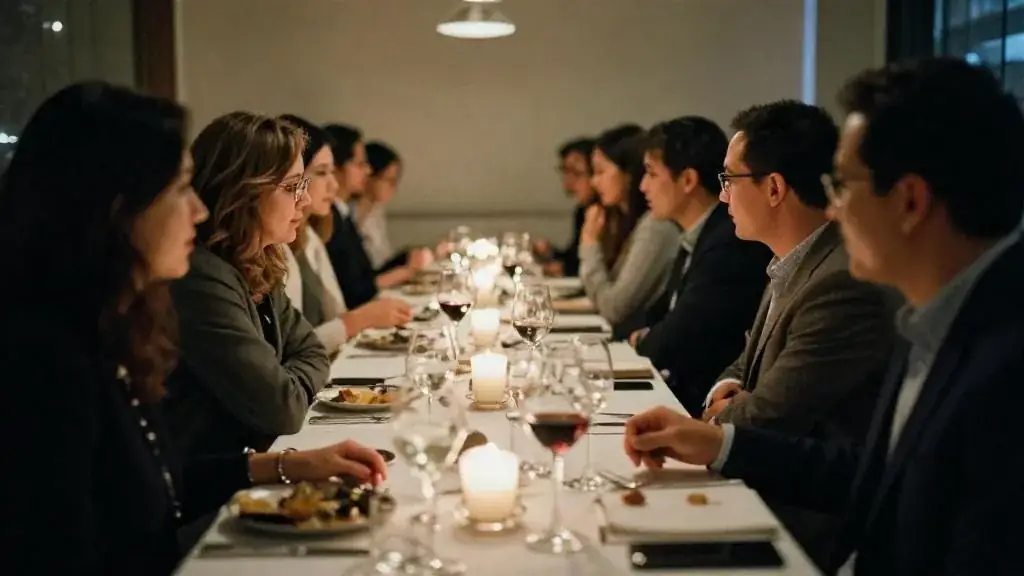
The dinner is where the deal moves. Book a private room six to eight weeks out for major shows; the private dining rooms near the convention centre and along King West fill during the big weeks. Work with the restaurant on a set menu with two or three choices per course so the kitchen is fast, pre-select the wine, and settle the bill quietly. Collect dietary needs when you invite, and code them for the restaurant. For a table of ten to twelve, in our experience a set menu with moderate wine runs roughly $150–$250 per head before HST and gratuity in a downtown private room; suburban rooms are lower. Keep it to one dinner a night and send the reps who are presenting in the morning home by ten.
After-show receptions
If you host something larger, a reception for fifty to a hundred invited guests after the hall closes, treat it as a small corporate event: a licensed venue so no SOP is needed, two hours, a short welcome from one executive, passed food at roughly eight to twelve pieces per person across two hours, and one piece of entertainment that gives people something to talk about, often the same magician who worked the booth, now doing close-up at the tables. Use the food quantity calculator and the bar calculator for quantities. The CRA rule that keeps an employer-provided social event non-taxable, open to all employees and costing $150 or less per person, is about staff parties, not client hospitality; keep the two budgets separate so the accounting is clean.
Breakfasts
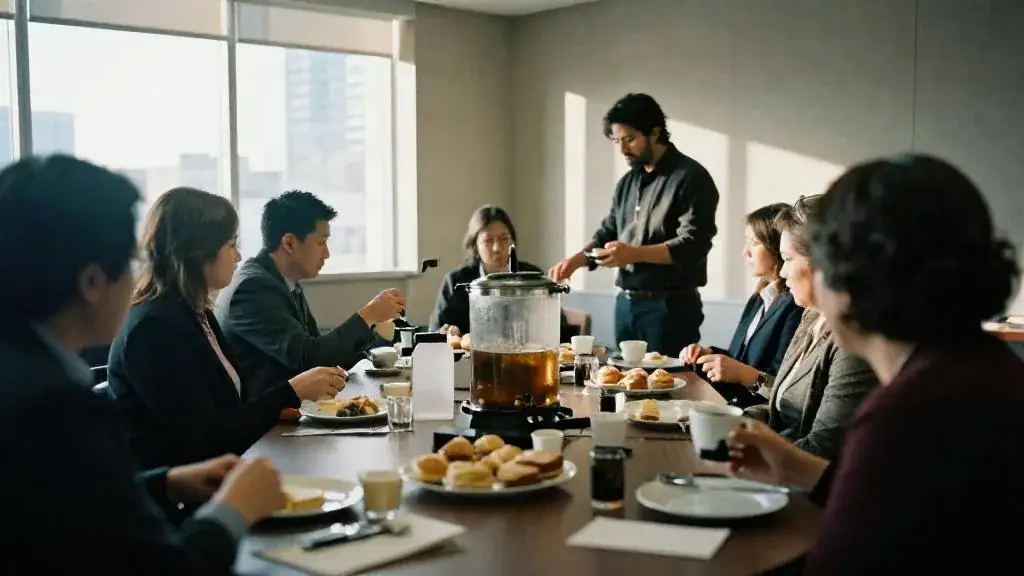
The underused option. A 7:30 breakfast briefing in a hotel room near the hall, with a short presentation and a hot buffet, gets senior buyers before the floor opens and before their day fills; it is cheaper than dinner and nobody has to decline because of another invitation.
Related guides, venues and vendors
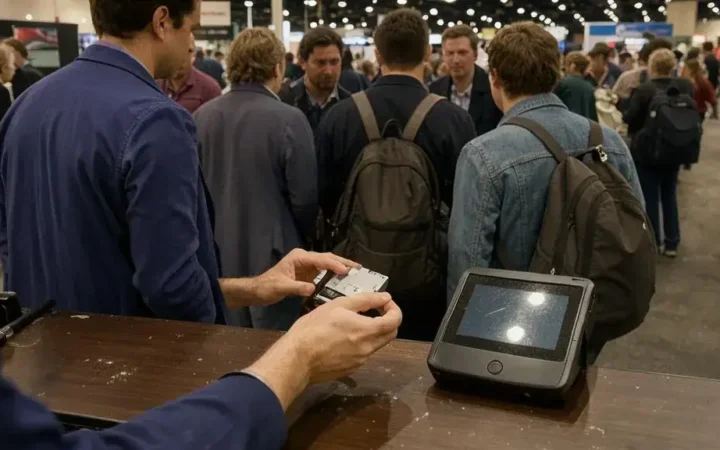
Getting traffic to your trade show booth
October 11, 2026 · 1 min read
Booth layout, staffing, scheduled micro-shows and 20-second lead capture: the playbook for a busy booth.
Read more
Trade show checklist
Trade Shows & Booth Activations
The printable exhibitor checklist from space contract to the 30-day ROI review. Progress saves in your browser.
Read more
Magic Magic
Entertainment, Magicians, Mentalists · Close-up from $650 · stage shows from $1,500
Toronto magic agency with a roster of nine magicians, illusionists and mentalists (Dan Kranstz plus the eight acts listed in this directory)…
Read more