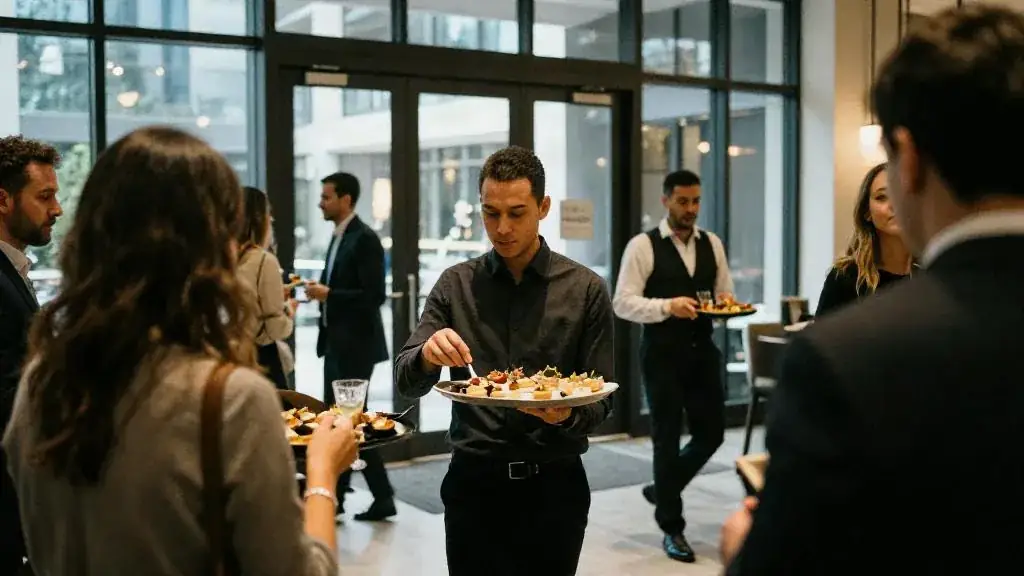
Hors d’oeuvres served on trays by circulating staff during a reception.
Read the transcript
Pass-around.
Hors d'oeuvres served on trays by circulating staff during a reception.
How it works in practice.
Servers leave the kitchen with a tray of one variety, work a set route through the room and come back when the tray is empty.
The first 20 minutes of a reception are the heaviest: guests arrive hungry and the bar line is long, so the kitchen should send its best-moving pieces first.
Worked numbers.
For the Harbour Gala, a 200-guest cocktail hour from 6 to 7 before a plated dinner, using the planning range of 4 to 6 pieces per guest per hour:
Hotels usually price pass-arounds per dozen or per piece.
Questions to ask.
How many servers will be passing, and do they also clear glasses?
Which pieces hold well, and which must go out within minutes of leaving the pass?
More detail, examples and common mistakes are on this page, below the video.
How it works in practice
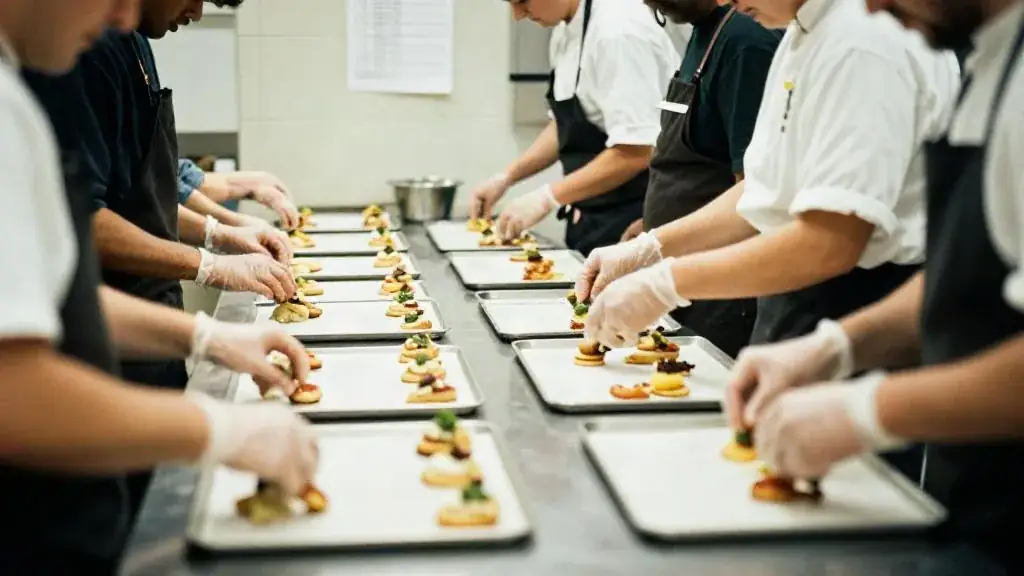
Servers leave the kitchen with a tray of one variety, work a set route through the room and come back when the tray is empty. The first 20 minutes of a reception are the heaviest: guests arrive hungry and the bar line is long, so the kitchen should send its best-moving pieces first. Count pieces per guest, not varieties. Six varieties sounds generous; it means nothing if each one makes a single lap.
Keep at least one tray clearly vegetarian and one gluten-free, and have the server say so as they approach. Guests with allergies should never have to guess from a canapé. If the client has collected dietary codes, the banquet captain can send a server straight to those guests.
Worked numbers
For the Harbour Gala, a 200-guest cocktail hour from 6 to 7 before a plated dinner, using the planning range of 4–6 pieces per guest per hour:
| Item | Planning figure |
|---|---|
| Pieces per guest (one hour, dinner to follow) | 5 |
| Total pieces | 1,000 |
| Varieties | 6, about 165–170 of each |
| Servers on the floor (typical: one per 25–35 guests) | 6–8 |
| Reception with no dinner after (typical) | 10–15 pieces per guest over the evening, plus a station |
Hotels usually price pass-arounds per dozen or per piece. Run the order through the BEO charges block, then add the service charge and HST before comparing it to a station.
Questions to ask
- How many servers will be passing, and do they also clear glasses?
- Which pieces hold well, and which must go out within minutes of leaving the pass?
- Is there a minimum order per variety?
- Will the trays stop when guests are called to dinner, or keep going during the walk-in?
- Can a server be assigned to the stage or VIP area so that guests stuck in conversation still eat?
If entertainment is working the reception, tell the captain where the strolling act will be so trays do not cut through the middle of a trick.
Related tools
The food quantity calculator gives piece counts by guest number and duration, and the bar and alcohol calculator covers the drinks side of the same hour. Compare the result against food stations before you commit.
Why it matters
Pass-arounds control pace and cost; plan 4–6 pieces per guest per hour for the first two hours.
Example
A cocktail hour with six pass-around varieties and one station.
Common mistakes
- Too few servers, so food never reaches the far side of the room
Related guides, venues and vendors
Cut-off date
Planning
The date after which held rooms, RSVPs or menu choices are released or locked.
Read more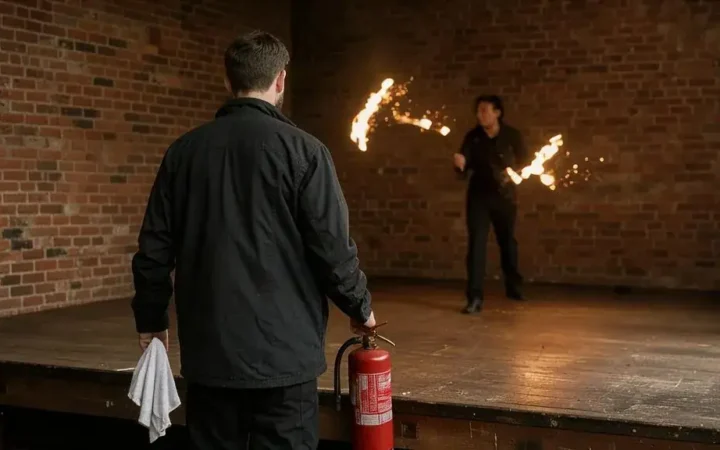
Fire watch
Safety & Permits
A trained person assigned to watch for fire hazards during an event, required when alarms are bypassed or open flame or pyro…
Read more
Attrition
Business & Legal
A contract clause charging you if you use fewer hotel rooms or catering covers than you committed to.
Read more