A trained person assigned to watch for fire hazards during an event, required when alarms are bypassed or open flame or pyro is used.
Read the transcript
Fire watch.
A trained person assigned to watch for fire hazards during an event, required when alarms are bypassed or open flame or pyro is used.
How it works in practice.
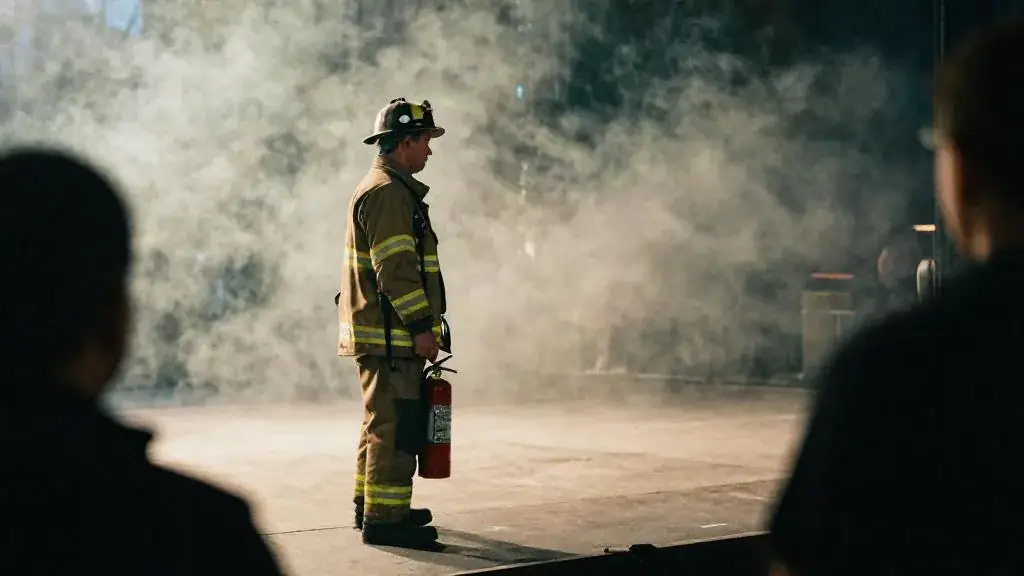
A fire watch is a person, not a device.
Their job is to watch the area for fire, have extinguishers in hand, know where the alarm pulls and exits are, and act immediately if something goes wrong.
In Ontario and the GTA.
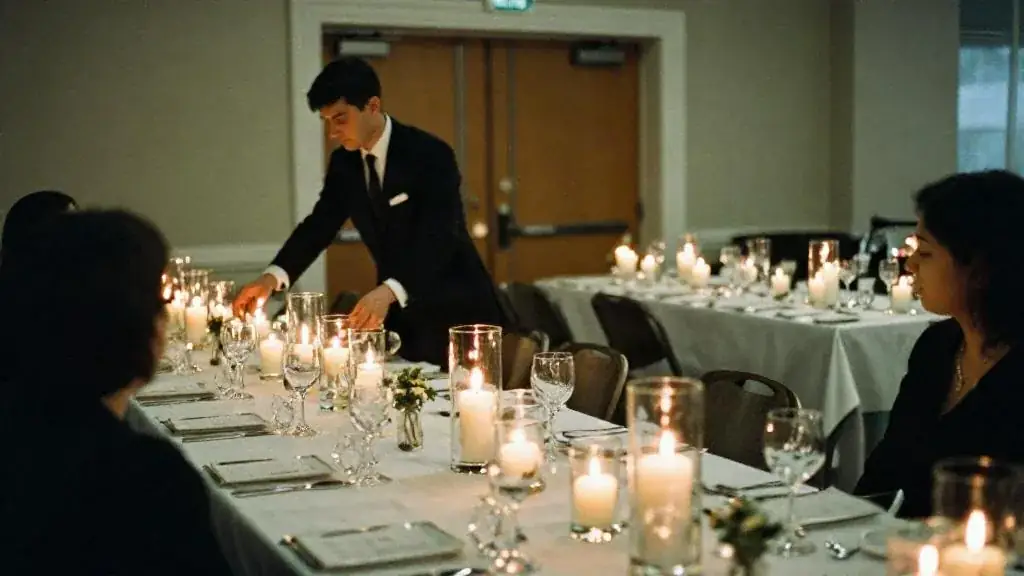
Many Toronto hotels permit only enclosed candles and refuse open flame in ballrooms.
Venues that do allow fire acts usually require a written request, the performer's insurance, the plan for extinguishers and a fire watch, and often fire department approval.
How to handle it.
Ask the venue in writing whether open flame, haze or pyro is permitted, and on what conditions.
If detectors must be bypassed, confirm who arranges it and who stands fire watch for the full bypass period.
More detail, examples and common mistakes are on this page, below the video.
How it works in practice
A fire watch is a person, not a device. Their job is to watch the area for fire, have extinguishers in hand, know where the alarm pulls and exits are, and act immediately if something goes wrong. They do nothing else during that period: no ushering, no checking tickets.
For events, a fire watch is usually needed in three situations. When smoke detectors are bypassed so haze or theatrical smoke can be used, someone must replace the detection the building has switched off. When open flame is used, from a fire performer to certain candle setups, someone must watch the flame and the people near it. And when indoor pyrotechnics are used, which also require a licensed pyrotechnician certified by Natural Resources Canada and venue and fire department approval.
In Ontario and the GTA
Many Toronto hotels permit only enclosed candles and refuse open flame in ballrooms. Venues that do allow fire acts usually require a written request, the performer’s insurance, the plan for extinguishers and a fire watch, and often fire department approval. Some venues supply their own fire watch staff and charge for them; others require the performer or production company to supply one. In our experience, approval takes weeks, not days, so start early.
How to handle it
- Ask the venue in writing whether open flame, haze or pyro is permitted, and on what conditions.
- If detectors must be bypassed, confirm who arranges it and who stands fire watch for the full bypass period.
- Get the performer or pyrotechnician’s insurance certificate naming the venue.
- Place extinguishers of the right type and confirm the fire watch knows how to use them.
- Brief the fire watch on exits, alarm locations and who to call.
- Write the fire watch into the run of show with start and end times.
Questions to ask
- Who supplies the fire watch, and at what hourly cost?
- Does the fire department need to approve this act, and by when?
- Would an LED version of the act achieve the look without the approvals?
See fire spinning and LED glow acts for alternatives, and log the requirement in the risk register.
Why it matters
Venues and fire departments require it for haze, pyro and some open-flame acts.
Example
A fire watch stands by during a 12-minute indoor fire act with the venue's approval.
Common mistakes
- Running haze without telling the venue (alarms)
Related guides, venues and vendors
Load-in
Production & AV
The process of bringing equipment and materials into a venue, through a dock or elevator, at scheduled times.
Read more
Mentalism
Entertainment
Performance that appears to read minds, predict choices and influence decisions.
Read more
Run of show
Planning
A minute-by-minute schedule of every cue at an event, with one named owner per cue.
Read more