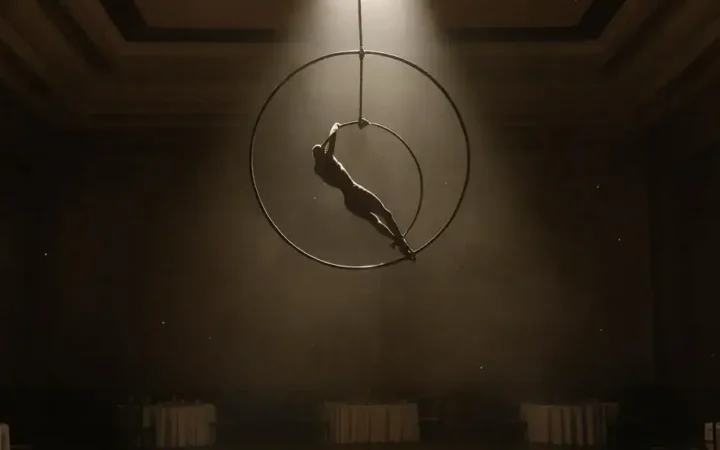
Performance with lit poi, staffs, fans or hoops.
Read the transcript
Fire spinning.
Performance with lit poi, staffs, fans or hoops.
How it works in practice.
A fire act is a performer, a set of props with wicks soaked in fuel, and a safety person who does not perform.
Before the act, the props are dipped at a fuel station kept away from the audience, then spun off so excess fuel does not fly.
In Ontario and the GTA.
Open flame in a venue needs the venue's approval, and many hotels allow only enclosed candles, so indoor fire acts are rarely an option.
Fire performers need venue approval and often fire department approval, plus a fire watch with extinguishers.
How to handle it.
Confirm in writing that the venue or landowner allows fire, before you book the act.
Ask the local fire department what approval it needs and how long it takes.
More detail, examples and common mistakes are on this page, below the video.
How it works in practice
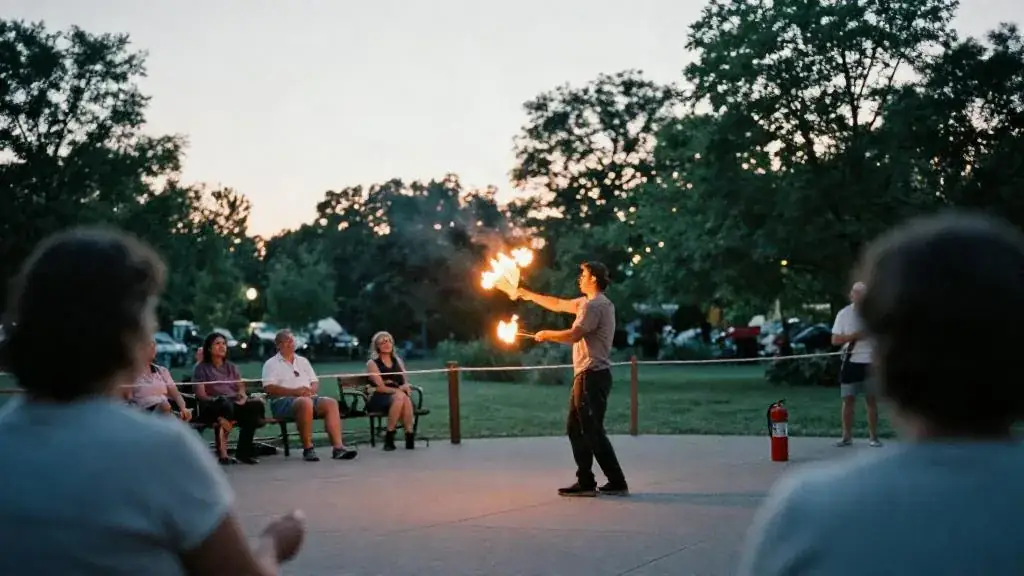
A fire act is a performer, a set of props with wicks soaked in fuel, and a safety person who does not perform. Before the act, the props are dipped at a fuel station kept away from the audience, then spun off so excess fuel does not fly. During the act, the safety person stands at the edge of the performance area with an extinguisher and a fire blanket or damp duvetyne. After the act, props are put out and left to cool in a marked area.
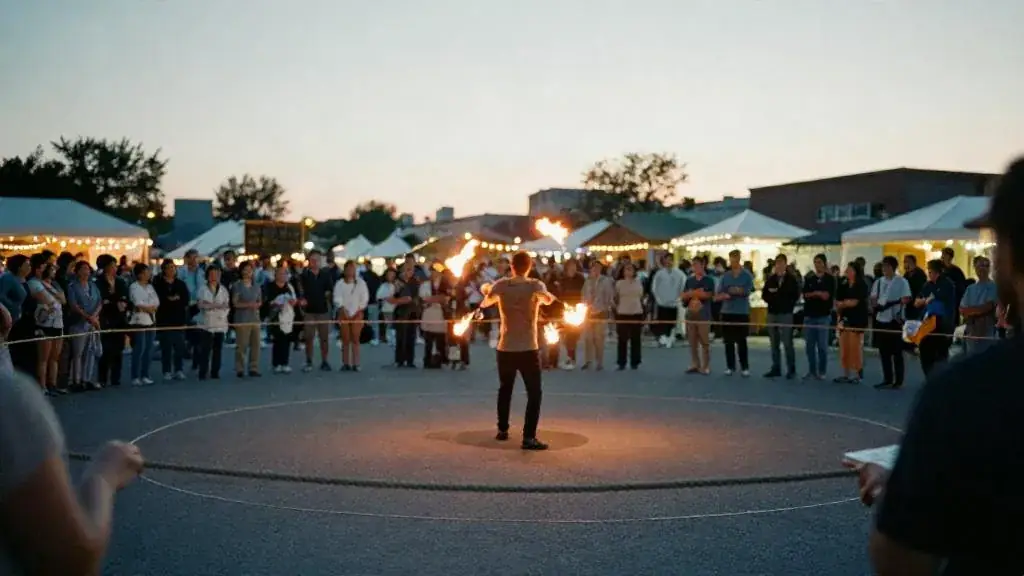
Dusk is the sweet spot: dark enough for the flames to read, light enough for the crowd to move safely. LED poi, staffs and fans give the same look with none of the paperwork; see LED and glow acts.
In Ontario and the GTA
Open flame in a venue needs the venue’s approval, and many hotels allow only enclosed candles, so indoor fire acts are rarely an option. Fire performers need venue approval and often fire department approval, plus a fire watch with extinguishers. Outdoors on public land, the act has to be part of the event permit; in Toronto parks that runs through the city’s Parks special event permit process, which should be started months ahead for summer weekends. Ask the performer for a certificate of insurance that names fire performance specifically, and read the indemnity clause.
How to handle it
- Confirm in writing that the venue or landowner allows fire, before you book the act.
- Ask the local fire department what approval it needs and how long it takes.
- Mark the performance area and a safety perimeter, typically 3 m or more from the audience, with barriers or rope.
- Keep the area clear of overhead branches, tents, banners, décor and exit routes.
- Set a wind limit with the performer and agree who calls the act off.
- Keep the bar and fuel station well apart, and assign a fire watch who stays until the props are cold.
Worked numbers
At the Lakeshore Night Market, with 8,000 people through one evening in Mississauga, a fire act at dusk needs a stage or roped area with a 3 m perimeter on every side the crowd can reach. A 4 m performance circle plus that perimeter takes a 10 m wide footprint. Plan the crowd edge using crowd density so the front row is not pushed forward by people behind.
Related tools
Record fire, wind and crowd risks in the risk register template and pack the day-of emergency kit.
Why it matters
Outdoor or venue-approved only; needs clearance, an extinguisher, a safety and often a municipal permit. LED versions need none.
Example
A fire act at a summer festival at dusk with a 3 m safety perimeter.
Common mistakes
- Assuming a venue will allow fire indoors
- No fire safety person