Performers on stilts in costume, typically 2.5–3 m tall, used for arrivals and roaming.
Read the transcript
Stilts.
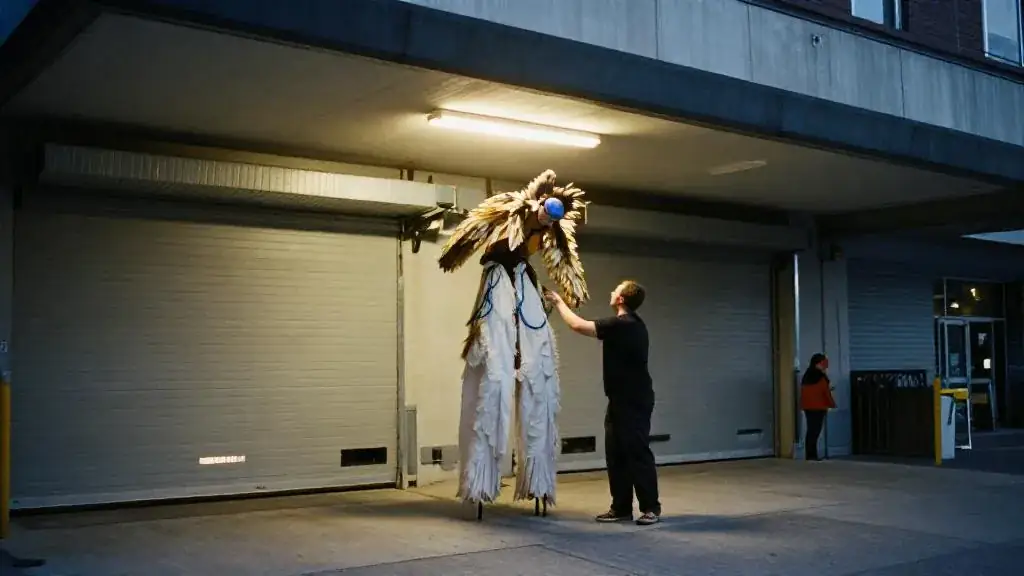
Performers on stilts in costume, typically 2.5 to 3 m tall, used for arrivals and roaming.
How it works in practice.
Stilt walkers are tall, slow and impossible to miss, which is the point.
They greet arrivals, pose for photos, hand out programs or glow sticks, and lead guests from one space to the next.
Worked numbers.
Height is the planning issue.
That last line is why stilt walkers often get ready in the room they perform in, or enter through a loading dock.
How to handle it.
Walk the full route on the site visit: entrance, performance areas, the path to the change room.
Note every doorway, ramp, step and change in floor surface.
More detail, examples and common mistakes are on this page, below the video.
How it works in practice
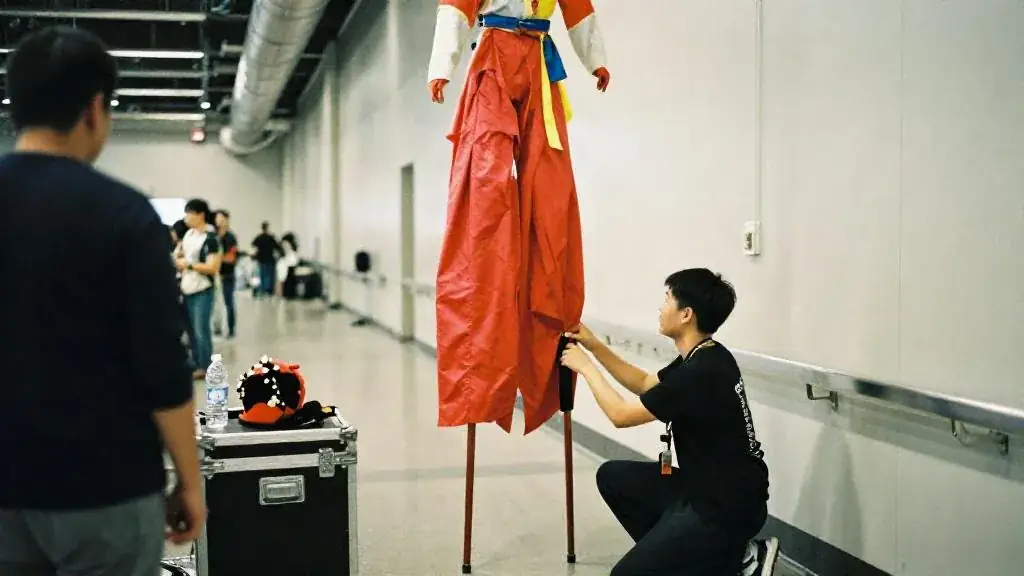
Stilt walkers are tall, slow and impossible to miss, which is the point. They greet arrivals, pose for photos, hand out programs or glow sticks, and lead guests from one space to the next. They do not run, climb stairs or ride escalators, and they need a handler or a clear path. Most work in sets of 20–30 minutes with breaks to sit down, so a “two-hour” booking usually means several sets inside that window.
For evening and outdoor events, LED costumes turn stilt walkers into a lighting feature. See LED and glow acts.
Worked numbers
Height is the planning issue. Typical figures:
| Item | Height |
|---|---|
| Performer on stilts | 2.5–3 m |
| Plus headdress or costume | Add up to 0.5 m |
| Clear height needed | At least 3.5 m along the whole route |
| Most interior doors | Just over 2 m |
That last line is why stilt walkers often get ready in the room they perform in, or enter through a loading dock. Low exit signs, chandeliers, ductwork, sprinkler heads and tent cross-bars are all hazards. Measure to the lowest point, not the ceiling.
How to handle it
- Walk the full route on the site visit: entrance, performance areas, the path to the change room.
- Note every doorway, ramp, step and change in floor surface.
- Agree where the performer gets on and off stilts and where they rest.
- Keep them out of the busiest exit routes and away from tight bar queues; check crowd density before sending them into a packed reception.
- Outdoors, check the ground: wet grass, gravel and slopes slow or stop them. Have a plan for wind and rain.
Questions to ask
- What is the total height in costume?
- How long is each set, and how long are the breaks?
- Do you need a handler, and is one included?
- Can the costume match a theme or brand colour?
- Can you send a certificate of insurance?
Related tools
Bring the venue tour checklist to measure clear heights, and find acts through the entertainment finder. Compare with other roaming entertainment and strolling acts.
Why it matters
Needs 3.5 m of clear height and no low doorways; the best photo opportunity per dollar.
Example
Two LED stilt walkers greeting guests at a holiday party entrance.
Common mistakes
- Stairs with no alternative route
- Low chandeliers
Related guides, venues and vendors

Opener
Entertainment
A short act that starts a program and sets the energy.
Read more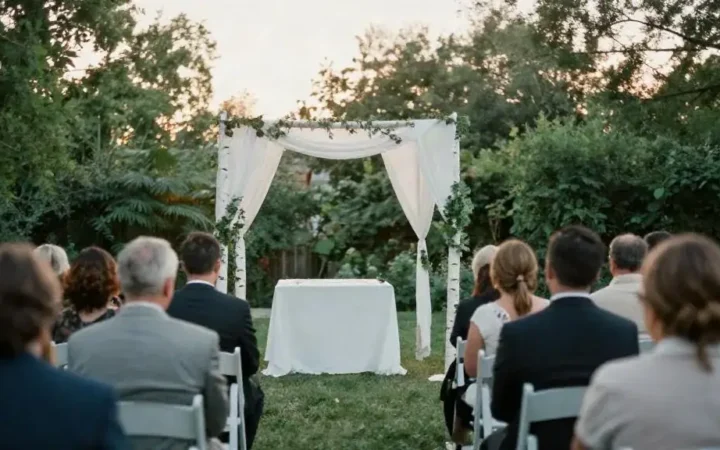
Chuppah
Weddings & Cultural
The canopy under which a Jewish wedding ceremony takes place.
Read more
Force majeure
Business & Legal
A clause that excuses performance when extraordinary events outside either party's control (storms, strikes, public-health orders) make the event impossible.
Read more