A clause that excuses performance when extraordinary events outside either party’s control (storms, strikes, public-health orders) make the event impossible.
Read the transcript
Force majeure.
A clause that excuses performance when extraordinary events outside either party's control (storms, strikes, public-health orders) make the event impossible.
How it works in practice.
A force majeure clause lists events that excuse a party from performing: severe weather, fire, flood, strikes, government orders, public-health restrictions, sometimes "acts of God" or terrorism.
When one occurs and makes the event impossible (or, in better-written clauses, illegal or commercially impracticable), the clause says what happens next: refund, credit, reschedule, or each party keeps what it has.
In Ontario and the GTA.
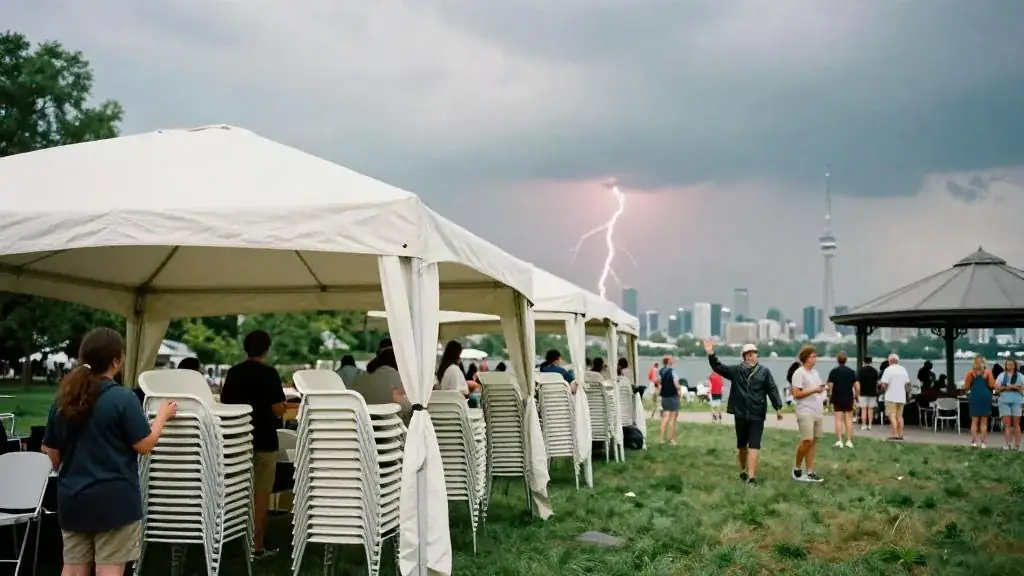
The realistic risks here are winter storms that close highways and transit, summer thunderstorms at outdoor events, transit or hotel labour disputes, and public-health orders.
Since 2020 most Toronto venues have rewritten their clauses, and some now exclude pandemics explicitly or limit the remedy to rescheduling.
How to handle it.
Read the list of covered events and ask for additions that matter to your event, such as transit strikes for a downtown conference.
"Impossible" is a high bar. "Illegal, impossible or commercially impracticable" protects you more.
More detail, examples and common mistakes are on this page, below the video.
How it works in practice
A force majeure clause lists events that excuse a party from performing: severe weather, fire, flood, strikes, government orders, public-health restrictions, sometimes “acts of God” or terrorism. When one occurs and makes the event impossible (or, in better-written clauses, illegal or commercially impracticable), the clause says what happens next: refund, credit, reschedule, or each party keeps what it has.
The clause does not cover a change of heart, low ticket sales, a keynote speaker cancelling or a forecast of bad weather. Those are cancellation situations, and cancellation fees apply.
In Ontario and the GTA
The realistic risks here are winter storms that close highways and transit, summer thunderstorms at outdoor events, transit or hotel labour disputes, and public-health orders. Since 2020 most Toronto venues have rewritten their clauses, and some now exclude pandemics explicitly or limit the remedy to rescheduling. Do not assume your venue’s current wording matches the last contract you signed with them.
How to handle it
- Read the list of covered events and ask for additions that matter to your event, such as transit strikes for a downtown conference.
- Check the trigger. “Impossible” is a high bar. “Illegal, impossible or commercially impracticable” protects you more.
- Check the remedy. Is it a full refund of deposits, a credit, or a reschedule within a stated window?
- Make the clause mutual, so it protects you as well as the venue.
- Line up your vendor contracts so each one has a compatible clause. A venue that refunds is little help if the band keeps a non-refundable deposit.
- Consider event cancellation insurance for large events, and read its exclusions alongside the contracts.
Questions to ask
- Who decides that a force majeure event has occurred, and how quickly must notice be given?
- If we reschedule, does the original pricing hold?
- Is a government advisory (not an order) enough to trigger the clause?
- What happens to costs already incurred, like printed materials or custom décor?
Related tools
Record the force majeure exposure of each contract in your risk register, with the deposit at stake and the notice deadline. It is far easier to act calmly at 6 a.m. during an ice storm if that sheet already exists.
Why it matters
It decides whether you get deposits back or a reschedule when the unthinkable happens.
Example
A February ice storm closes the highway; a force majeure clause lets the client reschedule without penalty.
Common mistakes
- Assuming it covers 'we changed our minds'
- Not defining whether rescheduling or refund applies
Related guides, venues and vendors

Smart Serve
Safety & Permits
Ontario's mandatory responsible alcohol service certification for anyone serving alcohol.
Read more
Uplighting
Production & AV
LED fixtures placed on the floor against walls and columns to wash them in colour.
Read more
Room block
Planning
A set of hotel rooms held at a negotiated rate for event guests until a cut-off date.
Read more