A set of hotel rooms held at a negotiated rate for event guests until a cut-off date.
Read the transcript
Room block.
A set of hotel rooms held at a negotiated rate for event guests until a cut-off date.
How it works in practice.
A room block holds a set number of hotel rooms at a negotiated rate for your guests, usually from the night before the event through the night of it.
Guests book through a dedicated link or code.
In Ontario and the GTA.
Toronto hotel availability swings with the convention and festival calendar.
Weekends in September and large conference weeks can make even a courtesy block hard to get downtown.
How to handle it.
Estimate how many guests actually need rooms: out-of-town guests, wedding party, speakers, staff.
Request courtesy blocks from two or three hotels first; move to a contracted block only if you need more rooms or a better rate.
More detail, examples and common mistakes are on this page, below the video.
How it works in practice
A room block holds a set number of hotel rooms at a negotiated rate for your guests, usually from the night before the event through the night of it. Guests book through a dedicated link or code. Until the cut-off date, unbooked rooms remain held for you; after it, they go back into general inventory and the rate may no longer be honoured.
There are two kinds. A contracted block commits you to a pickup level and carries attrition if guests do not book. A courtesy block holds rooms with no financial commitment; the hotel simply releases what is not booked. Courtesy blocks are smaller, the rate may be less sharp, and in busy weeks hotels may refuse them.
In Ontario and the GTA
Toronto hotel availability swings with the convention and festival calendar. Weekends in September and large conference weeks can make even a courtesy block hard to get downtown. For weddings in the Distillery District, King West or Yorkville, a block at an airport or midtown hotel with a shuttle is often more realistic than one walking distance away. Remember that hotel room rates in Toronto carry HST and a municipal accommodation tax; quote guests the all-in nightly cost.

How to handle it
- Estimate how many guests actually need rooms: out-of-town guests, wedding party, speakers, staff.
- Request courtesy blocks from two or three hotels first; move to a contracted block only if you need more rooms or a better rate.
- Negotiate the rate, cut-off date, review dates, comp ratio and any upgrades for staff or the couple.
- Get the booking link before invitations go out, and put it on the event website.
- Ask for a weekly pickup report and chase guests who have not booked two weeks before cut-off.
- Release rooms at the review date if pickup is behind.
Questions to ask
- Is this a courtesy or contracted block, and what is the attrition percentage if contracted?
- Will the rate apply to guests who book after cut-off if rooms remain?
- Can guests book shoulder nights at the group rate?
- Do bookings outside the link count toward our pickup?
- Is there a shuttle, and does parking cost extra?
Keep the block confirmation with the event contracts. When a guest calls the week before saying the hotel has no record of the rate, you will want the block code and the sales manager’s name within reach.

Why it matters
Guests get a rate; you may carry attrition risk. Courtesy blocks carry none.
Example
A courtesy block of 20 rooms at a Yorkville hotel with a cut-off 30 days before the wedding.
Common mistakes
- Confusing a courtesy block with a contracted block
- Missing the cut-off date
Related guides, venues and vendors
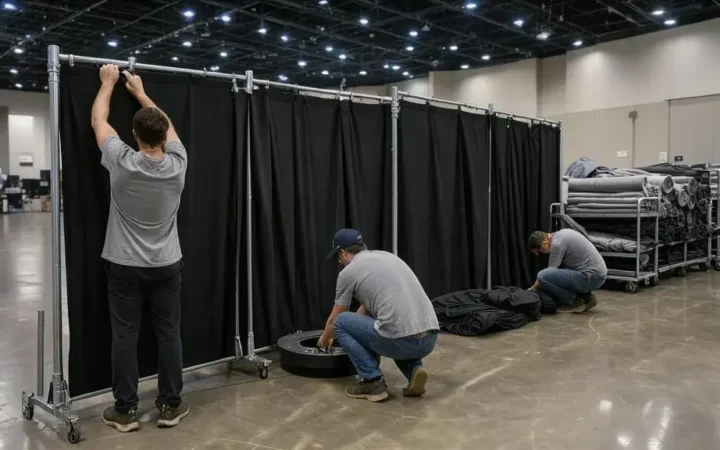
Pipe and drape
Production & AV
Adjustable metal uprights and bases with fabric panels, used to create walls, backdrops and hide storage.
Read more
Attrition
Business & Legal
A contract clause charging you if you use fewer hotel rooms or catering covers than you committed to.
Read more
Cocktail rounds
Venue & Layout
High (standing) tables, 30 inches across, for receptions with no assigned seating.
Read more