A short act that starts a program and sets the energy.
Read the transcript
Opener.
A short act that starts a program and sets the energy.
How it works in practice.
An opener has one job: change the room from arriving to watching.
Guests walk in carrying the noise of the cocktail hour.
How to handle it.
Place the opener immediately before the welcome, with lights already dimmed and the MC ready to walk on as the applause lands.
Agree a clean, rehearsed handoff: music out, lights shift, MC on mic.
Questions to ask.
How much floor or stage space does the piece need, and what surface?
Is there any rigging? If so, who is the insured rigger, and what is the rated load of the point?
More detail, examples and common mistakes are on this page, below the video.
How it works in practice
An opener has one job: change the room from arriving to watching. Guests walk in carrying the noise of the cocktail hour. A short burst of visual spectacle gets heads turned toward the stage so the first speaker does not have to fight for attention. That is why movement-based acts work best here: a Cyr wheel, an aerial act, a dance crew or a drum line. Talking acts tend to need a settled room, which the opener is supposed to create.
Keep it short. Five to eight minutes is the natural length. Past ten minutes an opener stops being a curtain-raiser and starts competing with the headliner.
How to handle it
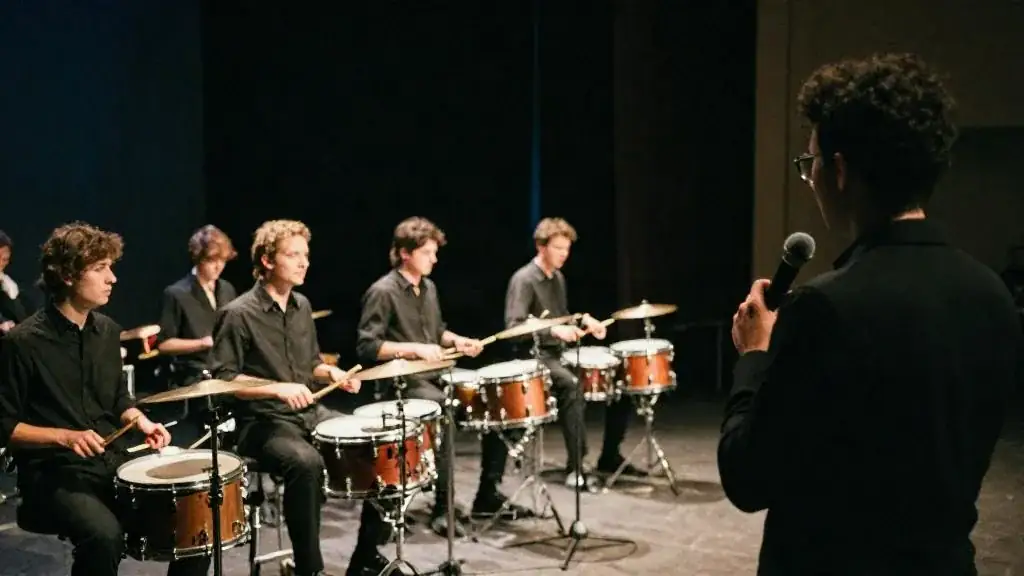
- Place the opener immediately before the welcome, with lights already dimmed and the MC ready to walk on as the applause lands.
- Agree a clean, rehearsed handoff: music out, lights shift, MC on mic.
- Confirm the floor or stage surface suits the act. Floor acts need a hard, level surface and clear space; aerial acts need rigging approved by the venue.
- Ask for a walk-through or cue-to-cue in the afternoon, even if the performer says it is not needed.
- Put the opener on the production schedule, not only the run of show, so the crew knows when the floor must be clear.
Questions to ask
- How much floor or stage space does the piece need, and what surface?
- Is there any rigging? If so, who is the insured rigger, and what is the rated load of the point?
- Does the act bring its own music file, and in what format?
- What lighting state does it need to start and finish?
- Can it be shortened to four minutes if the program runs late?
In Ontario and the GTA
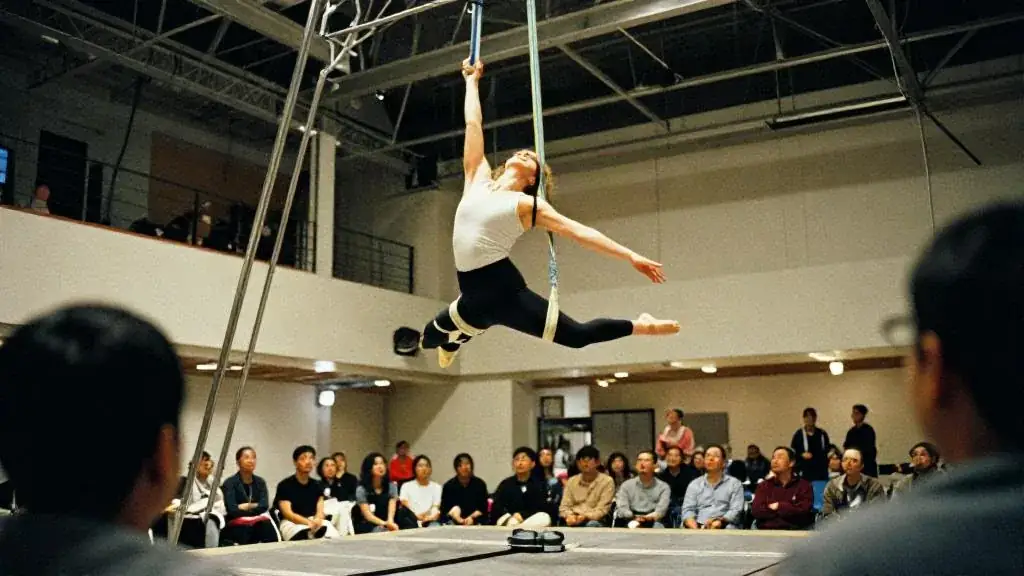
Aerial openers are popular in GTA hotel ballrooms, but plenty of rooms lack certified points. As a working rule, lyra and silks need a point rated for the dynamic load, typically at least 1,000 lb (450 kg) working load confirmed by an engineer, and a ceiling of 4.5 to 5 m at minimum, with 6 m or more preferred. Where the ceiling is too low, a floor act is the safer choice. An aerial duo act runs a typical GTA range, 2026, of $1,500 to $4,000 plus rigging.
Why it matters
Six minutes of spectacle (Cyr wheel, aerial, dance) before the welcome works better than a video.
Example
A Cyr wheel opener leads into the CEO's welcome.
Common mistakes
- An opener longer than ten minutes
Related guides, venues and vendors

Aerial silks
Entertainment
An aerial act performed on two lengths of fabric suspended from a certified rigging point.
Read more
Sightlines
Venue & Layout
The lines of view from seats to the stage, screen or ceremony point.
Read more
Roaming entertainment
Entertainment
Acts that move among guests rather than performing from a stage: magicians, stilt walkers, characters, caricaturists.
Read more