A large single steel ring the performer spins and rolls inside on the floor.
Read the transcript
Cyr wheel.
A large single steel ring the performer spins and rolls inside on the floor.
How it works in practice.
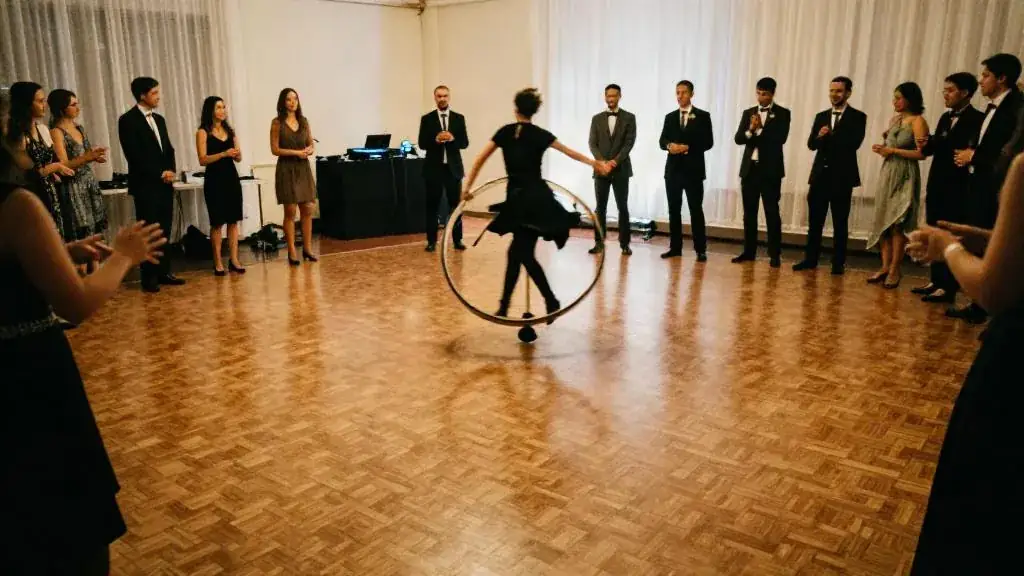
The performer stands inside a large steel ring, roughly their own height in diameter, and spins, rolls and spirals it across the floor.
Nothing is rigged, so a Cyr wheel works in rooms where aerial acts cannot: low ceilings, heritage buildings, hotels without rated points.
Worked numbers.
A 150-guest wedding usually gets a 6 by 6 m floor by the dance floor sizing rule.
That just fits the circle with no margin, so either rent a larger floor for the night or pull the nearest tables back.
How to handle it.
Send the venue the performer's floor requirements and ask what the floor is made of.
Check rented dance floor panels are locked flat; a raised seam can catch the wheel.
More detail, examples and common mistakes are on this page, below the video.
How it works in practice
The performer stands inside a large steel ring, roughly their own height in diameter, and spins, rolls and spirals it across the floor. Nothing is rigged, so a Cyr wheel works in rooms where aerial acts cannot: low ceilings, heritage buildings, hotels without rated points. What it does need is floor. The wheel travels, and a performer cannot stop a fast spiral on command if a guest steps into the circle.
The act is short and high energy. As an opener it runs five to eight minutes to music, which is long enough to change the mood of a room and short enough to keep the program moving. It also works at the opening of the dance floor.
Worked numbers
| Need | Planning figure |
|---|---|
| Clear circle | 6 m diameter |
| Matching dance floor | 6 × 6 m (20 × 20 ft) at minimum; 7 × 7 m is safer |
| Buffer to first row of tables | Roughly 1 m beyond the circle |
| Floor | Hard, level, clean, no carpet, no gaps between panels |
| Set length as an opener | 5–8 minutes |
A 150-guest wedding usually gets a 6 × 6 m floor by the dance floor sizing rule. That just fits the circle with no margin, so either rent a larger floor for the night or pull the nearest tables back.
How to handle it
- Send the venue the performer’s floor requirements and ask what the floor is made of.
- Check rented dance floor panels are locked flat; a raised seam can catch the wheel.
- Ask whether the venue has concerns about marks on a finished floor, and how the wheel is coated.
- Clear the circle before the cue: no chairs, cables or photographers inside it.
- Put one person in charge of keeping guests back while the act runs.
- Light the floor with a wash, not just the stage, so the act is visible from every table.
Questions to ask

- What is the smallest space you can perform in safely?
- Do you bring your own music, and who plays it?
- Can the routine be shortened to fit before a speech?
- Do you carry liability insurance and can you send a certificate?
Related tools
Plan the floor with the venue capacity calculator, check sightlines, and place the cue in the run-of-show template.
Why it matters
Floor-based spectacle with no rigging; needs a 6 m clear circle and a hard, level floor.
Example
A Cyr wheel opener on a ballroom dance floor.
Common mistakes
- Carpeted floors (the wheel will not roll)
Related guides, venues and vendors

Aerial silks
Entertainment
An aerial act performed on two lengths of fabric suspended from a certified rigging point.
Read more
Processional
Weddings & Cultural
The entrance of the wedding party and the couple at the start of a ceremony.
Read more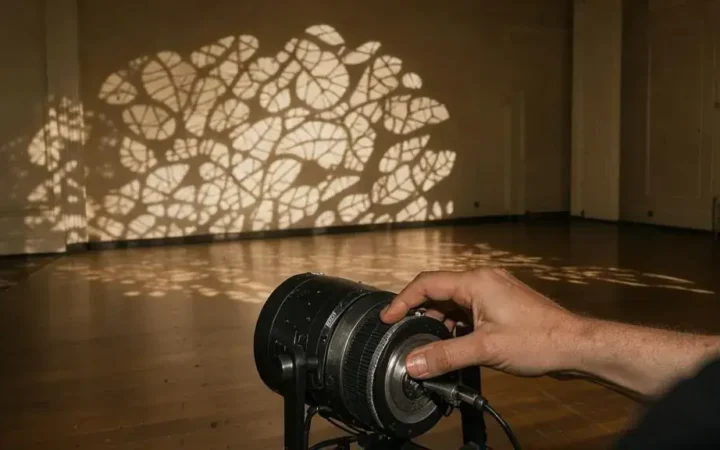
Gobo
Production & AV
A stencil placed in a lighting fixture to project a pattern or logo.
Read more