Plated: each guest served an individual plate per course. Family style: platters shared at the table.
Read the transcript
Plated versus family style.
Plated: each guest served an individual plate per course.
Family style: platters shared at the table.
How it works in practice.
Plated service runs on a clock.
The kitchen fires each course for the whole room, servers work in teams by section, and the banquet captain calls the next course when tables are cleared.
Worked numbers.
A 120-guest wedding compared both ways, using 72-inch rounds:
For per-plate pricing, the typical GTA range for 2026 is 65 to 120 dollars at a banquet hall and 95 to 180 dollars at a downtown hotel, before tax and service charge.
Questions to ask.
Can the kitchen do a duet plate instead of a choice of entrée?
Are family-style platters refilled, and is there a cap?
More detail, examples and common mistakes are on this page, below the video.
How it works in practice
Plated service runs on a clock. The kitchen fires each course for the whole room, servers work in teams by section, and the banquet captain calls the next course when tables are cleared. A typical ratio for plated service is one server per two tables of ten. Choice-of-entrée menus add work: each guest needs a marker on the place card so the server delivers the right plate without asking, which is exactly what dietary codes do.
Family style replaces individual plates with platters for each table. Servers drop the platters, guests pass them, and the table refills on request. It feels generous and starts conversation, but it needs room on the table for platters, which is why a table that would seat ten plated usually seats eight family style. It also takes longer to clear, so the run of show needs more slack between courses.
Worked numbers
A 120-guest wedding compared both ways, using 72-inch rounds:

| Item | Plated, rounds of 10 | Family style, rounds of 8 |
|---|---|---|
| Tables | 12 | 15 |
| Extra table sets (typical GTA range, 2026: $60–$120 each) | None | 3, about $180–$360 |
| Extra floor (roughly 11 m² per table) | None | About 33 m² |
| Food ordered | Base | About 15% more |
| Course timing (typical) | Fixed by kitchen | Add 10–15 minutes per course |
For per-plate pricing, the typical GTA range for 2026 is $65–$120 at a banquet hall and $95–$180 at a downtown hotel, before tax and service charge. Family style is often quoted at the upper end.
Questions to ask
- Can the kitchen do a duet plate instead of a choice of entrée?
- Are family-style platters refilled, and is there a cap?
- How are guests with allergies served at a family-style table?
- Does the room still fit the dance floor with the extra tables?
Related tools
Check the extra tables with the venue capacity calculator and price both options in the event budget calculator. The BEO should state the service style in plain words.
Why it matters
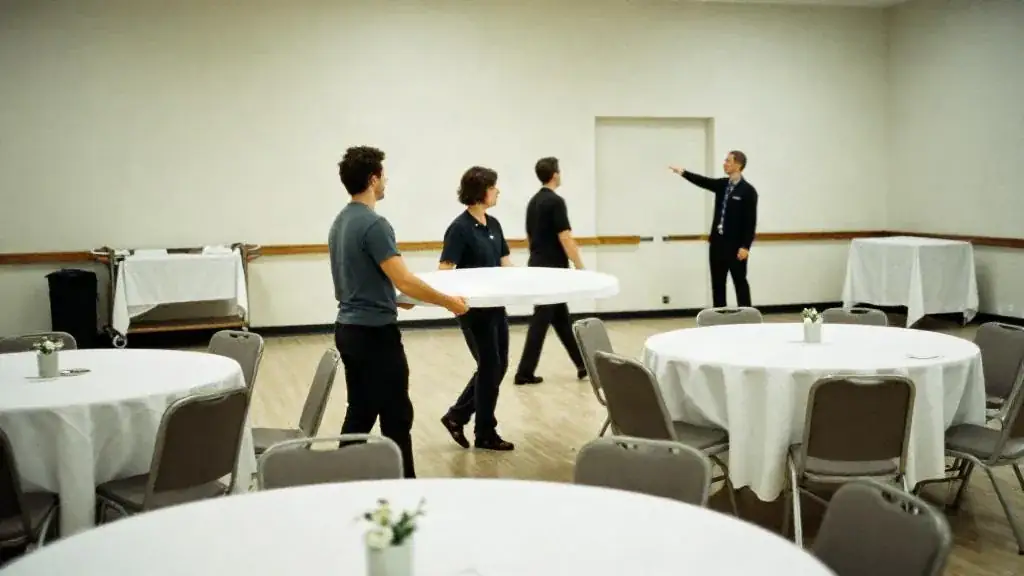
Plated controls portions and timing; family style feels warmer and needs bigger tables and 15% more food.
Example
A 120-guest wedding chooses family style on 72-inch rounds of 8.
Common mistakes
- Family style on a 60-inch round of 10 (no room for platters)
Related guides, venues and vendors
Force majeure
Business & Legal
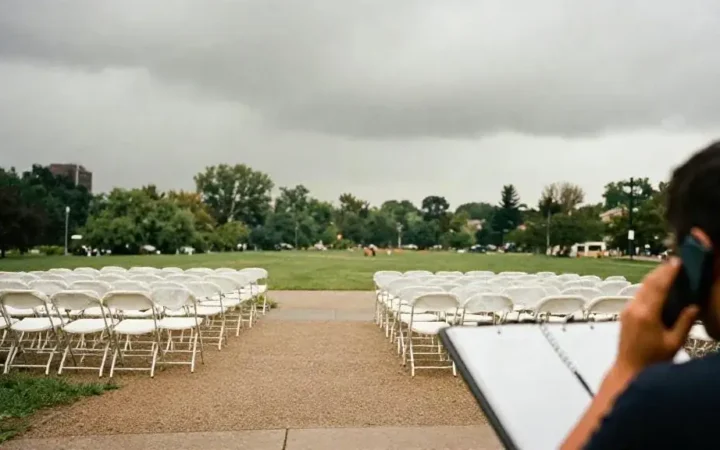
A clause that excuses performance when extraordinary events outside either party's control (storms, strikes, public-health orders) make the event impossible.
Read more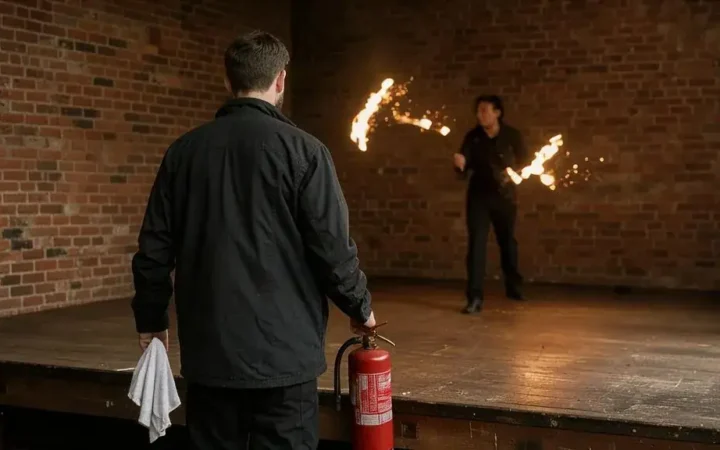
Fire watch
Safety & Permits
A trained person assigned to watch for fire hazards during an event, required when alarms are bypassed or open flame or pyro…
Read more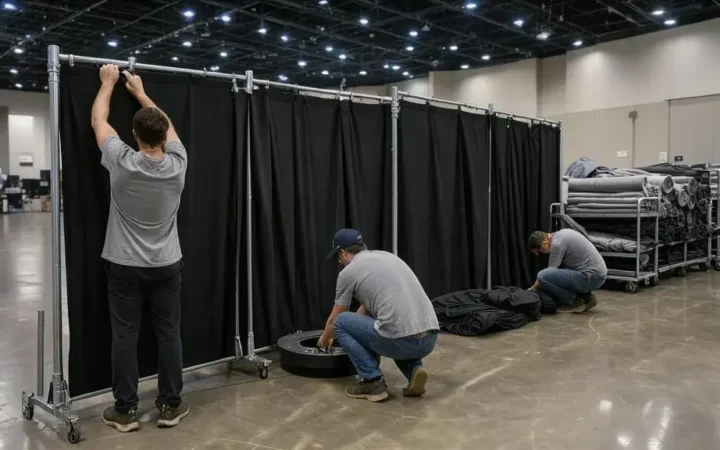
Pipe and drape
Production & AV
Adjustable metal uprights and bases with fabric panels, used to create walls, backdrops and hide storage.
Read more