Trade show entertainment is not there to entertain. It is there to stop the right people, hold them for ten minutes, deliver your message, and hand them to a rep with a reason to talk. Anything that does the first three without the fourth is a crowd, not a lead.
Read the transcript
Trade show entertainment ideas.
Trade show entertainment is not there to entertain.
It is there to stop the right people, hold them for ten minutes, deliver your message, and hand them to a rep with a reason to talk.
Scheduled micro-shows: the format that works.
A trade show magician or sales presenter runs an 8 to 12 minute show on a fixed schedule, every 30 minutes off the hour, during the hours the aisle is busiest.
In our experience a well-placed show draws twenty to forty people, and the routine is written around the product: the three talking points the sales team wants every visitor to hear are built into the tricks, the giveaway is the finale, and the last line sends the audience to the reps standing at the edge.
Other draws that pull their weight.
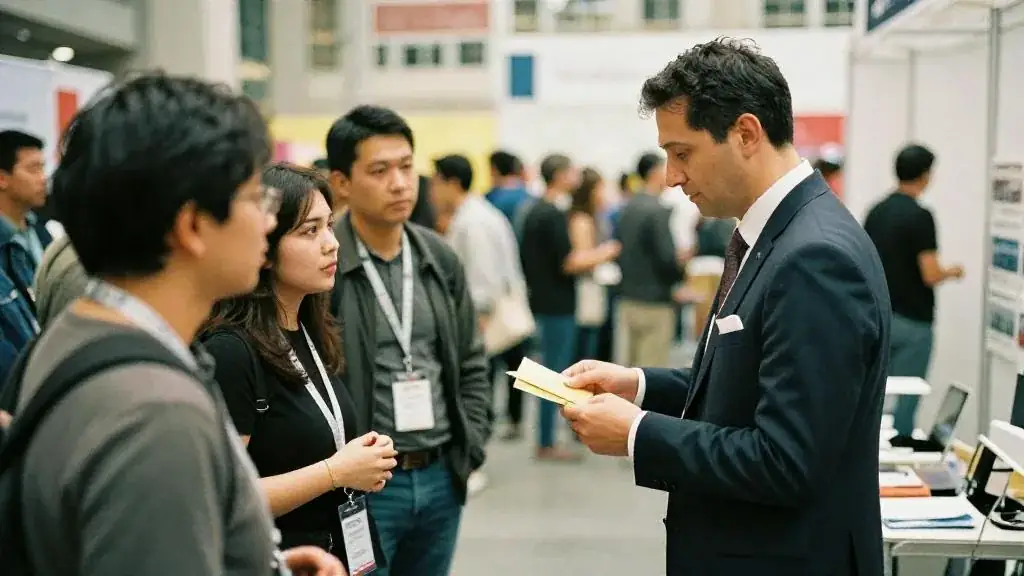
Mentalist: quieter and more corporate in tone than a magician; strong for professional-services and technology shows where the audience is senior.
Professional presenter or demo host: for a product that genuinely demonstrates well, a trained presenter on a 10-minute loop can out-perform a magician because the demo is the show.
What to avoid.
Exhibitor manuals set sound limits and neighbours complain; a performer who works at conversational volume with a small amplifier is fine, a DJ is not.
Anything that blocks the aisle. Security will stop it and the organizer will remember.
Timing and staffing.
Run shows during peak traffic, usually late morning and early afternoon; skip the first half hour after doors and the last hour of the final day unless the floor is still busy.
One performer can sustain roughly twelve to sixteen shows across a full day with aisle work in between; a two-performer team covers a 20 by 20 island with shows at both ends.
Typical GTA prices, 2026.
Trade show magician or sales presenter, full show day: roughly 1,500 to 5,000, dollars with lower per-day rates on multi-day bookings.
Close-up magician working the aisle only, two hours: 600 to 1,500. dollars
The full guide, with tables and checklists, continues below this video.
Scheduled micro-shows: the format that works
A trade show magician or sales presenter runs an 8–12 minute show on a fixed schedule, every 30 minutes off the hour, during the hours the aisle is busiest. In our experience a well-placed show draws twenty to forty people, and the routine is written around the product: the three talking points the sales team wants every visitor to hear are built into the tricks, the giveaway is the finale, and the last line sends the audience to the reps standing at the edge. Between shows the performer works the aisle with close-up magic, pulling people toward the booth for the next start time.
What makes it a sales tool rather than a gimmick:
- A brief. Send the performer the product brief, the three talking points, the qualifying question and the call to action at least six weeks out. A good trade show magician will write the routine around them and rehearse it with your team at move-in.
- A hand-off. A rep stands at the end of every show. The performer closes by introducing them by name and pointing the audience to the scanner or demo.
- A schedule on the run of show. Start times go on a sign at the booth and in the pre-show emails. Returning crowds are easier than new ones.
- The sightline. The show point faces the aisle, the performer stands inside the booth line so the crowd stands on your carpet, and the back wall behind them carries the one message.
His listings in the Directory carry a visible disclosure and receive no ranking preference; compare him with other performers on the same terms.
Other draws that pull their weight
- Mentalist: quieter and more corporate in tone than a magician; strong for professional-services and technology shows where the audience is senior. See mentalism.
- Professional presenter or demo host: for a product that genuinely demonstrates well, a trained presenter on a 10-minute loop can out-perform a magician because the demo is the show.
- Caricaturist or live illustrator: a five-minute sitting with your logo on the paper is a giveaway that goes on a fridge; the queue stands in your booth and the reps work it.
- Espresso bar or smoothie bar: a barista and a good machine are a draw in any hall with bad coffee. Check the show’s catering exclusivity first; many organizers restrict food and drink to the venue’s caterer.
- Games and prize wheels: cheap and effective for consumer shows, weaker for B2B because they attract everyone rather than buyers. Under Ontario rules a prize draw at a booth is a contest, not a lottery, as long as there is no purchase or payment to enter; keep the ballot simple and add a consent line for your lead list.
- Photo moments and video booths: useful when the shareable image carries your product, pointless when it carries only your logo.
- VR and interactive screens: a draw for a technology audience; budget for a host, because an unattended headset is an unused headset.
What to avoid
- Loud acts. Exhibitor manuals set sound limits and neighbours complain; a performer who works at conversational volume with a small amplifier is fine, a DJ is not.
- Anything that blocks the aisle. Security will stop it and the organizer will remember.
- Costumed characters and models without a script. They attract phones, not buyers.
- Performers who have not been briefed on the product. A funny show with no message is a gap in the sales day.
Timing and staffing
Run shows during peak traffic, usually late morning and early afternoon; skip the first half hour after doors and the last hour of the final day unless the floor is still busy. One performer can sustain roughly twelve to sixteen shows across a full day with aisle work in between; a two-performer team covers a 20 × 20 island with shows at both ends. Use the entertainment hours planner to lay the schedule against the show hours, and the entertainment finder to match a format to your audience.
Typical GTA prices, 2026
- Trade show magician or sales presenter, full show day: roughly $1,500–$5,000, with lower per-day rates on multi-day bookings.
- Close-up magician working the aisle only, two hours: $600–$1,500.
- Caricaturist, per day: roughly $600–$1,500.
Every performer should supply a certificate of insurance naming the show and the venue; most organizers require it. Send the performer’s tech rider to the display house so power and a small table are in the build.
Related guides, venues and vendors
Trade show venue guide
Trade Shows & Booth Activations
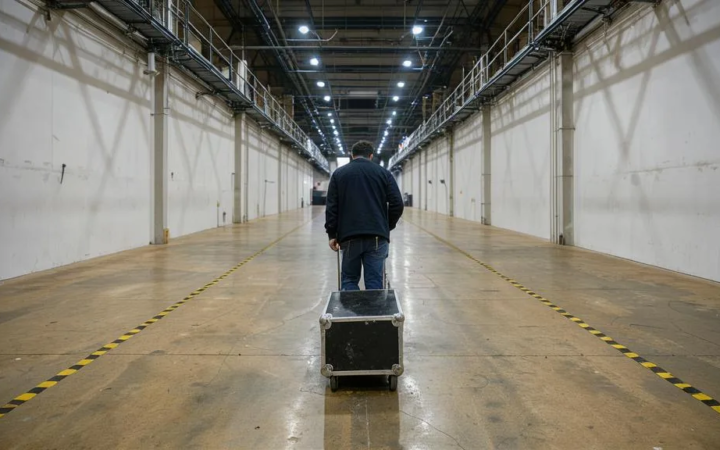
What the Toronto and GTA exhibition venues mean for an exhibitor: load-in, docks, ceiling heights, labour rules, parking, hotels and the questions…
Read more
Related articles & tools
Trade Shows & Booth Activations
Articles, tools and Academy lessons for trade shows and booth activations in Toronto and the GTA, in the order planners use them.
Read more
Dan Kranstz, magician & illusionist
Entertainment, Magicians, MCs, Mentalists · Strolling close-up and stage sets; quotes by event
The Toronto magician behind the bowler hat, and the entertainment entrepreneur behind Magic Magic and Circus Universe.
Read more