Scripted micro-shows, lead hand-off and measuring booth traffic.
Read the transcript
Trade show sales entertainment.
Scripted micro-shows, lead hand-off and measuring booth traffic.
Entertainment as a sales tool.
At a trade show, entertainment has one job: stop people walking past the booth, hold them long enough to hear one message, and hand them to a salesperson who can qualify them.
That is a different job from entertaining a gala.
Scripted micro-shows.
A trade show set is short and repeatable.
Most booths run a micro-show of 5 to 8 minutes, several times an hour, with the performer working the aisle in between to gather the next crowd.
Lead hand-off.
The crowd at the reveal lasts about 30 seconds.
Plan exactly what happens in those seconds.
Measuring booth traffic.
Agree the measures with the client before the show, and keep them simple.
Crowd size per show. A booth staffer counts heads at each reveal and logs it with the time.
Worked example: the Harbour Gala sponsor's booth.
The Harbour Gala's presenting sponsor, a medical-technology firm, watched the mentalist set before the paddle raise and asked the planner to book a similar act for its booth at a two-day Toronto healthcare trade show in the spring.
The planner used the entertainment finder with the format set to trade show, which returned close-up magicians and mentalists, and checked the directory listings (founder-owned listings carry a visible disclosure and no ranking preference).
That is the lesson. The worksheet and the quiz are just below this video.
Entertainment as a sales tool
At a trade show, entertainment has one job: stop people walking past the booth, hold them long enough to hear one message, and hand them to a salesperson who can qualify them. That is a different job from entertaining a gala. The act is not the point; the conversation after it is. Booked well, a performer at a booth is one of the few things that reliably creates a crowd in an aisle. Booked badly, it is a crowd that watches, claps and walks away.
Scripted micro-shows
A trade show set is short and repeatable. Most booths run a micro-show of 5 to 8 minutes, several times an hour, with the performer working the aisle in between to gather the next crowd. Close-up magicians and mentalists are the most common choice because they need no stage and their tricks can carry a message. Stilt walkers and roaming characters work the aisles to drive traffic to a show time.
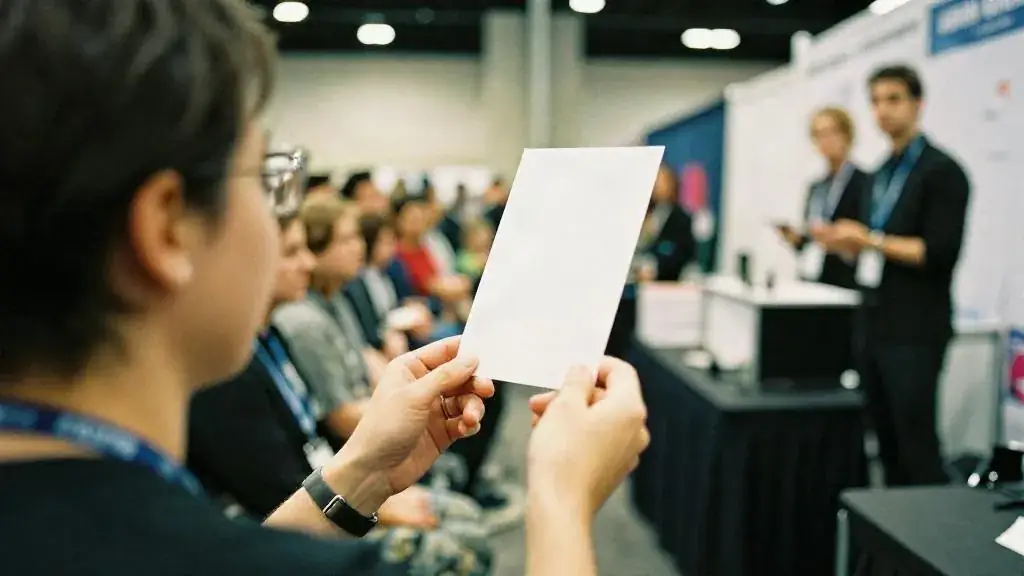
A good micro-show has a structure:
- The pull (30 seconds). A visual moment in the aisle that makes people stop.
- The setup (1 to 2 minutes). A volunteer from the crowd, a simple premise.
- The message (1 to 2 minutes). The trick is built around the client’s one sales point. A mentalist “predicting” the biggest problem in the industry; a magician making a messy pile of paperwork disappear.
- The reveal (30 seconds). The surprise, the applause.
- The hand-off (30 seconds). The performer points the crowd to the sales team: “My colleagues here can show you how it works in real life.”
The script is written with the client’s marketing team weeks before, approved by them, and rehearsed with the booth staff so they know when the hand-off comes. Brief the performer in full (lesson 5): the product, the one message, who the buyers are, and what the performer must never claim about the product.
Lead hand-off
The crowd at the reveal lasts about 30 seconds. Plan exactly what happens in those seconds.
| Element | What works |
|---|---|
| Staff position | Two or three sales staff standing at the edge of the crowd, not behind a table |
| The prompt | The performer names the staff and the next step (“scan your badge with Priya for the demo”) |
| The capture | Badge scanner or a short form on a tablet; a qualifying question or two, nothing more |
| The reason to stay | A demo, a meeting booking, a draw entry (a draw for a prize may be a lottery; check with the client’s legal team before running one), or a takeaway |
| Privacy | Tell people what you will do with their details. Under PIPEDA, collect only what you need, get consent, and protect it. |
Measuring booth traffic
Agree the measures with the client before the show, and keep them simple.
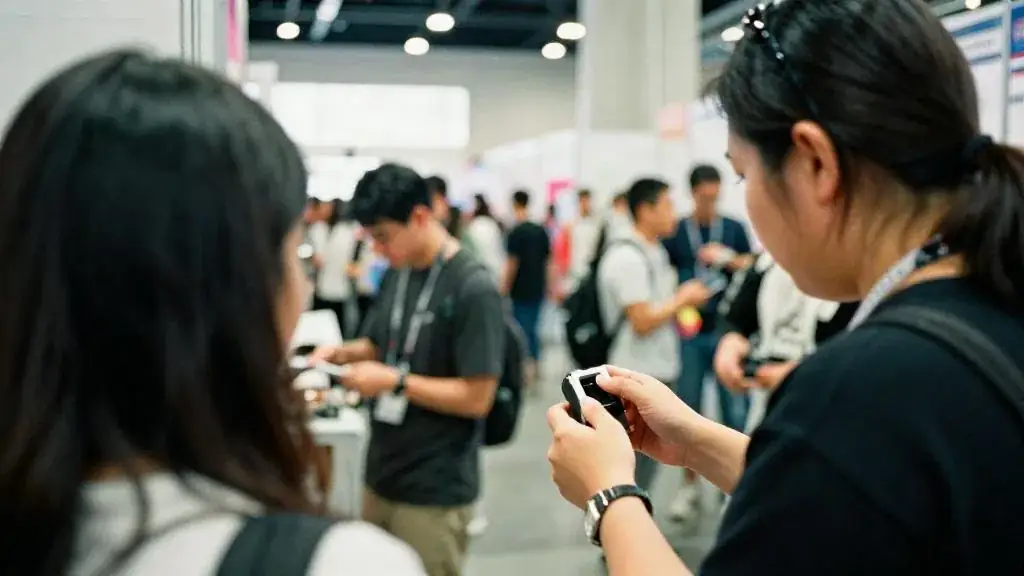
- Crowd size per show. A booth staffer counts heads at each reveal and logs it with the time.
- Badge scans per hour, split into hours with shows and hours without. The difference is the clearest signal of what the act is worth.
- Qualified leads. Scans that answered the qualifying question in a way sales cares about.
- Meetings booked at the booth or within two weeks.
- Cost per qualified lead. Performer fee plus HST, divided by qualified leads. The event ROI calculator works this out.
Do not compare the result to an industry average; compare it to the same booth at the same show last year, or to hours without the performer.
Worked example: the Harbour Gala sponsor’s booth
The Harbour Gala’s presenting sponsor, a medical-technology firm, watched the mentalist set before the paddle raise and asked the planner to book a similar act for its booth at a two-day Toronto healthcare trade show in the spring.
The planner used the entertainment finder with the format set to trade show, which returned close-up magicians and mentalists, and checked the directory listings (founder-owned listings carry a visible disclosure and no ranking preference). The sponsor chose a mentalist who had a corporate trade-show reel. The typical GTA range for a close-up performer is $600 to $1,500 for two hours; for two full show days the quote was a day rate, confirmed in writing, plus HST.
The micro-show was 6 minutes, three times an hour. The mentalist asked a volunteer to think of the biggest delay in their hospital’s imaging workflow, and revealed a prediction printed on a card: the exact problem the sponsor’s software addresses. The hand-off named two sales reps at the edge of the crowd, who scanned badges and asked one qualifying question about the visitor’s role.
Results across two days: an average of 22 people per show by head count, and badge scans in hours with shows roughly three times those in the two hours the performer was on break. Qualified leads and meetings booked went into the sponsor’s report. The sponsor booked the act for the following year before the second day ended.
Common mistakes
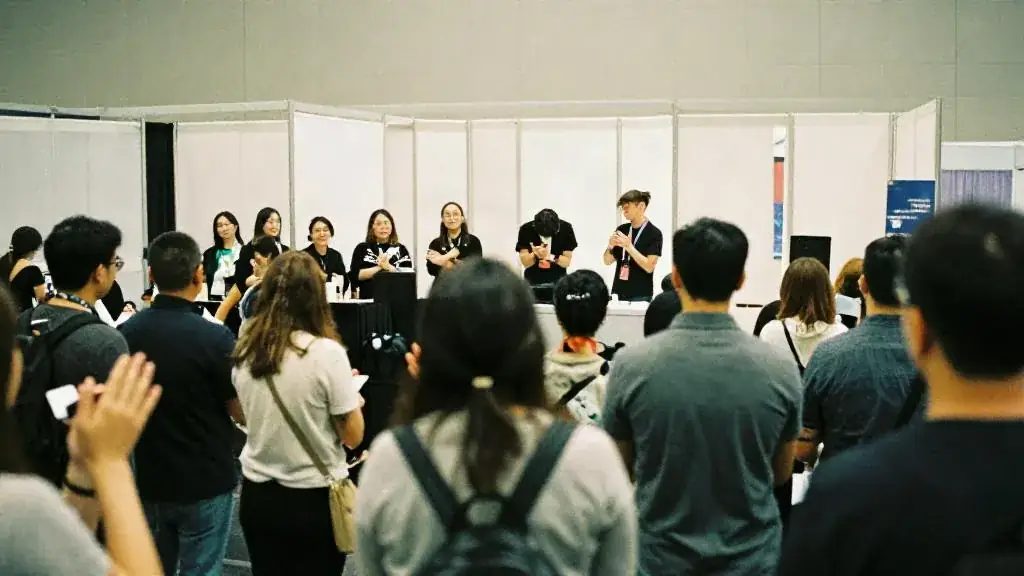
- A great act with no hand-off. A crowd that claps and leaves.
- Sales staff behind a table at the back of the booth.
- A message the performer improvises instead of the one the client approved.
- A performer who makes claims about the product. Script it and approve it.
- Running a prize draw without checking whether it is a lottery under Ontario rules.
- No count of traffic with and without the act, so nobody can say if it worked.
Worksheet
Apply this lesson to a real or practice event using the worksheet, then mark the lesson complete to track your progress toward the certificate.
Related guides, venues and vendors
Outdoor and tented events
Module 4: Venues · 15 min
Tents over 60 m² need permits in most Ontario municipalities. Learn tent sizing, flooring, power, washrooms, weather plans and the park permit…
Read more
Invitations, RSVPs and response rates
Module 9: Marketing & Promotion · 15 min
Timing, wording, digital vs print, reminders, and how to get RSVPs back on time.
Read more
Pricing models and packages
Module 12: The Business of Event Planning · 15 min
Day-of, partial, full-service and consulting packages that sell in the GTA, with price ranges and what each includes.
Read more