Audience, message, timing, do-not-mention list, and the MC intro.
Read the transcript
Writing the performer brief.
Audience, message, timing, do-not-mention list, and the MC intro.
The brief is the performance you get.
A good performer adapts to the room.
A great performer adapts to the room they were told about.
What goes in the brief.
The do-not-mention list.
This is the most valuable part of the brief and the part clients most often forget.
Ask the client directly: is there anything the performer must not mention, joke about or invite on stage?
Writing the MC intro.
The MC introduces every stage act.
A strong intro takes 20 to 40 seconds and does three things: tells the room why this act is here tonight, gives the performer's name clearly, and starts applause.
Worked example: the Harbour Gala mentalist brief.
Event: the Harbour Gala, Thursday in November, raising funds for a new imaging suite at a Toronto hospital.
Audience: 200 donors and sponsors, mostly 40s to 70s, black tie optional, seated at 20 rounds of 10.
That is the lesson. The worksheet and the quiz are just below this video.
The brief is the performance you get
A good performer adapts to the room. A great performer adapts to the room they were told about. The performer brief is a one- or two-page document that tells the act who they will be in front of, what the event is for, where they fit in the program, what to avoid, and how they will be introduced. Planners who skip it get a generic show. Planners who write it get a set that feels made for the event.
What goes in the brief
| Section | What to include |
|---|---|
| Event and purpose | Name, date, host organization, why the event exists in one sentence. |
| Audience | Number, ages, mix, dress code, language, culture, whether children will be there, the mood you expect. |
| Message | The one thing the client wants guests to feel or remember. A good performer will weave it in without making it a sales pitch. |
| Timing | Arrival, set-up, set start, set length, hard end, what happens immediately before and after. |
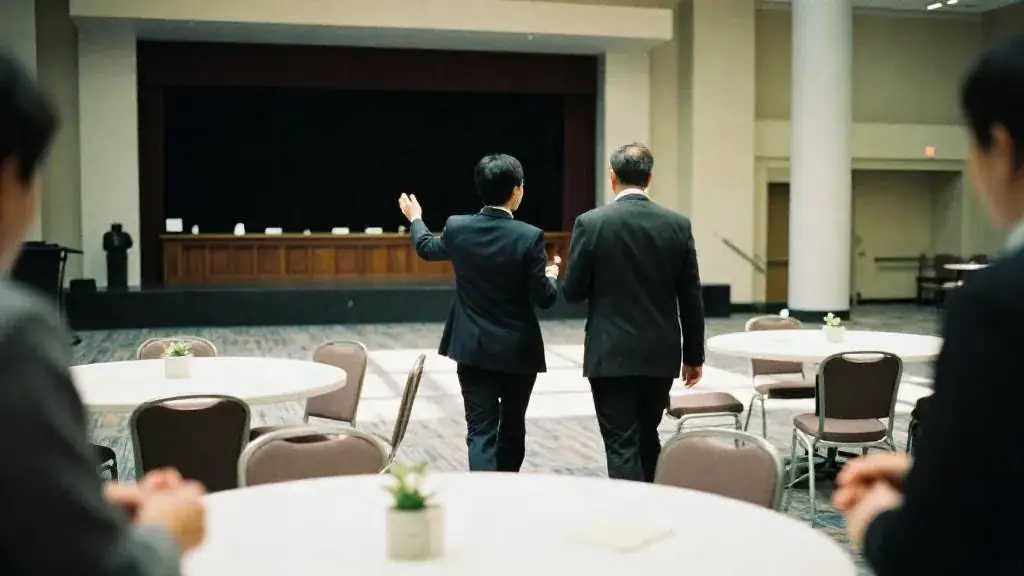
| Room | Floor plan with the stage, the tables, the bar, the pillars, the green room and the load-in route. |
| Key people | Who the host is, who the VIPs are, who might be invited on stage, who must not be. |
| Do-not-mention list | Topics, names and jokes to avoid. |
| MC intro | The exact words the MC will read. |
| Contacts | Planner on the day (mobile), venue contact, AV lead. |
The do-not-mention list
This is the most valuable part of the brief and the part clients most often forget. Ask the client directly: is there anything the performer must not mention, joke about or invite on stage? Common items:
- Recent layoffs, a restructuring, a lawsuit or a bad news story.
- A board member’s recent loss or illness.
- Competitors by name.
- Specific health conditions at a medical charity (the cause is serious; avoid jokes about it).
- Anyone who must not be picked as a volunteer: the CEO who hates being on stage, a guest with a disability who has asked not to be singled out, a major donor whose privacy matters.
- Alcohol jokes at a dry event; religion or politics at almost any event.
Keep it short and specific. A long list of vague “sensitive topics” is ignored. Three clear lines are followed.
Writing the MC intro
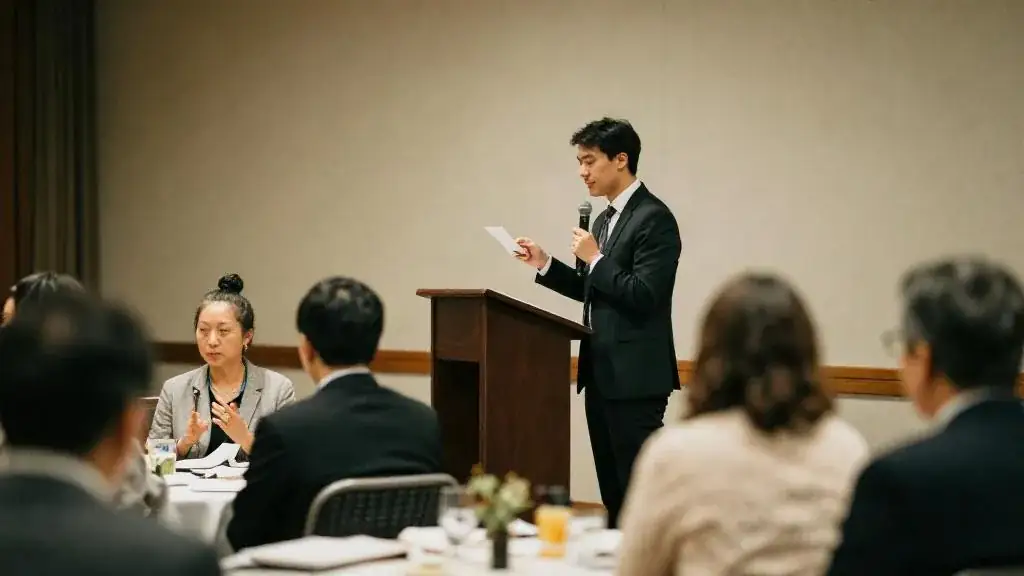
The MC introduces every stage act. A strong intro takes 20 to 40 seconds and does three things: tells the room why this act is here tonight, gives the performer’s name clearly, and starts applause.
- Ask the performer for their preferred intro. Most have one.
- Edit it to fit the event: one line connecting the act to the evening.
- Cut credits nobody cares about. One credit is enough.
- End on the name, then “please welcome”.
- Print it in large type on a card for the MC and send a copy to the performer so they know what the room has heard.
- Agree the outro: the MC thanks the performer by name and moves to the next segment.
Put the intro into the run of show on the run-of-show template as its own cue, with the music and lighting change.
Worked example: the Harbour Gala mentalist brief
Event: the Harbour Gala, Thursday in November, raising funds for a new imaging suite at a Toronto hospital. Audience: 200 donors and sponsors, mostly 40s to 70s, black tie optional, seated at 20 rounds of 10. Mood: warm and generous by the time you go on, after dinner and a short video.
Message: “Small things add up.” The foundation wanted guests to feel that every gift matters, whatever the size. The mentalist planned a closing prediction built around the idea of numbers adding up, without mentioning money.
Timing: arrive 7:30, sound check at the stage during dinner with the AV lead, set starts about 8:30 after mains are cleared, 25 minutes, hard end at 8:55. Straight after: a patient speaker for 4 minutes, then the auctioneer and the paddle raise. End the set on a quiet high; please do not leave the room loud and laughing.
Do-not-mention: the hospital’s recent news story about wait times; any jokes about illness or doctors; the foundation chair (does not want to go on stage); table 1, the presenting sponsor’s CEO, who asked not to be a volunteer.
MC intro, 30 seconds: “Tonight is about what happens when lots of people each do a little. Our next guest has spent his career showing audiences that they are more connected than they think. He has performed for corporate audiences across Canada, and tonight he is here for this room. Please welcome…” The mentalist approved it a week before.
The two strolling magicians got a shorter brief: the audience, the times, the floor plan with the silent auction and the pillars marked, the same do-not-mention list, and a note to leave tables alone once the first course was down.
Common mistakes
- No brief, then surprise when the act does their wedding material at a corporate gala.
- Forgetting to tell the performer what comes right after them.
- A do-not-mention list that is ten vague lines long.
- An MC intro that reads a full biography.
- Sending the brief the night before.
Worksheet
Apply this lesson to a real or practice event using the worksheet, then mark the lesson complete to track your progress toward the certificate.
Related guides, venues and vendors
Module 7 workshop: full production plan
Module 7: Logistics & Operations · 15 min
For the gala: master timeline, run of show, load-in schedule, transport plan, seating and staffing in one package.
Read more
Contingency and the reserve
Module 3: Budgeting · 15 min
Ten percent, held by the planner, released only for scope that was not in the brief. Learn what it covers, what it…
Read more
Reading a floor plan and a BEO
Module 1: Foundations · 15 min
Two documents decide whether a room works. Learn to read scale, capacities, egress and the BEO line items that hide costs.
Read more