Ten percent, held by the planner, released only for scope that was not in the brief. Learn what it covers, what it does not, and how to report it.
Read the transcript
Contingency and the reserve.
Ten percent, held by the planner, released only for scope that was not in the brief.
Learn what it covers, what it does not, and how to report it.
What contingency is for.
Contingency is the money you will spend on things that were not in the brief: a tent when the forecast turns, a second bartender when the RSVP list grows, overtime when the speeches run long.
It is not a slush fund for upgrades and it is not your fee.
How much.
8 to 12 percent for most events; 10 is the default.
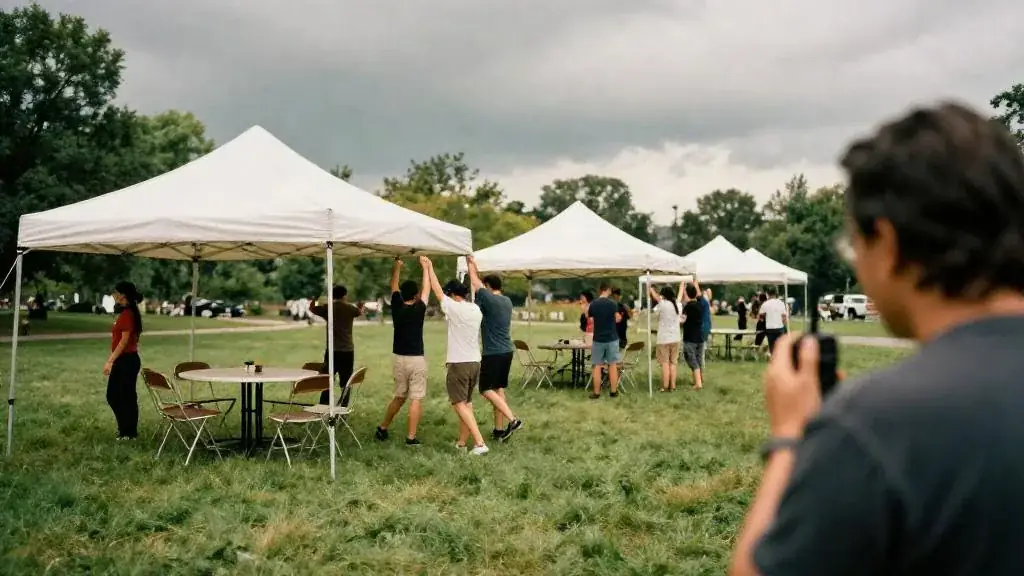
15 percent for outdoor events, first-time events, or anything with a fixed date and a long lead time (prices move).
Who holds it.
The planner, with the client's written agreement on what releases it.
Write the rule into the proposal: "Contingency of 10 percent is held by the planner and released only for costs arising from changes in scope, attendance or conditions, with the client's approval for any single item over 500. dollars"
The three triggers, with GTA examples.
The clause names three triggers.
Learn to sort every surprise into one of them, or into "not contingency", within a minute of it arriving.
Releasing it: the five-minute procedure.
Write the item, the amount including HST and the trigger (scope, attendance or conditions) on the contingency log in the budget sheet.
If it is under the approval threshold in the agreement, approve it yourself and tell the client in the next update.
That is the lesson. The worksheet and the quiz are just below this video.
What you will be able to do
- Set and defend a contingency
- Define what contingency may fund
- Report contingency use to the client
What contingency is for
Contingency is the money you will spend on things that were not in the brief: a tent when the forecast turns, a second bartender when the RSVP list grows, overtime when the speeches run long. It is not a slush fund for upgrades and it is not your fee.
How much
- 8–12 percent for most events; 10 is the default.
- 15 percent for outdoor events, first-time events, or anything with a fixed date and a long lead time (prices move).
- 5 percent for a repeat event at the same venue with the same vendors.
Who holds it
The planner, with the client’s written agreement on what releases it. Write the rule into the proposal: “Contingency of 10 percent is held by the planner and released only for costs arising from changes in scope, attendance or conditions, with the client’s approval for any single item over $500.”

The three triggers, with GTA examples
The clause names three triggers. Learn to sort every surprise into one of them, or into “not contingency”, within a minute of it arriving.
- Scope: something the brief did not include but the event now needs. An ASL interpreter requested on an RSVP. A ramp to the stage the venue cannot supply. A noise exemption permit when the client adds an outdoor cocktail hour and the city needs about four weeks to process it.
- Attendance: the headcount moves. Twenty extra covers when sponsors oversell. A second check-in station when the RSVP list passes 220. A third bartender when the venue’s ratio requires it.
- Conditions: the world changes. A tent sidewall package when the forecast turns. A generator when the venue’s power fails inspection. Overtime for the AV technician when the paddle raise runs 20 minutes long because it is going well.
Releasing it: the five-minute procedure
- Write the item, the amount including HST and the trigger (scope, attendance or conditions) on the contingency log in the budget sheet.
- If it is under the approval threshold in the agreement, approve it yourself and tell the client in the next update.
- If it is over, send the client one message: the item, the amount, the trigger, your recommendation, and the deadline for a decision. On the day, that message may be a thirty-second conversation; write it down afterward.
- Record the decision and the date beside the item.
- Update the “remaining” figure the same day. Never let the client learn the remaining figure from the final invoice.
Reporting it
Show contingency as its own line in every budget update: held, released (with reasons), remaining. Unspent contingency goes back to the client at the end, which is the moment they decide to hire you again.
What it does not cover

- The client’s own upgrades on the day (“can we add a late-night snack?”). That is a change order, priced and approved.
- Your estimating mistakes. If you under-quoted HST, that is on you.
- Vendor deposits lost to the client’s cancellation; that is the cancellation clause.
Questions to ask the client when setting it
- Has this event run before, at this venue, with these vendors? If yes, 5 percent may be enough.
- Is any part of it outdoors, or dependent on weather, traffic or a permit still to be issued? If yes, 15.
- Who can approve a release on the night, and what is their cell number? A committee cannot approve anything at 8:45 p.m.
- What single-item threshold do you want for your approval: $250, $500, $1,000?
- Should unspent contingency come back to you as a refund, as a credit against the final invoice, or as a line in next year’s budget?
Worked example
Harbour Gala: $4,000 contingency held. Released: $620 for a sign-language interpreter when a guest’s RSVP requested one (scope), $1,100 for 20 extra covers when table sponsors oversold (attendance). Returned: $2,280. The committee minutes record both.
The interpreter request arrived three weeks out through the RSVP form’s accessibility field. It is a scope item: the brief required an accessible stage and reserved seating but did not list interpretation, and under AODA practice captions or ASL are provided on request. At $620 it was over the $500 threshold, so the development officer approved it by email the same afternoon with the recommendation attached. The extra covers arrived ten days out, when two sponsors each sold a table and a half; the hotel’s per-cover price above the guarantee was the same as the contracted rate, and 20 covers at the all-in per-plate figure plus a share of the bar cap came to $1,100. It was logged as attendance and approved by the committee chair by text, which was pasted into the log. One item was refused: a request on the night to add a late-night poutine station for the volunteers. It was a good idea and an upgrade, so it was priced as a change order and the chair declined it. The remaining $2,280 appeared as a credit on the final invoice.
Common mistakes
- Spending contingency on upgrades because it is “there”. Fix: three triggers; everything else is a change order.
- Discovering at the invoice stage that contingency is gone. Fix: held, released, remaining, on every update.
- No named approver for the night. Fix: one person, one cell number, written in the run of show.
- Rounding contingency into the fee. Fix: it is the client’s money; return it or credit it.
Worksheet
Download the worksheet, complete it for your own event (or the running gala example), and keep it in your course binder. It takes about 10 minutes.

Check your understanding
Related guides, venues and vendors

Sponsorship and table sales
Specialist · Fundraisers · 15 min
Packages, pricing, the committee, and the 12-week sales calendar.
Read more
HST, gratuities and service charges in Ontario
Module 3: Budgeting · 15 min
Thirteen percent HST on most lines, 18% gratuity on food and bar at most venues, and service charges that are not gratuity.…
Read more
AGCO Special Occasion Permits
Module 8: Legal, Safety & Risk (Ontario) · 15 min
When you need one, the types (private, public, industry), how to apply, timing, signage, Smart Serve, and the rules that get events…
Read more