When you need one, the types (private, public, industry), how to apply, timing, signage, Smart Serve, and the rules that get events shut down.
Read the transcript
AGCO Special Occasion Permits.
When you need one, the types (private, public, industry), how to apply, timing, signage, Smart Serve, and the rules that get events shut down.
When you need an SOP and when you do not.
In Ontario, alcohol can only be sold or served in two situations: at a premises that holds a liquor licence, or at an event covered by a Special Occasion Permit (SOP) issued by the Alcohol and Gaming Commission of Ontario (AGCO).
A hotel ballroom, a licensed restaurant or a banquet hall with its own licence does not need an SOP; their licence covers the event and their staff run the bar.
Permit types, timing and fees.
Those lead times are minimums.
In practice, treat a public event SOP as a six-to-eight-week project because the municipal resolution has to go to a council or a delegated official first, and councils meet on their own schedule.
The rules that keep the permit alive.
Everyone who serves or sells must hold Smart Serve certification. The course is online and takes about four hours.
All liquor must be purchased under the permit from the LCBO, The Beer Store or an Ontario winery, brewery or distillery, and the receipts must be kept on site. An inspector may ask to see them against what is behind the bar.
Running a compliant bar: the practical layer.
Hire a bartending service that already works under SOPs; they will supply certified staff, know how to lay out a service area and will have their own liquor liability coverage (see the previous lesson).
Build the bar plan with the /tools/bar-alcohol-calculator/ so the LCBO order matches the permit area and the guest count.
Worked example: the Harbour Gala.
The gala is in a downtown hotel ballroom.
The hotel holds a liquor licence, so no SOP is required.
That is the lesson. The worksheet and the quiz are just below this video.
What you will be able to do
- Determine whether an SOP is required
- Apply with the right lead time
- Run a compliant bar
When you need an SOP and when you do not
In Ontario, alcohol can only be sold or served in two situations: at a premises that holds a liquor licence, or at an event covered by a Special Occasion Permit (SOP) issued by the Alcohol and Gaming Commission of Ontario (AGCO). A hotel ballroom, a licensed restaurant or a banquet hall with its own licence does not need an SOP; their licence covers the event and their staff run the bar. A community centre room, a park, a warehouse loft, a backyard or an art gallery without a licence does, as soon as alcohol appears.
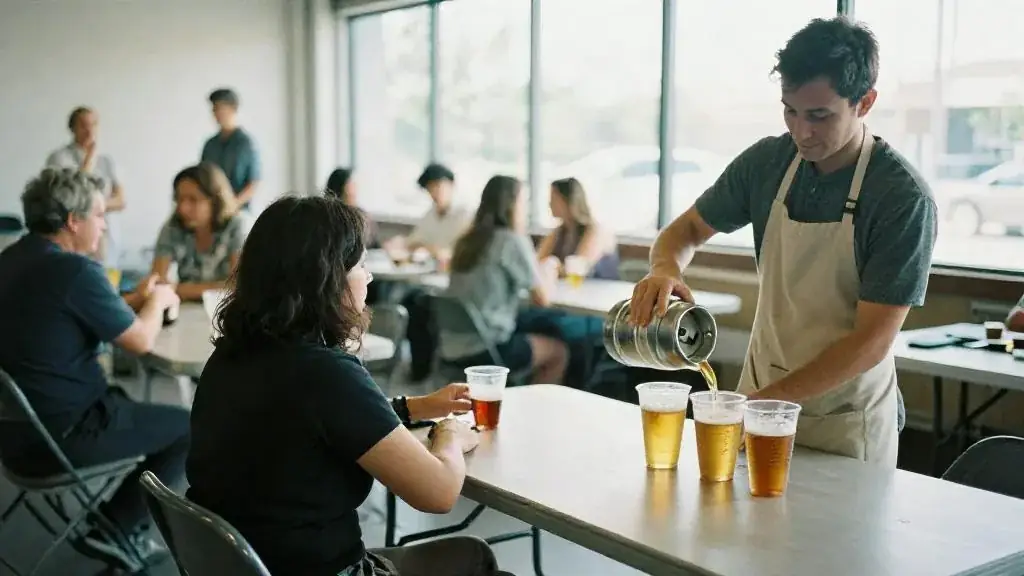
The test is simple: ask the venue whether they hold a liquor licence that covers the space you are renting. If yes, their bar, their rules. If no, you need a permit, and the permit comes with obligations that the person who signs it carries personally. Nothing in this lesson is legal advice; the AGCO publishes the current rules and fees, and they change. Check the current fee with the AGCO before you quote a client.
Permit types, timing and fees
| Type | Typical use | Apply at least | Fee (confirm current) | Extra steps |
|---|---|---|---|---|
| Private event, no sale | Wedding, family party, staff party; alcohol is free to invited guests | 10 days before | $50 per day | Invited guests only; no advertising to the public |
| Public event, sale | Fundraiser, festival, community dinner where tickets or drinks are sold | 30 days before | $150 per day | Municipal “significance” resolution or designation from the municipality |
| Large public event | 5,000 or more people per day | 60 days before | Per AGCO schedule | Municipal notification plus police and fire involvement |
| Industry promotional | Manufacturers and representatives promoting their own product | Per AGCO guidance | Per AGCO schedule | Applicant must be in the liquor industry |
Those lead times are minimums. In practice, treat a public event SOP as a six-to-eight-week project because the municipal resolution has to go to a council or a delegated official first, and councils meet on their own schedule. A fundraiser with a cash bar in an unlicensed space is a public event with sale, even if every guest bought a ticket in advance.
The rules that keep the permit alive
- Everyone who serves or sells must hold Smart Serve certification. The course is online and takes about four hours. Volunteers are not exempt; a volunteer pouring wine at a charity dinner must be certified.
- All liquor must be purchased under the permit from the LCBO, The Beer Store or an Ontario winery, brewery or distillery, and the receipts must be kept on site. An inspector may ask to see them against what is behind the bar.
- The permit itself is posted where it can be seen, usually at the bar.
- Service hours run from 11 a.m. to 2 a.m., with last call at 1:45 a.m. Earlier is always allowed; later is not.
- Service stops for anyone who shows signs of intoxication, and nobody under 19 is served. Have a plan for checking ID at a mixed-age event.
- The permit holder is responsible for the event, including the conduct of guests, and must be present or have a designate present.
- Keep alcohol inside the permitted area. Define that area on a site plan when you apply, and fence or mark it for outdoor events.
Events get shut down for mundane reasons: a server without Smart Serve, liquor bought from a cousin’s restaurant, drinks walking out into a parking lot. Inspectors do attend charity events, and a shutdown at 9 p.m. ends the fundraising night.
Running a compliant bar: the practical layer
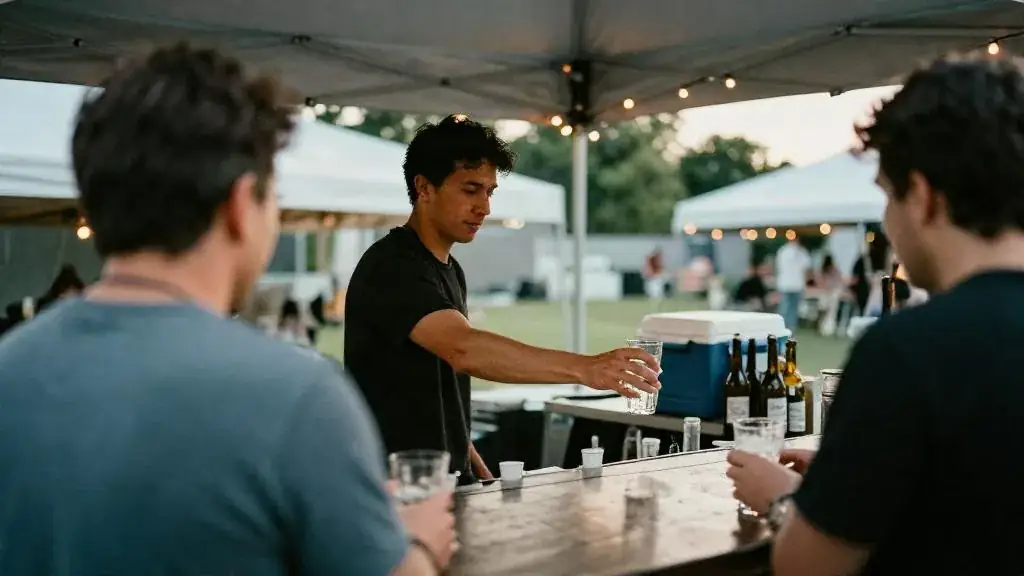
Hire a bartending service that already works under SOPs; they will supply certified staff, know how to lay out a service area and will have their own liquor liability coverage (see the previous lesson). Build the bar plan with the /tools/bar-alcohol-calculator/ so the LCBO order matches the permit area and the guest count. Keep a folder at the bar with the permit, the receipts, the Smart Serve certificates and the site plan. Post water and food near the bar. Arrange a ride-home option and announce it before last call.
For a tiered bar, where some drinks are free and others are sold, the permit must be the sale type. For a sponsor donating product, the donated liquor still needs to be purchased through an authorised channel and documented; ask the AGCO how to handle donations before accepting any.
Worked example: the Harbour Gala
The gala is in a downtown hotel ballroom. The hotel holds a liquor licence, so no SOP is required. The hotel’s bartenders are Smart Serve certified, the hotel buys the wine and spirits, and your bar conversation is about pricing and consumption, not permits. You still confirm three things with the banquet manager: that the cocktail hour bar is a hosted bar on consumption (the foundation pays per drink), that service stops when the program begins at 7 p.m. and resumes after the paddle raise, and that the hotel’s staff manage any intoxicated guest.
Now imagine the same gala moved to an unlicensed heritage building to save on the $18,000 minimum. It becomes a public event with sale (tickets sold, cash bar after dinner). You would apply at least 30 days before the Thursday in November, which means filing by early October, and you would need the City of Toronto to designate the event as municipally significant first. You would hire a bartending company, submit a site plan with a defined bar area, place the LCBO order under the permit, keep receipts in a folder at the bar, and post the $150-per-day permit. The 25-minute gap between the mentalist and first plate, when the two strolling magicians work the room, is exactly when the bar is busiest and a server without certification is most likely to be noticed. Budget for the permit, the bartending service and the liquor, and compare the total honestly against the hotel’s all-in figure before advising the client to move.
Numbers to remember
- Private event SOP: apply at least 10 days ahead; $50 per day (confirm current fee with the AGCO).
- Public event SOP: apply at least 30 days ahead; $150 per day; municipal significance resolution required.
- 5,000 or more people per day: 60 days’ notice.
- Service hours 11 a.m. to 2 a.m.; last call 1:45 a.m.
- Smart Serve: online, about four hours, required for every server including volunteers.
- Licensed venues do not need an SOP; their licence and their staff cover the event.
Worksheet
Download the worksheet, complete it for your own event (or the running gala example), and keep it in your course binder. It takes about 12 minutes.

Check your understanding
Related guides, venues and vendors
Fire, pyro, candles and performers
Module 8: Legal, Safety & Risk (Ontario) · 15 min
Open flame rules, pyrotechnic permits, fire performer requirements, extinguishers, fire watch and venue approvals.
Read more
Tools of the trade
Module 1: Foundations · 15 min
A planner needs a budget spreadsheet, a timeline, a run of show, a vendor contact sheet, a floor plan tool and a…
Read more
Module 4 workshop: choose between three venues
Module 4: Venues · 15 min
Score a hotel ballroom, a King West loft and a Vaughan banquet hall for a 220-guest corporate gala using the checklist and…
Read more