Score a hotel ballroom, a King West loft and a Vaughan banquet hall for a 220-guest corporate gala using the checklist and the capacity calculator.
Read the transcript
Module 4 workshop: choose between three venues.
Score a hotel ballroom, a King West loft and a Vaughan banquet hall for a 220-guest corporate gala using the checklist and the capacity calculator.
The workshop.
You have three venues on the shortlist for a 220-guest corporate gala on a Thursday in late November: a downtown hotel ballroom, a King West loft and a Vaughan banquet hall.
The client is a mid-sized firm celebrating a milestone year.
Building the weighted sheet.
A weighted sheet is ten criteria, each with a weight that adds up to 100, each scored 1 to 5 for each venue.
The discipline is in setting the weights before you score and not touching them afterward.
Procedure.
Agree the weights with the client before any tour. This is your protection against "but I loved the loft".
Tour all three in the same week with the same checklist. Photograph and measure as in lesson 2.
Presenting a recommendation with trade-offs.
The recommendation is one page: the score table, a ranked list, and three short paragraphs.
Each paragraph says what the venue does well, what it costs you, and what would have to be true for it to win.
Worked example: the Harbour Gala.
We ran the same sheet for the Harbour Gala's three downtown hotels, with one change to the weights: the dance floor criterion became "quiet room for the ask", because a paddle raise needs a room that can hold silence, and curfew dropped to 4 because the program ends at 10:30.
Hotel A (the committee's favourite, 420 square metres, 4.9 m ceiling, two pillars): capacity 5, cost 3 (about 24,000 dollars of the 40,000 dollars envelope on food and beverage alone), program fit 4 (pillars cost us the north wall but the east-wall stage has clean sightlines), accessibility 5, catering 4, guest access 5, curfew 4, contract 4 after negotiation, atmosphere 4, vendor friendliness 5.
That is the lesson. The worksheet and the quiz are just below this video.
What you will be able to do
- Score venues with a weighted sheet
- Present a recommendation with trade-offs
- Draft the contract questions
The workshop
You have three venues on the shortlist for a 220-guest corporate gala on a Thursday in late November: a downtown hotel ballroom, a King West loft and a Vaughan banquet hall. The client is a mid-sized firm celebrating a milestone year. The program has a 20-minute welcome and awards segment, a plated dinner, a 30-minute stage act and dancing until midnight. The envelope is $55,000 all-in. Your deliverables are a weighted score sheet, a one-page recommendation with trade-offs, and the list of contract questions for the winner.

Work through this with the venue tour checklist and the venue capacity calculator. The three venue profiles are on the worksheet.
Building the weighted sheet
A weighted sheet is ten criteria, each with a weight that adds up to 100, each scored 1 to 5 for each venue. Multiply, add, compare. The discipline is in setting the weights before you score and not touching them afterward. Weights express what the client cares about; scores express what you saw.
| Criterion | Weight | Scoring guide |
|---|---|---|
| Capacity in the needed layout | 20 | 5 = fits with room to spare in banquet with stage and dance floor; 1 = fits only without the dance floor |
| All-in cost against envelope | 20 | 5 = under 60 percent of envelope; 1 = over 80 percent |
| Program fit (stage, sightlines, sound) | 12 | Pillars, ceiling height, house staging, in-house AV |
| Accessibility | 10 | Step-free route, accessible washrooms on the level, elevators |
| Catering quality and flexibility | 10 | In-house menu range, tastings, dietary handling |
| Guest access (transit, parking) | 8 | Distance from the client’s office; parking cost; transit at midnight |
| Curfew and hours | 8 | Music to midnight; strike included |
| Contract terms | 6 | Attrition allowance, cancellation steps, mutual force majeure |
| Atmosphere and photographs | 4 | What it looks like on the company’s social feed |
| Vendor friendliness | 2 | Open to your entertainment and photographer without fees |
Notice that atmosphere carries a weight of 4. That is deliberate for a corporate gala where the client’s real measure is that 220 employees fit, eat well and get home. Weight it at 20 for a wedding.
Procedure

- Agree the weights with the client before any tour. Email them. This is your protection against “but I loved the loft”.
- Tour all three in the same week with the same checklist. Photograph and measure as in lesson 2.
- Run each room through the capacity calculator in banquet-with-stage-and-dance-floor. Record the planning capacity, not the venue’s number.
- Build the all-in cost for each: rental, F&B minimum or per-plate × 220, service charge, HST, plus the items the venue does not include (kitchen, furniture, washrooms, AV, security, parking). Lofts add the most here.
- Score each criterion 1 to 5 the same afternoon.
- Multiply and total. Then write one paragraph of trade-offs for each venue, because a client never accepts a number without the story.
- Draft the contract questions for the top scorer using lesson 4.
Presenting a recommendation with trade-offs
The recommendation is one page: the score table, a ranked list, and three short paragraphs. Each paragraph says what the venue does well, what it costs you, and what would have to be true for it to win. “The loft wins on photographs and loses on cost and accessibility; it would win if the guest count dropped to 150 and the envelope rose by $12,000.” Clients can argue with that. They cannot argue with a bare score.
End with the contract questions for the winner, so the client sees that choosing the venue is the start of the negotiation, not the end of the process.
Worked example: the Harbour Gala
We ran the same sheet for the Harbour Gala’s three downtown hotels, with one change to the weights: the dance floor criterion became “quiet room for the ask”, because a paddle raise needs a room that can hold silence, and curfew dropped to 4 because the program ends at 10:30.
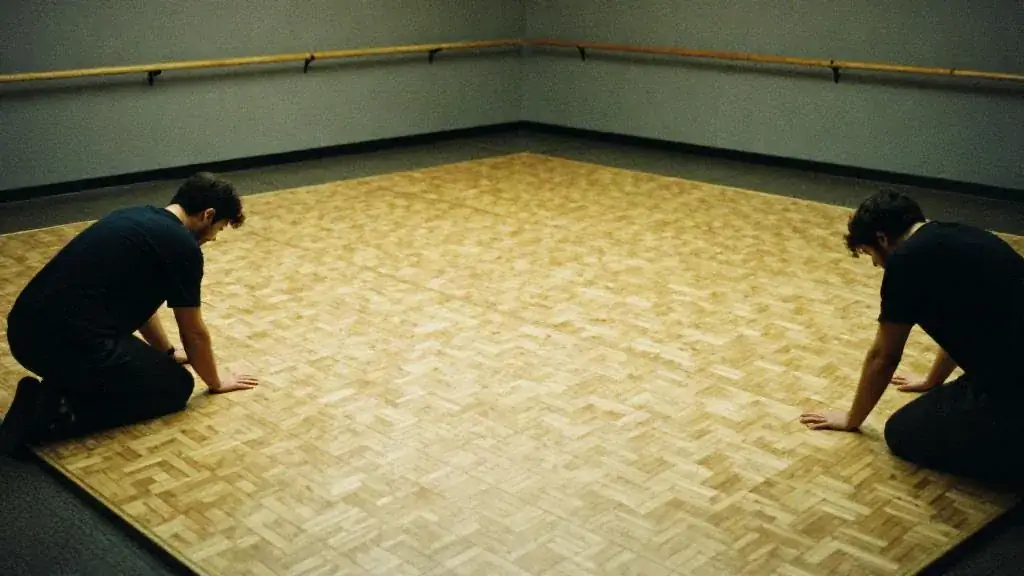
Hotel A (the committee’s favourite, 420 m², 4.9 m ceiling, two pillars): capacity 5, cost 3 (about $24,000 of the $40,000 envelope on F&B alone), program fit 4 (pillars cost us the north wall but the east-wall stage has clean sightlines), accessibility 5, catering 4, guest access 5, curfew 4, contract 4 after negotiation, atmosphere 4, vendor friendliness 5. Weighted total: 426 of 500.
Hotel B (larger ballroom, higher minimum): capacity 5, cost 2 (minimum of $26,000 before service and tax), program fit 5, accessibility 5, catering 5, access 4, curfew 5, contract 3, atmosphere 5, vendor 3 (fee for outside photographer). Total: 404.
Hotel C (older property, lower minimum): capacity 3 (seats 200 only without the silent auction run), cost 5, program fit 2 (3.6 m ceiling, low chandeliers over the stage position), accessibility 3 (washrooms one level down), catering 3, access 4, curfew 5, contract 4, atmosphere 2, vendor 5. Total: 350.
The recommendation went to the committee as Hotel A with Hotel B as the alternate if sponsorship exceeded $45,000, and Hotel C removed with a sentence about the ceiling. The contract questions for Hotel A became the negotiation in lesson 4. The committee spent twelve minutes on the decision. That is what the sheet is for.
Common mistakes
- Changing the weights after the tours to make the favourite win.
- Scoring cost from the room rental instead of the all-in figure.
- Using the venue’s capacity number instead of the planning capacity in the needed layout.
- Presenting the score without the trade-off paragraphs.
- Letting the shortlist grow to six because someone’s cousin knows a place.
Worksheet
Download the worksheet, complete it for your own event (or the running gala example), and keep it in your course binder. It takes about 18 minutes.

Check your understanding
Related guides, venues and vendors
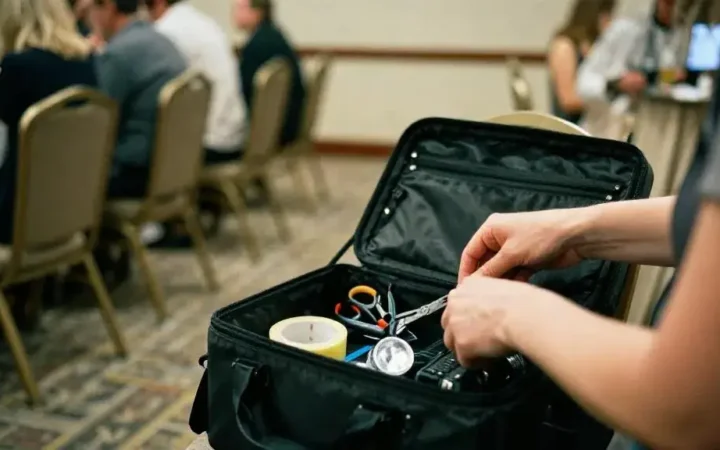
The day-of kit and the first hour
Module 10: Event Day · 15 min
What is in the bag, when to arrive, who to meet, and the walk-through that catches 80% of problems.
Read more
Food, cake and allergies
Specialist · Kids' Parties · 15 min
Nut-free planning, quantities, and the cake moment.
Read more
Privacy, photo rights and PIPEDA
Module 8: Legal, Safety & Risk (Ontario) · 15 min
Guest data, photography consent, performer image rights, and what you can post. Includes the signage and consent language that works.
Read more