What is in the bag, when to arrive, who to meet, and the walk-through that catches 80% of problems.
Read the transcript
The day-of kit and the first hour.
What is in the bag, when to arrive, who to meet, and the walk-through that catches 80 percent of problems.
What goes in the bag.
The day-of kit is not a first-aid box with extra tape.
It is the physical version of every assumption you made in the last six months.
When to arrive.
Arrive before the first vendor.
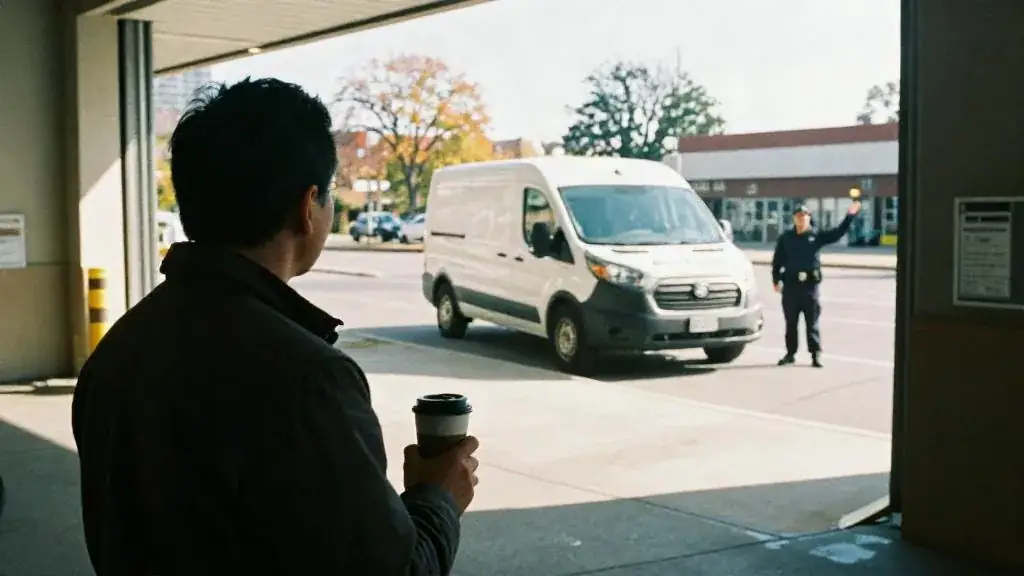
If the first load-in is 1 p.m., you are in the building at 12:30, badged, with the venue contact's cell number tested.
The arrival walk-through.
This is the fifteen minutes that catch most problems.
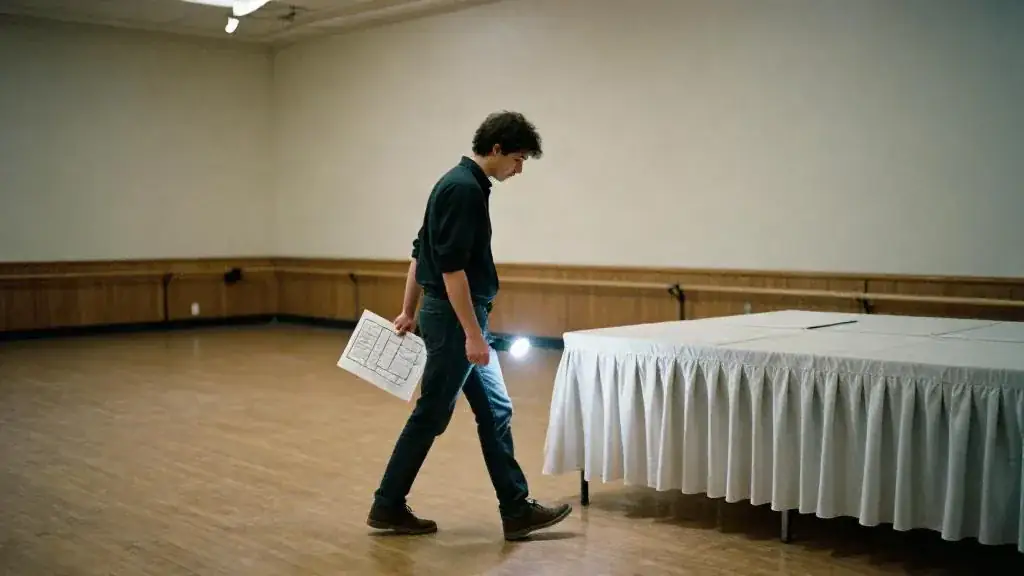
Do it with the floor plan in hand and the venue lead beside you.
Who to meet, in order.
The venue lead first, because they control the building.
Exchange cell numbers, confirm the radio channel if they run one, and ask the question every good captain respects: "What usually goes wrong in this room?" Then the AV lead, because sound and light touch every other vendor.
Worked example: the Harbour Gala.
First load-in is AV at 1 p.m., so the planner is at the dock at 12:30 with the banquet captain.
The walk-through finds three things.
That is the lesson. The worksheet and the quiz are just below this video.
What you will be able to do
- Pack the kit
- Run the arrival walk-through
- Meet venue and vendor leads
What goes in the bag
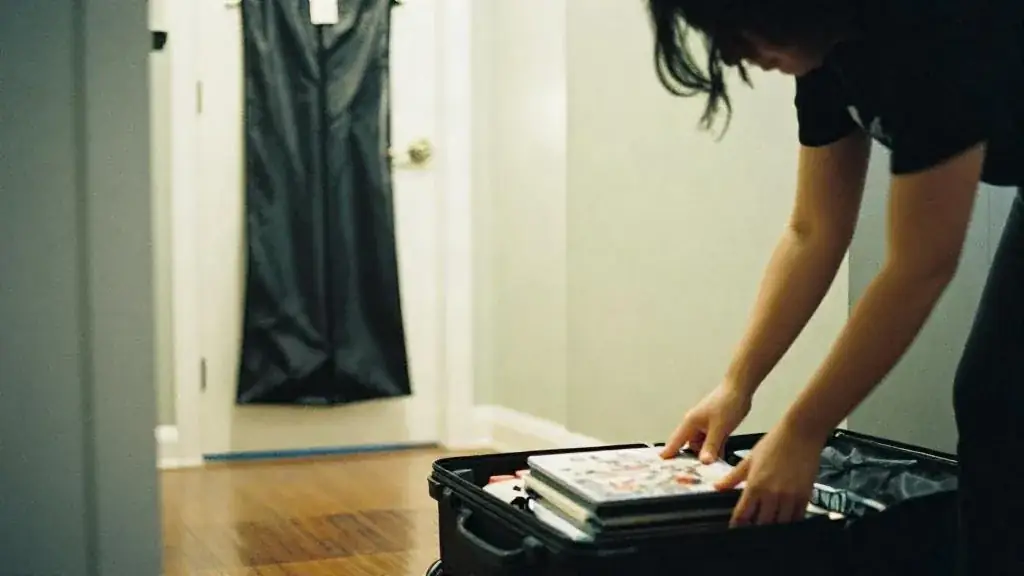
The day-of kit is not a first-aid box with extra tape. It is the physical version of every assumption you made in the last six months. Each item in it answers the question “what will I need in the next ten minutes that nobody else thought to bring?” Pack it the night before, from a list, and check it against the list again before you leave. The full printable version lives at /tools/day-of-emergency-kit/; what follows is the logic behind it.
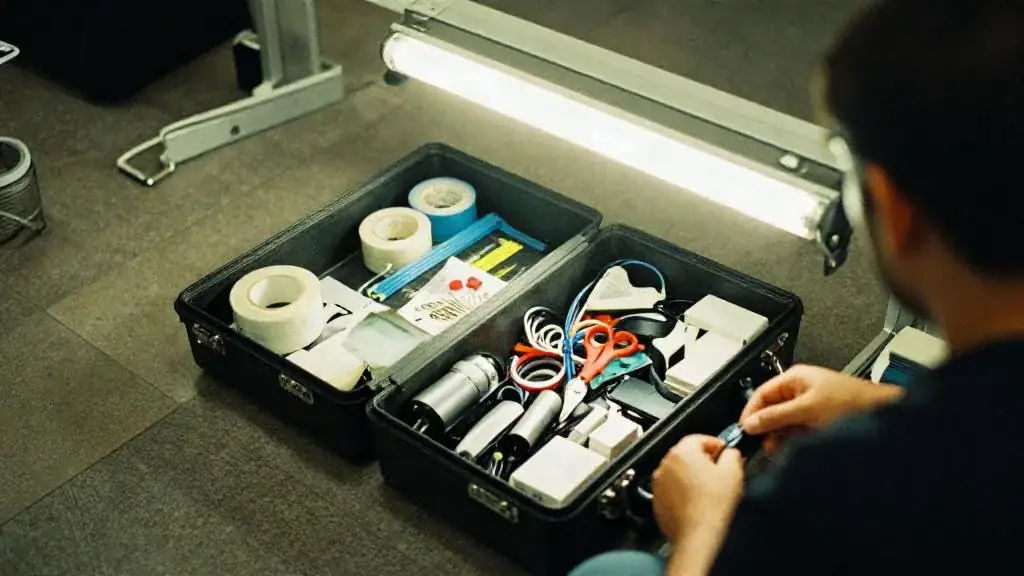
| Category | What is in it | Why |
|---|---|---|
| Paper | Three printed copies of the run of show, the vendor contact sheet, the floor plan, the seating chart, every signed contract and the venue BEO | Phones die, Wi-Fi fails, and a vendor will dispute a detail you can settle with a printed page |
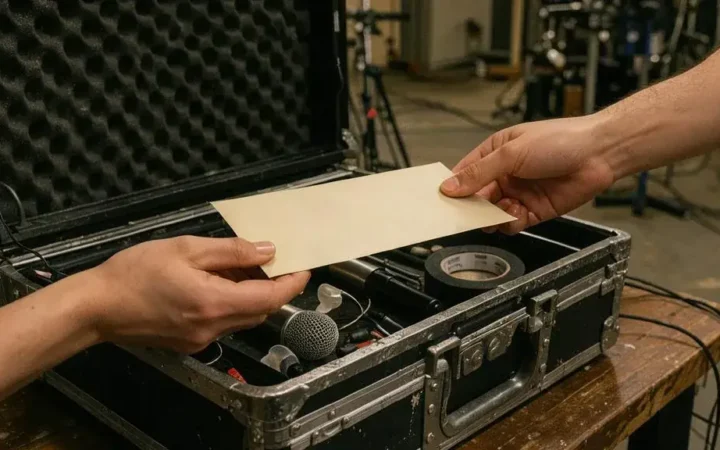
| Fixing | Gaffer tape (black and white), zip ties, a multi-tool, safety pins, a sewing kit, fishing line, command hooks, a small stapler | Banners droop, linens tear, signs fall over |
| Power and sound | Two extension cords, a power bar, phone chargers, a battery pack, spare AA and 9V batteries, a 3.5 mm audio cable and adapters | The MC’s wireless mic always needs the one battery nobody has |
| People | Pain relievers, bandages, antacids, blister pads, a stain remover pen, mints, tissues, a lint roller, tampons, hair elastics | You are the person the client’s mother comes to |
| Admin | Cash in small bills for tips and emergencies, a cheque book or e-transfer access, blank vendor receipts, markers, blank place cards, a clipboard | Balances get paid on site and someone always needs a replacement card |
| You | Flat shoes, a snack you can eat in one hand, water, a layer for a cold loading dock | A twelve-hour day on your feet with no lunch is normal |
One rule: the kit is yours, not the client’s. Nothing in it goes home with a guest. Keep it at your base position, closed, and restock it the next day while you still remember what ran out.
When to arrive
Arrive before the first vendor. If the first load-in is 1 p.m., you are in the building at 12:30, badged, with the venue contact’s cell number tested. For a hotel ballroom that usually means a loading dock meeting with the banquet captain or the event services manager. For a community centre it means the caretaker with the keys.
Arriving first does two things. It lets you see the room empty, which is the only moment you can compare the floor plan to reality without furniture in the way. And it means every vendor who walks in meets you, not the other way round.
The arrival walk-through
This is the fifteen minutes that catch most problems. Do it with the floor plan in hand and the venue lead beside you. Walk the route a guest will take, then the route a vendor will take, then the route a plate will take.
- Front of house. Street entrance, signage, coat check, registration position, accessible route from the accessible drop-off to the room. Is the elevator working today? Is there a step you forgot?
- The room. Count the tables. Check the stage position against the plan and the sightlines from the furthest table. Find the pillars. Confirm the dance floor or paddle-raise aisle is clear.
- Power and sound. Where are the outlets the AV crew will use? Is house sound available for the MC, or is the band bringing everything? Test the lights down and up.
- Back of house. Kitchen door to the room: how many metres, and does it cross the guest route? Where is the green room? Where do vendors stage empty cases?
- Safety. Exits unlocked and unblocked, extinguisher locations, the posted occupant load. Where is the nearest defibrillator?
- Washrooms, temperature, smell. Open every stall. Ask for the thermostat setting; a full room of 200 will warm by several degrees. If the carpet was shampooed this morning, open the doors now.
Write every problem on one sheet, with a name beside it. Problems without an owner do not get fixed.
Who to meet, in order
The venue lead first, because they control the building. Exchange cell numbers, confirm the radio channel if they run one, and ask the question every good captain respects: “What usually goes wrong in this room?” Then the AV lead, because sound and light touch every other vendor. Then catering, then décor and rentals, then entertainment as they arrive. Say the same three things to each: where their base is, what time they must be ready, and who to call if something changes.
Worked example: the Harbour Gala
Thursday, downtown hotel. First load-in is AV at 1 p.m., so the planner is at the dock at 12:30 with the banquet captain. The walk-through finds three things. The stage was built against the north wall, directly between the two pillars, so tables 18, 19 and 20 cannot see the mentalist; the fix is to swap the stage to the east wall before the carpet goes down, which takes the hotel crew twenty minutes now and would take two hours at 5 p.m. The accessible washroom on the ballroom level is out of service; the hotel opens the one on the mezzanine and the planner adds a sign and tells the registration team. The thermostat is set at 22°C; the planner asks for 20°C from 5 p.m.
The kit earns its place by 6:15 p.m. The MC’s handheld mic dies during a test; a spare 9V battery from the bag fixes it before any guest notices. A table sponsor’s banner arrives with no hanging hardware; fishing line and gaffer tape hold it on the step-and-repeat frame for the night.
Common mistakes
- Arriving with the first vendor instead of before them, and discovering the stage problem after the carpet is laid.
- Carrying one copy of the run of show. The client will take it, and then you have none.
- Skipping the washrooms on the walk-through. Nothing undermines a $40,000 gala faster than a stall out of order at 8 p.m.
- Letting the kit become the lost-and-found. Keep a separate box for that.
- No cash. Many venues cannot break a $100 bill at 11 p.m. and some tips are expected in cash.
Worksheet
Download the worksheet, complete it for your own event (or the running gala example), and keep it in your course binder. It takes about 10 minutes.
Check your understanding
Related guides, venues and vendors
Contracts, deposits and substitutions
Specialist · Entertainment Booking · 15 min
Booking terms, cancellation, illness, and insurance.
Read more
Wedding budgets and the splitter
Specialist · Weddings · 15 min
Toronto averages by category, where couples overspend, and how to present a budget to two families.
Read more
Measuring ROI and reporting
Module 11: After the Event · 15 min
Cost per attendee, cost per lead, pipeline, donations, retention. Build the one-page report with the ROI calculator.
Read more