Positions, radios, cue calling, watching the clock and the crowd, and the quiet fixes that keep a program on time.
Read the transcript
Running the room.
Positions, radios, cue calling, watching the clock and the crowd, and the quiet fixes that keep a program on time.
Positions: where everyone stands.
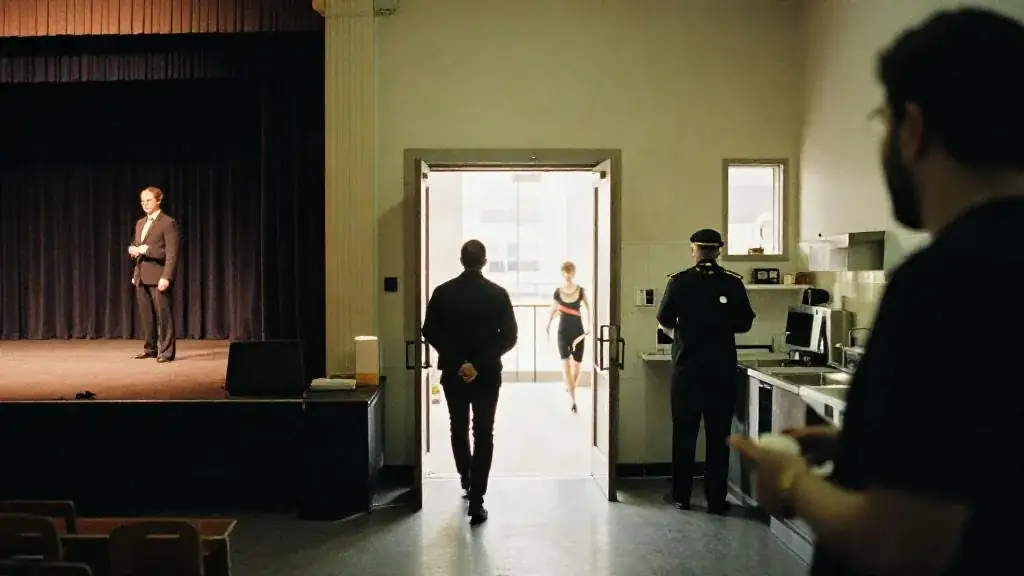
A room runs on positions, not people.
Before the doors open, every member of your team should be able to answer "where is my base, what do I watch, and who do I call?" For a 200-guest dinner with a program, three positions is the minimum.
Radios and the language of cues.
Rent radios for anything with a stage.
Phones are for vendors outside the building; inside, a radio is faster and you can hear it over a band.
Calling from the run of show.
The run of show you built with /tools/run-of-show-template/ has a cue column.
On the day, the printed version becomes your script.
Reading the room.
The clock tells you where the program is.
The room tells you whether the program is working.
Worked example: the Harbour Gala.
At 7:05 p.m. the foundation chair is still at the podium; she was allotted five minutes and started at 6:58.
The run of show says first plate at 7:15.
That is the lesson. The worksheet and the quiz are just below this video.
What you will be able to do
- Call cues from the run of show
- Keep a program on time
- Read the room and adjust
Positions: where everyone stands
A room runs on positions, not people. Before the doors open, every member of your team should be able to answer “where is my base, what do I watch, and who do I call?” For a 200-guest dinner with a program, three positions is the minimum.
| Position | Base | Watches | Owns |
|---|---|---|---|
| Lead (you) | Back of room, standing, with sightline to stage and kitchen door | The clock, the program, the client | Every cue call and every decision above $200 or five minutes |
| Front of house | Registration, then the ballroom doors | Arrivals, late guests, coat check, accessible needs | Door open and close times, seating stragglers |
| Stage and vendors | Stage left, near AV | Performers, MC, AV, the next act in the wings | Sound checks, intros handed to MC, performer readiness |
| Floor (if you have a fourth) | Roaming | Service pace, spills, guests who need something | Catering captain liaison |
For a smaller party, one person holds all of this and the catering captain becomes the second set of eyes. For anything over 300 guests, add a position per 150 guests and a dedicated person on the client.
Radios and the language of cues
Rent radios for anything with a stage. Phones are for vendors outside the building; inside, a radio is faster and you can hear it over a band. Use one channel for your team and ask the venue for theirs so you can monitor it. Agree on four phrases and use only those:
- “Standby [cue].” Thirty seconds to two minutes out. Everyone involved gets ready and acknowledges with their position name.
- “Go [cue].” The action happens now. Only the lead says go.
- “Hold.” Nothing moves until the lead speaks again. Used when a speaker runs long or the room is not ready.
- “Clear.” The cue is complete.
Everything else is a conversation, and conversations happen off radio. If you need to discuss something for more than one sentence, say “switch to phone” or walk over.
Calling from the run of show
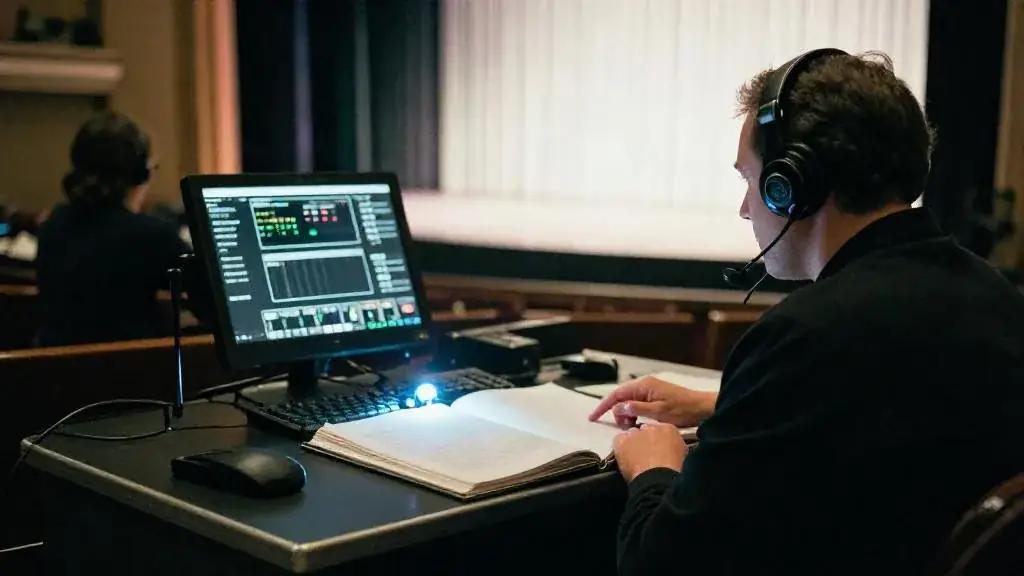
The run of show you built with /tools/run-of-show-template/ has a cue column. On the day, the printed version becomes your script. Read ahead, not behind: at any moment you should know the next three cues and what has to be true for each to go. A dinner program typically has twenty to thirty cues. Mark each one off with a pen as it clears. If you lose your place, the marks tell you where you are.
Keep a cushion. Programs run long, never short. The way you keep a program on time is by building the cushion before the parts you cannot move, and by calling cues slightly early for the things that take longer than people think: moving 200 people from a foyer into a ballroom takes ten to fifteen minutes, not five. Clearing a main course from twenty tables takes twelve to twenty minutes depending on how many servers the hotel has scheduled. Ask the captain for that number at the briefing and plan on it.
Reading the room
The clock tells you where the program is. The room tells you whether the program is working. Watch four things: noise level, movement, phones, and the bar line. A room that goes quiet during a speaker is listening; a room that goes quiet during dinner is bored. Movement toward the doors during a program means it has run long. A bar line of more than ten people during cocktails means you need a second bartender or a tray pass. Phones out en masse means the speaker lost them two minutes ago.
The quiet fixes are the ones nobody sees. Ask the captain to pour water; the sound of pouring resets a table. Have the MC walk on with energy to shorten the applause gap. Dim the lights by ten percent to pull focus to the stage. Open a second coat-check line before the rush, not during it. Tell the band to play one more song instead of three. None of these need the client’s permission and all of them keep the evening on rails.
Worked example: the Harbour Gala
At 7:05 p.m. the foundation chair is still at the podium; she was allotted five minutes and started at 6:58. The run of show says first plate at 7:15. The lead calls “Hold first plate” to the captain over radio, then walks to the stage position and asks the MC to be ready to step up the moment she finishes. She wraps at 7:11. “Go MC, go first plate.” The kitchen was holding at the pass, so plates land at 7:19, four minutes behind. Those four minutes come out of the cushion built before the paddle raise, which was planned at 8:40 with a 20-minute buffer to the 9 p.m. hard stop.
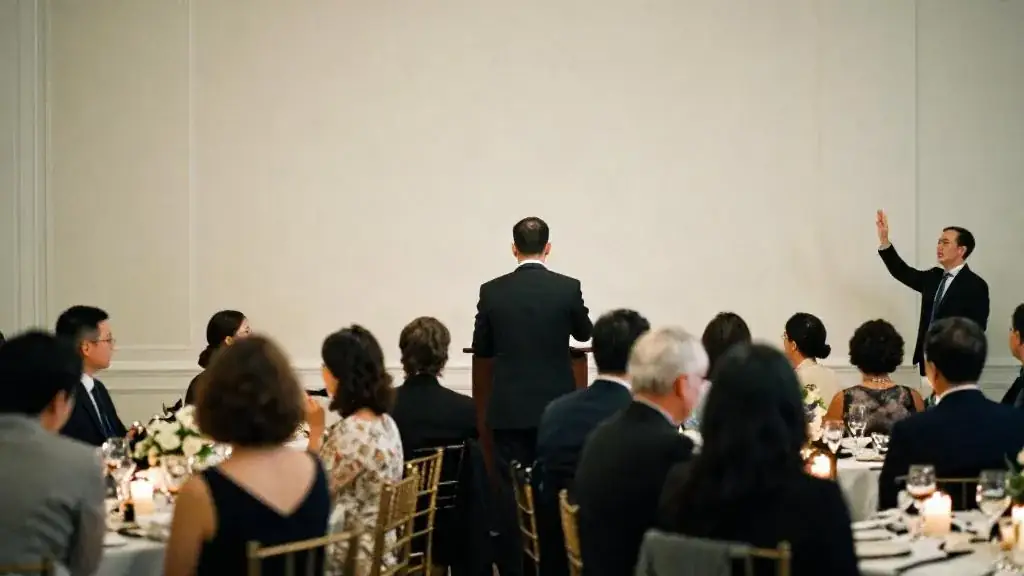
At 8:20 the lead watches the room instead of the clock. Dessert is down, the noise level is high, and two tables near the bar have stood up. The mentalist is due at 8:25 before the ask. The lead calls “Standby house lights, standby MC” at 8:22, has the captain pull the dessert plates from the three tables closest to the stage so that the sightline is clean, and goes at 8:25 on the nose. The mentalist runs 18 minutes. The paddle raise begins at 8:44 with the room seated and quiet, and the auctioneer has sixteen minutes before the committee’s own deadline of 9 p.m.
Numbers to remember
- Moving 200 guests from foyer to seats: 10 to 15 minutes, in our experience.
- Clearing a course from 20 rounds: 12 to 20 minutes, depending on server count; ask the captain.
- Cushion before a hard stop: at least 15 minutes for every hour of program.
- Four radio phrases, one person who says “go”.
- A bar line over ten deep is a problem you fix now, not at the debrief.
Worksheet
Download the worksheet, complete it for your own event (or the running gala example), and keep it in your course binder. It takes about 12 minutes.
Check your understanding
Related guides, venues and vendors

Sponsorship: packages that get signed
Module 9: Marketing & Promotion · 15 min
What sponsors buy (access, data, visibility), tiered packages, activation ideas and the deck template.
Read more
City permits: parks, tents, noise, road closures
Module 8: Legal, Safety & Risk (Ontario) · 15 min
Toronto, Mississauga, Vaughan and Hamilton processes for park bookings, tents, amplified sound, road closures and food vendors.
Read more
Bar: packages, permits and Smart Serve
Module 5: Vendors & Entertainment · 15 min
Open, consumption and toonie bars; AGCO Special Occasion Permits; Smart Serve; last call and safe rides. The bar calculator in practice.
Read more