Arrival checks, the pre-event briefing, problem escalation, and paying balances on site.
Read the transcript
Managing vendors on the day.
Arrival checks, the pre-event briefing, problem escalation, and paying balances on site.
Check-in: the first two minutes with each vendor.
Every vendor who walks in gets the same two minutes.
Not a chat: a check.
The pre-event briefing.
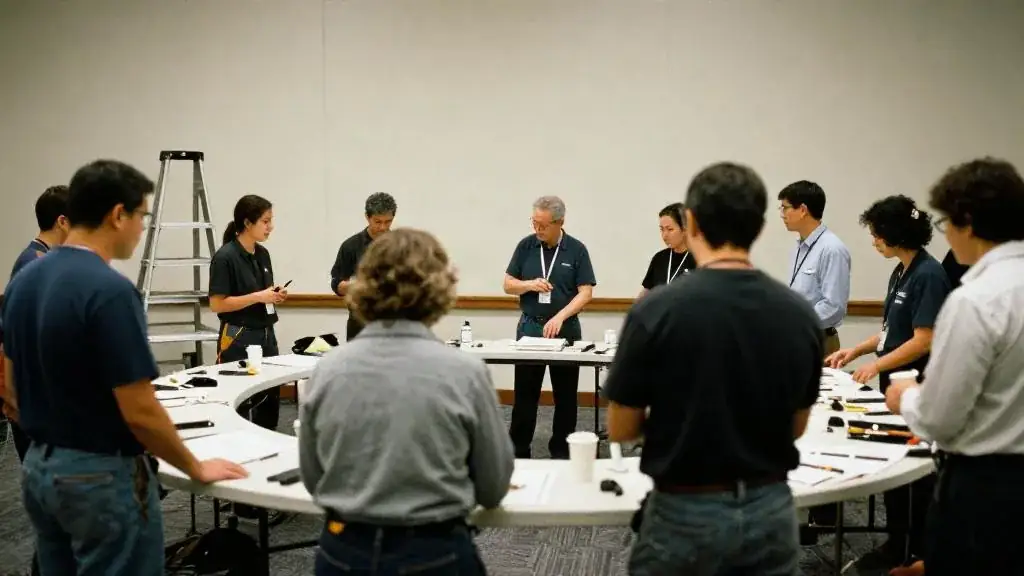
Thirty to forty-five minutes before doors, gather the leads from every vendor for five minutes.
Stand in a circle somewhere out of the way.
Escalation and the quiet word.
Vendors will have problems with each other.
The band wants the DJ's table; the florist blocked the AV cable run; the hotel captain will not let the magician use the service corridor.
Late and missing vendors.
A vendor is late when they are fifteen minutes past load-in without a call.
They are missing when they are past the point where their work can still be done in time.
Paying balances on site.
Many contracts put the final balance on the day.
Know before you arrive which vendors are owed what, in what form, and by whom.
That is the lesson. The worksheet and the quiz are just below this video.
What you will be able to do
- Check vendors in
- Brief and escalate
- Handle late or missing vendors
Check-in: the first two minutes with each vendor
Every vendor who walks in gets the same two minutes. Not a chat: a check. Confirm who they are and that they match the contact sheet. Confirm what they brought against the contract. Show them their base and their power. Tell them the one time that matters most for them, which is usually “ready to go” rather than “arrive”. Give them your radio call sign or cell. Then let them work.

Carry the vendor contact sheet with arrival times, and tick vendors off as they arrive. Fifteen minutes past a load-in time with no call is the trigger to phone them, not thirty. Vendors who are running late almost never call first; the one who does is a keeper.
| Vendor | Check on arrival | Common gap |
|---|---|---|
| AV | Equipment list against the quote; house power confirmed; who runs the board during the show | Wireless mic count is short by one; no lectern mic |
| Catering / venue F&B | Final guaranteed count matches the BEO; dietary list in the kitchen’s hand; service timings from the run of show | Dietary meals not flagged to the tables |
| Rentals and décor | Count the chairs and linens; check for stains and mismatched colours before they go on the tables | Linen colour from a different dye lot |
| Florist | Centrepiece height against sightlines; candle type permitted by the venue | Open-flame tapers in a hotel that permits only enclosed candles |
| Entertainment | Who is performing, sound check time, intro copy for the MC, rider items in the green room | Performer expects a mic the AV company did not quote |
| Photographer | Shot list and the must-have moments from the run of show; permission signage up | Photographer is at dinner during the paddle raise |
The pre-event briefing
Thirty to forty-five minutes before doors, gather the leads from every vendor for five minutes. Stand in a circle somewhere out of the way. It is the only time all evening they will all hear the same thing at once. Cover, in order:
- The purpose of the event in one sentence, so the catering captain knows why 9 p.m. matters.
- Three times: doors, the first cue that touches them, and the hard stop.
- Who the client is, by name and description, and that the client speaks to you, not to them.
- The escalation rule: anything that changes the program, costs money, or involves a guest’s safety comes to the lead first.
- Where the green room, the staff washroom and the staff food are.
Then ask every lead for their one concern. Someone always has one, and it is usually fixable in the forty minutes you have left.
Escalation and the quiet word
Vendors will have problems with each other. The band wants the DJ’s table; the florist blocked the AV cable run; the hotel captain will not let the magician use the service corridor. Your job is not to referee but to decide. Listen for thirty seconds, decide, say it once, and move on. If it costs money, decide who pays later, not now; if it is the client’s money, tell the client tonight, not on the invoice.
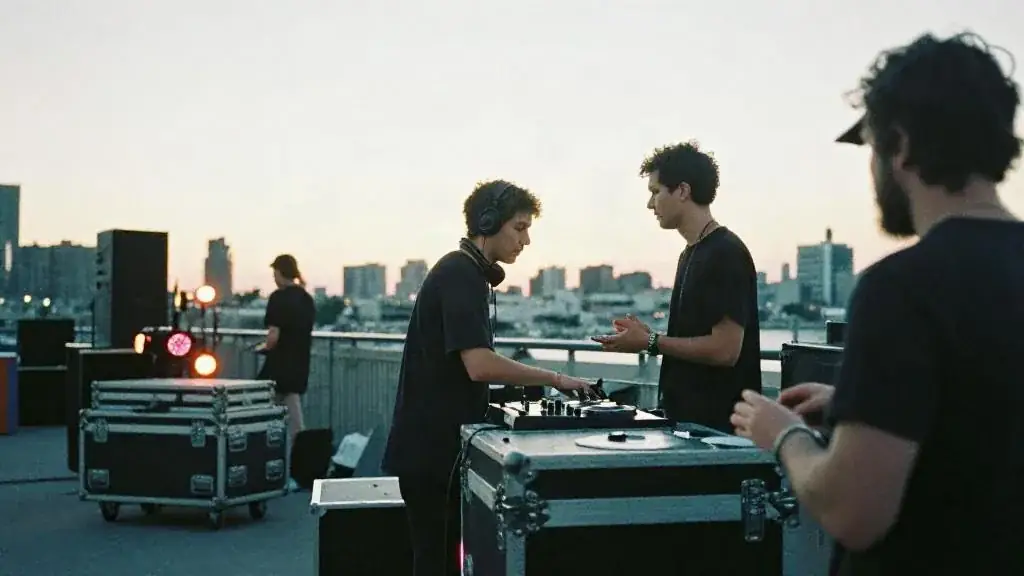
The quiet word is for performance problems. A server who is rude, a DJ who is too loud, a photographer who is drinking. Go to the vendor’s lead, not the person. Say what you observed, what you need, and by when. Write the time in your notes. If it happens twice, it goes in the post-event email to the owner of that company, and it decides whether they are on your list next year.
Late and missing vendors
A vendor is late when they are fifteen minutes past load-in without a call. They are missing when they are past the point where their work can still be done in time. The sequence is the same: call the cell on the contact sheet, call the office line, text, then call the backup you listed in the risk register. For every category that can sink the event (AV, catering, the headline act) you should already have the name of someone who can be there in ninety minutes. For a DJ or a photographer that is usually a phone call to a peer at the same price. For a hotel kitchen there is no backup, which is why the BEO is confirmed by phone the day before.
Document times. Late arrival that causes a visible change to the event is a contract matter, and the paper trail starts with your note that says “DJ load-in 4:00, arrived 5:10, called 4:15 and 4:30, no answer.”
Paying balances on site
Many contracts put the final balance on the day. Know before you arrive which vendors are owed what, in what form, and by whom. If the client pays directly, have them bring cheques or confirm e-transfers in the afternoon, not at 11 p.m. on a hotel loading dock. If you pay on the client’s behalf, carry the cheques signed, with the vendor name filled in and the amount blank until the work is confirmed complete. Never pay a balance before the service is delivered; pay promptly once it is. Gratuities for performers and crew are covered in Module 11, but if the client has given you cash for tips, keep it in a separate envelope with a list of who gets what, and get a signature or at least a name beside each one.

Worked example: the Harbour Gala
Load-in schedule: AV 1 p.m., rentals and florist 2:30, strolling magicians 5:15 for a 6 p.m. start, mentalist 6:30 for a 7 p.m. sound check during dinner, photographer 5:30. At 2:45 the florist has not arrived or called; the lead phones and learns the van is on the Gardiner, twenty minutes out. Fine, but noted. The pre-event briefing at 5:20 brings out one concern: the banquet captain has only twelve servers for twenty tables, so clearing a course will take closer to twenty minutes than twelve. The lead adjusts the dessert cue earlier by eight minutes and tells the mentalist his set may start at 8:25 or 8:30, to be confirmed by radio.
At 6:30 the mentalist’s sound check reveals he needs a lavalier mic; the AV quote lists only two handhelds. The AV lead has one in the truck for a $75 add-on. The lead approves it, tells the foundation’s executive director in one sentence while she is walking past, and writes “$75 lav, approved 6:34, ED informed” on the problem sheet. The magicians’ balances, two cheques from the foundation, are handed over at 7:10 after their set clears, with a thank-you and a note of the time.
Common mistakes
- Skipping the briefing because everyone seems busy. It saves five minutes and costs an hour later.
- Letting the client brief vendors directly. Two sets of instructions and nobody knows which one counts.
- Refereeing instead of deciding. Vendors want a decision, not a mediator.
- Paying before the work is done because a vendor “has to leave”.
- Not writing down times. The dispute will come weeks later and memory will not settle it.
Worksheet
Download the worksheet, complete it for your own event (or the running gala example), and keep it in your course binder. It takes about 10 minutes.
Check your understanding
Related guides, venues and vendors

The wedding-day run of show
Specialist · Weddings · 15 min
A real 14-hour run of show from hair and makeup to last dance, with vendor cues.
Read more
Hybrid and virtual events
Specialist · Corporate · 15 min
Platforms, production, engagement design, and the hybrid checklist.
Read more
Module 5 workshop: book a full vendor team
Module 5: Vendors & Entertainment · 15 min
For the gala from Module 3, select entertainment, caterer, AV and photo from the Directory, collect riders and COIs, and build the…
Read more