Green rooms, timing, intros, sound checks, audience management and what performers need from planners to do their best work.
Read the transcript
Working with performers.
Green rooms, timing, intros, sound checks, audience management and what performers need from planners to do their best work.
What a performer needs from you.
Performers are the one vendor category whose product is a human being in front of your guests for a fixed number of minutes.
Everything you do for them before those minutes decides how good the minutes are.
The green room.
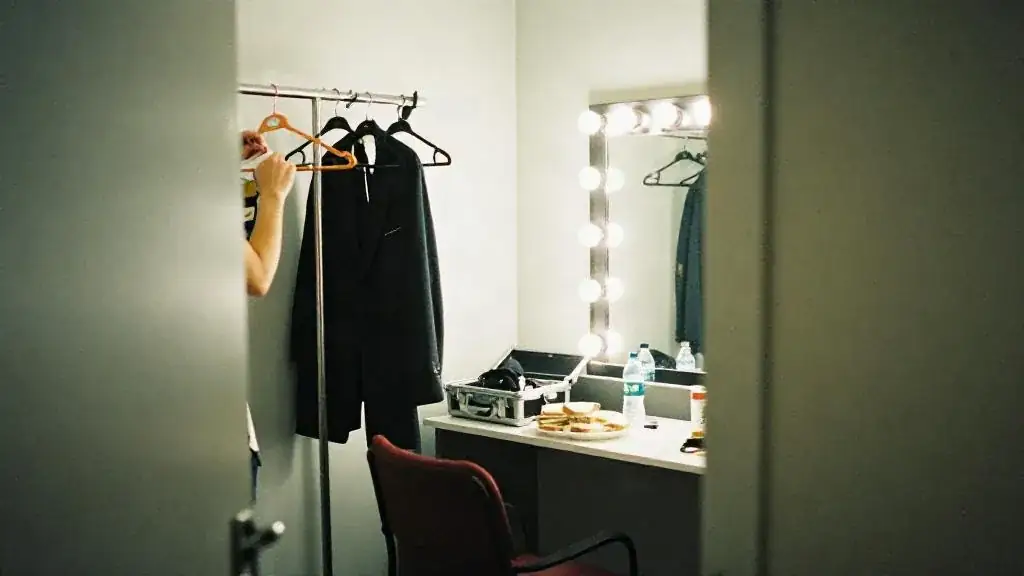
A green room is any lockable, private space near the stage with a chair, a mirror, water and a power outlet.
In a hotel it is usually a boardroom or a divided section of the pre-function space.
Timing and sound checks.
Sound checks happen before guests arrive or during a loud, covered part of the program, which usually means during dinner service with the house music up.
Never run a sound check during speeches or over an empty, quiet room with early guests at the bar.
Introductions.
The MC introduces every stage act, every time.
An act that walks on unannounced to a room still talking will spend its first two minutes earning attention it should have been handed.
Audience and sightlines.
Sightlines are set at the floor plan stage, but on the night you can still fix the two things that ruin a stage act: tall centrepieces and standing guests.
Clear or lower centrepieces on the tables closest to the stage before the act begins.
That is the lesson. The worksheet and the quiz are just below this video.
What you will be able to do
- Prepare a green room and a sound check
- Introduce and time acts
- Handle audience and sightline issues
What a performer needs from you
Performers are the one vendor category whose product is a human being in front of your guests for a fixed number of minutes. Everything you do for them before those minutes decides how good the minutes are. A magician who has been standing in a service corridor for forty minutes with no water, no chair and no idea when she goes on will still do the act, but she will not do her best act. The tech rider you collected with /tools/performer-tech-rider-template/ lists the hard requirements. The soft requirements are the same for all of them: a place to change and wait, a clear call time, a sound check, a proper introduction, and someone who knows their name.
The green room
A green room is any lockable, private space near the stage with a chair, a mirror, water and a power outlet. In a hotel it is usually a boardroom or a divided section of the pre-function space. In a community centre it may be an office. It is never a washroom, and it is never the kitchen corridor. If the only option is a corner of the ballroom behind a pipe-and-drape wall, that is acceptable for a strolling act and poor for a stage act with costumes or props.
- Confirm the room with the venue a week out and put it on the floor plan.
- Put a sign on the door and a key or a staff member who can open it.
- Stock it from the riders: water, light food if the call is more than three hours before the set, a full-length mirror for anyone in costume.
- Give the performer a walking route from the green room to the stage that avoids the guest flow and the kitchen door.
- Tell the venue staff who is allowed in. Props and instruments are expensive and the room must stay locked when empty.
Timing and sound checks
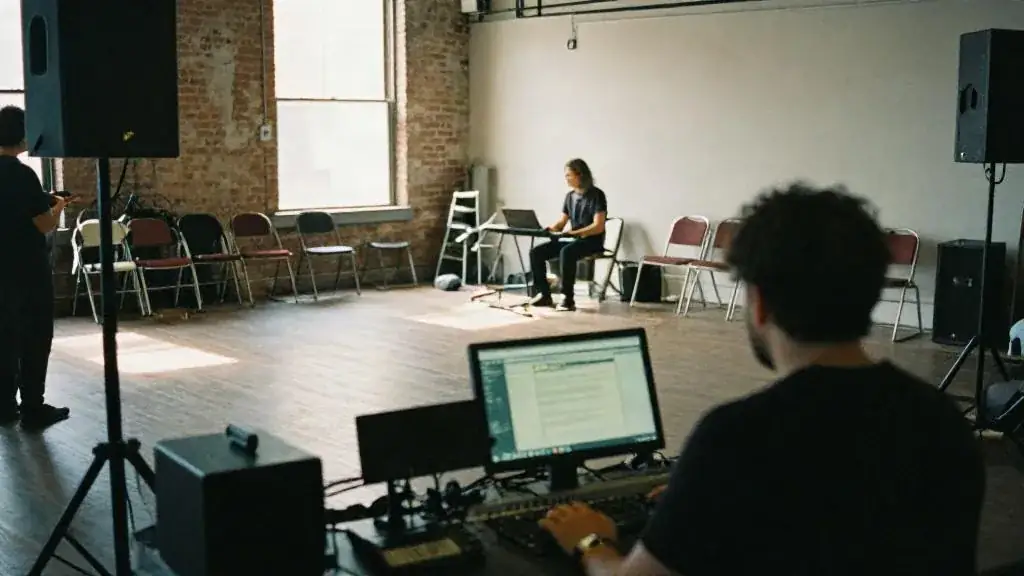
Sound checks happen before guests arrive or during a loud, covered part of the program, which usually means during dinner service with the house music up. Never run a sound check during speeches or over an empty, quiet room with early guests at the bar. A stage act needs ten to fifteen minutes: the AV lead sets the mic, the performer runs the loudest and quietest moments of the act, and the lighting state is set and saved. Write the finished mic assignments on the run of show so the MC’s handheld and the performer’s lavalier never get swapped.
Call times are the performer’s arrival; set times are when they walk on. The gap between them is the cushion you use when the program drifts. Tell performers the set time is a target with a possible shift of up to fifteen minutes either way, and that you will give them a ten-minute standby and a two-minute standby by radio or in person. Strolling acts work in blocks: two magicians working a cocktail hour of 200 guests will reach roughly a third to half of the room in 25 minutes, which is why the guidance is one performer per 40 to 60 guests for roaming.
Introductions
The MC introduces every stage act, every time. An act that walks on unannounced to a room still talking will spend its first two minutes earning attention it should have been handed. The introduction has three parts: a settle line (“Please find your seats; the program is about to continue”), a frame (one sentence on what the guests are about to see), and the name, said clearly and last. Get the exact wording from the performer in advance; many have a preferred intro and all have a preferred pronunciation of their name. Hand the MC a printed card. The MC also closes the act with a thank-you and the name again, and moves straight to the next cue.
Audience and sightlines
Sightlines are set at the floor plan stage, but on the night you can still fix the two things that ruin a stage act: tall centrepieces and standing guests. Clear or lower centrepieces on the tables closest to the stage before the act begins. For a mentalist or close-up act being shown on a screen, confirm the camera position with the AV lead. For a paddle raise or any act that uses audience members, tell the performer which tables hold the client’s VIPs and which hold people who should not be brought on stage, such as the sponsor who asked not to be photographed.

| Problem | Fix on the night |
|---|---|
| Guests still at the bar when the act starts | Close the bar for the set; the MC announces it reopens after |
| Back tables cannot see | Raise the stage lighting, drop the house lights, use the screens if there are any |
| Servers clearing during the act | Hold service by radio; this was agreed at the briefing |
| A heckler or a drunk volunteer | Your stage position walks to the table; the performer is trained to handle it on stage, you handle it off |
| Phones and flash during a performance that forbids it | MC announcement before the act; a sign at the stage edge |
Worked example: the Harbour Gala
Two strolling magicians arrive at 5:15 for a 6 p.m. cocktail hour of 200 guests, which fits the one-per-40-to-60 guideline. Their green room is a small boardroom off the foyer with water, a mirror and a locked door. They are briefed on the layout and told the sponsor tables by number. They work 6:05 to 7:00, then continue through the 25-minute gap between seating and first plate, which is where the program had its first dead spot. Balance cheques are handed over after the set.
The mentalist arrives at 6:30, changes in the same boardroom, and sound checks at 7:25 during the main course with house music up. His rider calls for a lavalier, a stool and a specific lighting state; the lav is added for $75 and the state is saved as preset 4. The MC card reads: “Please take your seats. Before we ask for your support tonight, we have asked someone to read your minds first. Please welcome [name].” At 8:22 the lead gives the ten-minute standby in person; at 8:25 the MC walks on. The captain holds dessert clearing. The set runs 18 minutes, the MC closes with the name, and the auctioneer is introduced in the same breath. The room is quiet, seated and warmed up when the paddles go up.
Common mistakes
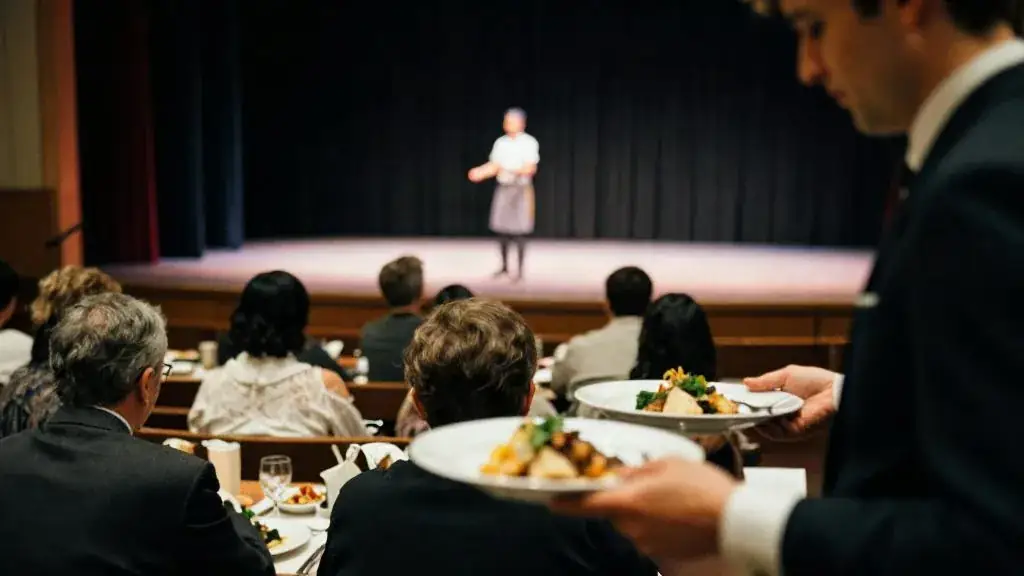
- Scheduling a stage act over a course. Nobody watches a magician when a plate has just landed in front of them.
- No green room, so the performer changes in a washroom stall and waits in the hallway.
- Letting the MC ad-lib the introduction and get the name wrong.
- Sound checking at 5:45 with forty early guests in a silent room.
- Booking one strolling performer for 200 guests and wondering why half the room never saw anything.
Worksheet
Download the worksheet, complete it for your own event (or the running gala example), and keep it in your course binder. It takes about 10 minutes.
Check your understanding
Related guides, venues and vendors
Building the vendor team
Module 5: Vendors & Entertainment · 15 min
Order of booking, how to find good vendors in the GTA, references, and the directory filters that save hours.
Read more
Systems, tools and scaling
Module 12: The Business of Event Planning · 15 min
CRM, proposals, contracts, payments, project boards, and when to hire your first coordinator.
Read more
Tools of the trade
Module 1: Foundations · 15 min
A planner needs a budget spreadsheet, a timeline, a run of show, a vendor contact sheet, a floor plan tool and a…
Read more