CRM, proposals, contracts, payments, project boards, and when to hire your first coordinator.
Read the transcript
Systems, tools and scaling.
CRM, proposals, contracts, payments, project boards, and when to hire your first coordinator.
The lean operating stack.
A planning business runs on the same seven jobs whether you plan four events a year or forty: track leads, send proposals, sign contracts, take payments, manage tasks, keep files, and do the books.
In the first year you do not need a separate tool for each, and you should not pay for software that does more than you use.
Document the repeatable.
Every event has a skeleton: the same phases, the same checklists, the same emails.
Write each one down the second time you do it, not the first, because the first time you do not know what matters.
When to hire your first coordinator.
Most planners hire too late, after they have turned work away or delivered an event exhausted.
Watch for three signals.
Worked example: the Harbour Gala.
The gala ran on the lean stack.
The lead came in through her contact form and went straight into a lead spreadsheet with source "board referral".
Numbers to remember.
Seven jobs, one place for each.
Write a process the second time you do something.
That is the lesson. The worksheet and the quiz are just below this video.
What you will be able to do
- Set up a lean operating stack
- Document repeatable processes
- Decide when to hire
The lean operating stack
A planning business runs on the same seven jobs whether you plan four events a year or forty: track leads, send proposals, sign contracts, take payments, manage tasks, keep files, and do the books. In the first year you do not need a separate tool for each, and you should not pay for software that does more than you use. You need one place for each job, chosen once, used every time.

| Job | What the tool must do | Lean option |
|---|---|---|
| Leads (CRM) | Name, source, date, stage, value, next action | A spreadsheet or a free CRM tier |
| Proposals | Branded proposal from a template, quickly | The proposal template in your document editor |
| Contracts | Your agreement template; electronic signature | An e-signature service |
| Payments | Invoices with HST; e-transfer and card; reminders | Your accounting software’s invoicing |
| Projects | A board per event with tasks, dates and owners | A project board tool or a shared spreadsheet |
| Files | One folder per event, same structure every time | Cloud storage |
| Books | Income, expenses, HST, bank reconciliation | Small-business accounting software your accountant can access |
All-in-one planner platforms combine several of these and suit some people well. Try one only after you have run three events on the lean stack, so that you know which jobs you actually need help with.
Document the repeatable
Every event has a skeleton: the same phases, the same checklists, the same emails. Write each one down the second time you do it, not the first, because the first time you do not know what matters. A process document is a short checklist with a trigger (“when a contract is signed”), the steps, the template links, and who does each step. Keep them in one folder named “How we work”.
- Enquiry to proposal. Reply within one business day; discovery call; proposal within three days; follow-up at seven.
- Signed to kick-off. Agreement, deposit, folder, project board from template, welcome email with timeline.
- Vendor booking. Shortlist, quotes, comparison sheet, client approval, contract, contact sheet updated.
- Final month. Run of show draft, final counts, vendor confirmations, risk register review.
- Event day. Kit packed, walk-through, briefing, cue calling, close-out.
- Close. The fourteen-day close from Module 11, survey, report, project write-up, testimonial request.
The folder structure is a process too. The same subfolders in every event (contracts, invoices, floor plans, run of show, photos, report) mean that you, a coordinator or an accountant can find anything in seconds.
When to hire your first coordinator
Most planners hire too late, after they have turned work away or delivered an event exhausted. Watch for three signals. You are regularly running events alone that need two people on the floor. You are declining enquiries because of date conflicts on the same weekend. Your admin time has grown to the point where you are doing proposals at midnight. Any one of these means it is time to try help; two means you are already late.
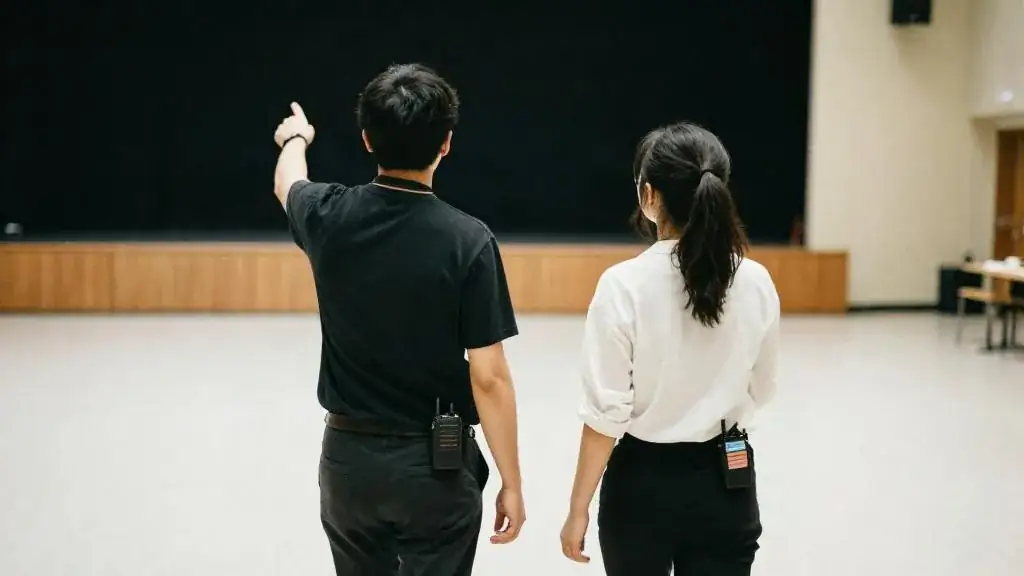
The first hire is almost always a contract day-of coordinator, paid per event, not a full-time employee. They work your events from your process documents, under your name. Pay them fairly and promptly, brief them with the same run of show you use, and keep the client relationship with you. Before you take anyone on, talk to your accountant about whether they are a contractor or an employee in law, because the answer depends on how they actually work, not on what you call them, and it changes your payroll obligations. Check that your insurance covers people working on your behalf.
Worked example: the Harbour Gala
The gala ran on the lean stack. The lead came in through her contact form and went straight into a lead spreadsheet with source “board referral”. The proposal came from the template in two hours. The agreement was signed electronically and the deposit invoice went from her accounting software with HST shown. Her project board for the gala was copied from a template with 64 tasks across six phases; she added nine gala-specific tasks, including sponsor card proofs and the paddle raise script. Every vendor quote, the hotel BEO and the floor plan revisions lived in a folder with the same subfolders as every other event.
On the night, she ran the gala with two contract coordinators on front of house and stage, briefed from her process documents and paid within a week of the event. Those two hires were the signal she watched: the gala and a corporate holiday party had landed on consecutive nights in November, which the old one-person business could not have taken on. That season she paid for e-signature and accounting software and nothing else.
Numbers to remember

- Seven jobs, one place for each.
- Write a process the second time you do something.
- Reply to enquiries within one business day; proposals within three.
- Three signals to hire; the first hire is a contract coordinator per event.
- Contractor or employee is a legal question; ask your accountant first.
Worksheet
Download the worksheet, complete it for your own event (or the running gala example), and keep it in your course binder. It takes about 10 minutes.
Check your understanding
Related guides, venues and vendors

Typical cost splits by event type
Module 3: Budgeting · 15 min
A holiday party, a gala, a kids' party and a conference spend differently. Memorise the four shapes and you can sanity-check any…
Read more
Conferences: program, AV and registration
Specialist · Corporate · 15 min
Session design, breakouts, AV house rules, registration platforms, sponsors and entertainment between sessions.
Read more
Menu planning with the caterer
Module 6: Design & Guest Experience · 15 min
Seasonal, local, dietary-complete, timed to the program. Build a menu that serves 200 in 60 minutes.
Read more