Seasonal, local, dietary-complete, timed to the program. Build a menu that serves 200 in 60 minutes.
Read the transcript
Menu planning with the caterer.
Seasonal, local, dietary-complete, timed to the program.
Build a menu that serves 200 in 60 minutes.
The menu serves the program.
At a dinner with a program, the menu has one job before all others: get 200 plates down, eaten and cleared in the time the run of show gives it, without anyone speaking over the service.
Taste matters, seasonality matters, dietary completeness matters, but a beautiful menu that runs 40 minutes late pushes the ask past 9 p.m. and costs the foundation money.
Building the menu with the caterer.
Give the caterer the run of show first. They need to know when the room sits, when the speeches are, when the ask is, and when the room must be clear.
Ask what is in season and local in that month. November in Ontario means squash, root vegetables, apples, late brassicas, Ontario lamb and beef, and preserved or greenhouse produce for anything green.
Timing courses to speeches and acts.
The rule is simple: nothing is said from the stage while plates are moving.
Plates move during service and during clearing.
Worked example: the Harbour Gala.
The gala's hotel food and beverage minimum is 18,000, dollars which with 18 percent service and HST comes to roughly 24,000 dollars all-in.
At 200 guests that is a 90 dollars per-plate spend before tax and service, at the bottom of the downtown hotel range, so the menu is built for speed and value rather than show.
Numbers to remember.
Plated main for 200 with a pre-set first course: roughly 12 to 18 minutes to serve with a full brigade, in our experience; ask the hotel for their number for your room.
Three speaking windows: after first course clear, after main clear, after dessert down.
That is the lesson. The worksheet and the quiz are just below this video.
What you will be able to do
- Plan a menu that serves on time
- Balance dietary needs and cost
- Time courses with speeches and acts
The menu serves the program
At a dinner with a program, the menu has one job before all others: get 200 plates down, eaten and cleared in the time the run of show gives it, without anyone speaking over the service. Taste matters, seasonality matters, dietary completeness matters, but a beautiful menu that runs 40 minutes late pushes the ask past 9 p.m. and costs the foundation money. Start from the timing and work back to the food.
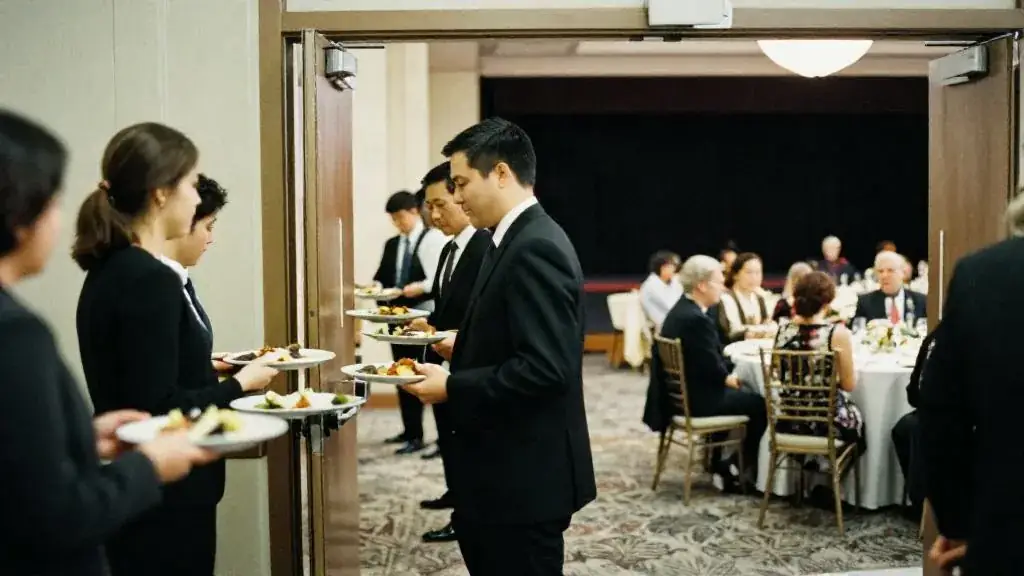
Three service styles, and what they do to the clock.
| Style | Time to serve 200 | Strengths | Watch for |
|---|---|---|---|
| Plated, pre-set first course | First course on the table before guests sit; main in roughly 12–18 minutes with a full brigade; dessert similar | Fastest start, most controlled, best for programs | Kitchen needs final counts and dietary codes by table; a pre-set salad wilts if the transition runs long |
| Plated, all courses served | Add 10–15 minutes per course for service | Hot first course | Longest dinner; speeches get squeezed |
| Family style or stations | Flexible; guests pace themselves | Social, generous, handles dietary variety well | Hard to clear for a program; tables finish at different times; more floor space per table |
For a fundraising dinner with a 9 p.m. ask, plated with a pre-set first course is the answer almost every time. For a wedding with no program until the dances, family style can be wonderful.
Building the menu with the caterer
- Give the caterer the run of show first. They need to know when the room sits, when the speeches are, when the ask is, and when the room must be clear. A chef who knows the CEO speaks at 8:15 will plate the main at 7:35, not 7:50.
- Ask what is in season and local in that month. November in Ontario means squash, root vegetables, apples, late brassicas, Ontario lamb and beef, and preserved or greenhouse produce for anything green. A seasonal menu usually costs less than one that fights the calendar, and the caterer will cook it better.
- Design the main for speed. One protein with one alternate, both plated identically except for the centre. Sauces that hold. Nothing that must be cut tableside, flamed or assembled in front of the guest.
- Make the dietary options complete, not afterthoughts. Vegetarian, vegan, gluten-free, halal, kosher-style, nut-free and the common allergens should each have a named dish that the kitchen has actually made before, not “we can do something”.
- Agree the counts and the cut-off. Most hotels want final guaranteed numbers several days ahead and will prepare a small overage above the guarantee; ask the exact number of days and the overage percentage, because they vary.
- Price it all-in. Downtown hotel per-plate pricing in the GTA typically runs $95 to $180 before tax and service in 2026, banquet halls $65 to $120. Add the 18 percent service charge most hotels and halls apply to food and beverage, then 13 percent HST on the total, because the service charge is itself taxable. Ask whether the service charge reaches the staff.
Use the food quantity calculator for pass-around counts and the bar and alcohol calculator for the drinks side; the caterer’s numbers should land near them.
Timing courses to speeches and acts
The rule is simple: nothing is said from the stage while plates are moving. Plates move during service and during clearing. That leaves three windows for speaking: after the first course is cleared and before the main lands; after the main is cleared and before dessert; and after dessert is down. Use the first window for welcomes, the second for the substantive program, and the third for the ask and thanks, when guests have eaten, have coffee, and are not waiting for anything.
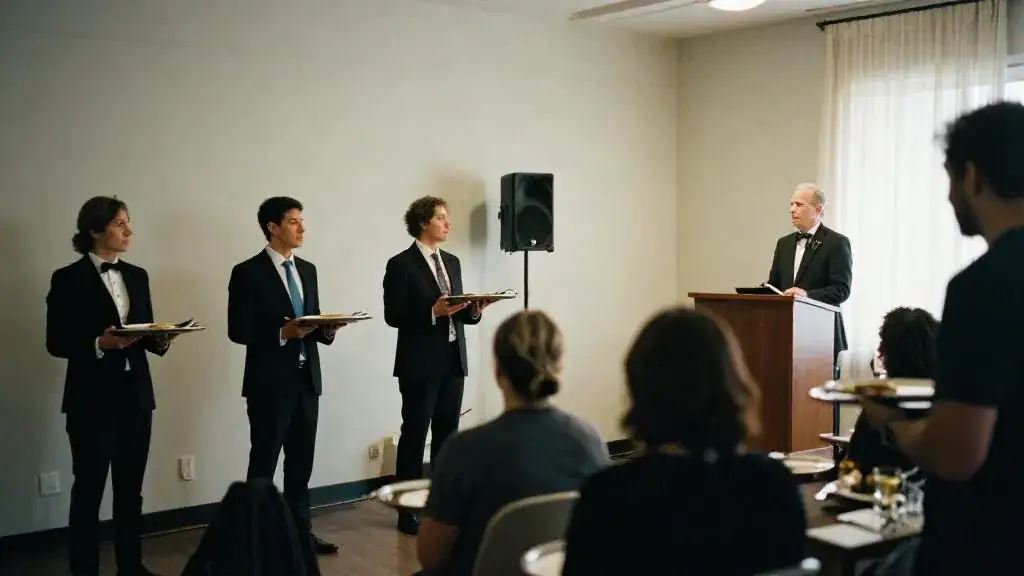
Entertainment works the same way. A strolling act can work tables while people settle and before the first plate is touched. A stage act needs a window with plates down and nobody clearing. Tell the caterer the mentalist is on at 8:25 and ask for the main to be cleared by 8:10 and dessert held until he is off.
Worked example: the Harbour Gala
The gala’s hotel F&B minimum is $18,000, which with 18 percent service and HST comes to roughly $24,000 all-in. At 200 guests that is a $90 per-plate spend before tax and service, at the bottom of the downtown hotel range, so the menu is built for speed and value rather than show.
Cocktail hour, 6:00 to 7:00: six pass-arounds including two vegetarian and one vegan, plus a sparkling pour at the door. First course, pre-set at 7:00: roasted Ontario squash and apple salad with toasted seeds, naturally vegan and gluten-free, so there is one first course for the whole room and no substitutions to track. Main, plated from 7:35: braised Ontario beef short rib with root vegetables, alternate of roasted cauliflower steak with the same vegetables and a different sauce, both plated the same way; halal beef is sourced for the eleven guests who requested it, and the kitchen plates those first from a separate line. Clear by 8:10. Program and mentalist 8:15 to 8:40. Paddle raise 8:45. Dessert, an apple tart with cheddar crumble and a dairy-free alternate, lands at 9:05 with coffee, after the ask closes. Room clear at 9:30.
Dietary codes on the seating chart: V, VG, GF, H, NUT, plus a column for anything unusual. The kitchen received the chart by table number three days before the event with a count per code, and the captain carried a copy on the floor.
Numbers to remember
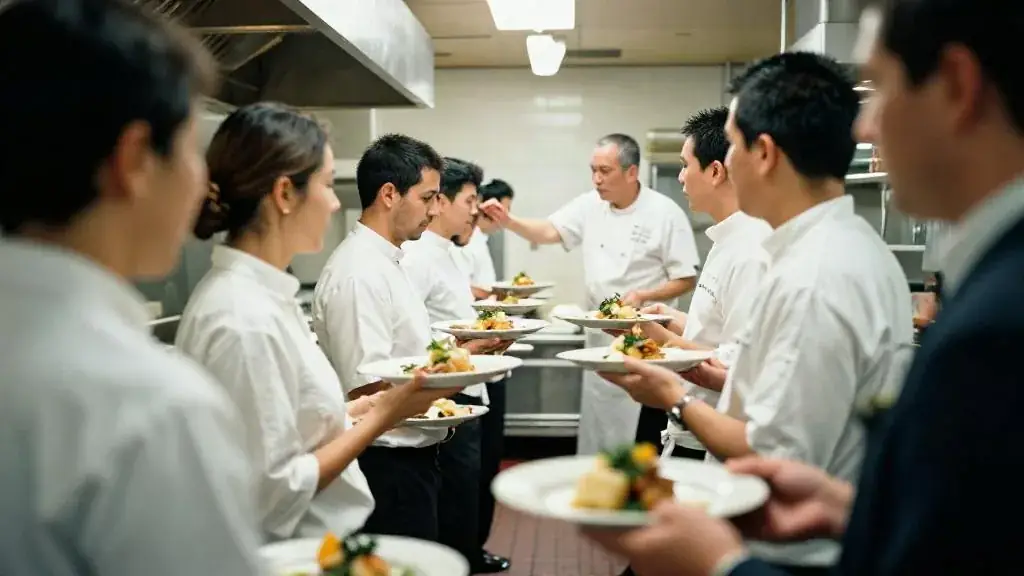
- Plated main for 200 with a pre-set first course: roughly 12 to 18 minutes to serve with a full brigade, in our experience; ask the hotel for their number for your room.
- Three speaking windows: after first course clear, after main clear, after dessert down.
- 18 percent service charge, then 13 percent HST on the total: a $90 plate becomes roughly $120 all-in.
- Name every dietary dish. “We can accommodate” is not a menu.
Worksheet
Download the worksheet, complete it for your own event (or the running gala example), and keep it in your course binder. It takes about 10 minutes.
Check your understanding
Related guides, venues and vendors
The day-of kit and the first hour
Module 10: Event Day · 15 min
What is in the bag, when to arrive, who to meet, and the walk-through that catches 80% of problems.
Read more
Tracking actuals and cash flow
Module 3: Budgeting · 15 min
Deposits, milestone payments, final balances and the week after. Build a payment calendar so nothing is late and nothing is paid twice.
Read more
Negotiating with venues and vendors
Module 3: Budgeting · 15 min
Dates, minimums, inclusions and payment terms are negotiable; quality rarely is. Learn the asks that work in Toronto and the ones that…
Read more