Eight beats from invitation to the ride home. Find the moments guests remember, fix the ones they complain about.
Read the transcript
Guest journey mapping.
Eight beats from invitation to the ride home.
Find the moments guests remember, fix the ones they complain about.
Eight beats.
Guests do not experience an event as a budget line or a floor plan.
They experience it as a sequence of moments, and they remember perhaps three of them: usually the arrival, one peak, and the way it ended.
Arrival and transitions are where events fail.
Most planners put their design effort into beats 6 and 7, because that is where the money is.
Most complaints come from beats 2, 5 and 8, because that is where guests wait.
How to map it.
Walk the venue as a guest, from the street, at the time of day the event happens. Note every place you had to guess.
Write the eight beats on one page with a time for each.
Worked example: the Harbour Gala.
Invitation: the foundation's page lists the hotel, the nearest subway station, the underground parking entrance, a dress code of business attire, and the 6 p.m. start.
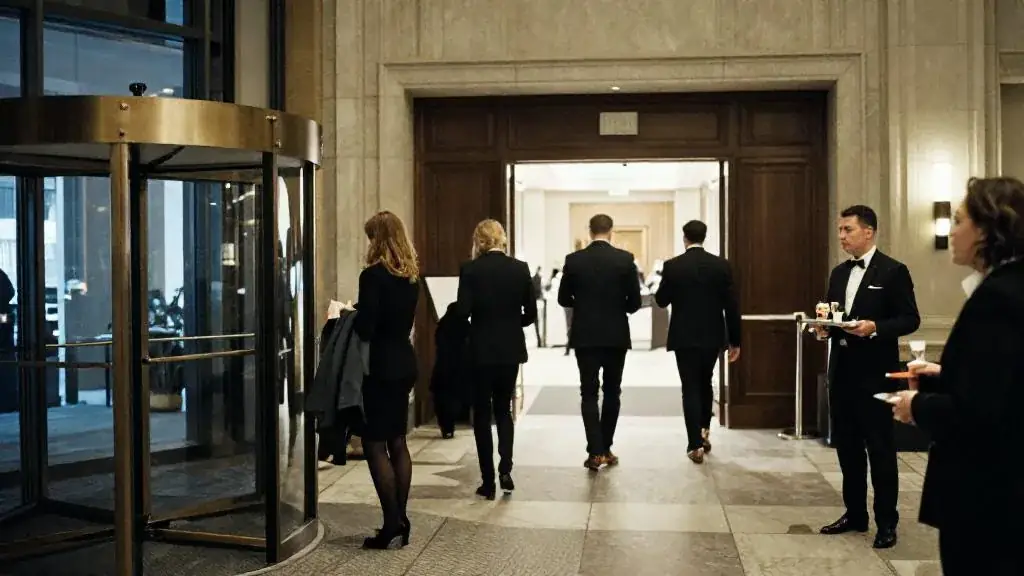
Arrival: the hotel's main entrance has two steps, so the step-free side entrance is marked on the invitation and signed at street level; coat check has two attendants from 5:45 to 6:30.
Common mistakes.
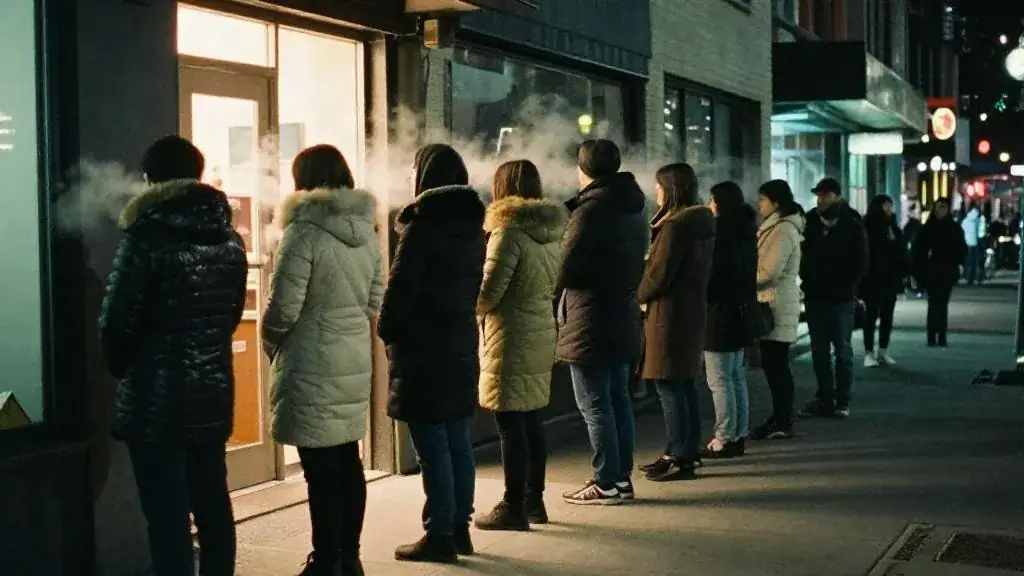
Designing beat 7 and ignoring beat 2. The peak does not land on a guest who spent 20 minutes in a coat line.
A still line with nothing to watch. Put the performer, the photographer or the first drink in the line.
That is the lesson. The worksheet and the quiz are just below this video.
What you will be able to do
- Map the journey in eight beats
- Design arrival and transitions
- Fix the waiting problem
Eight beats
Guests do not experience an event as a budget line or a floor plan. They experience it as a sequence of moments, and they remember perhaps three of them: usually the arrival, one peak, and the way it ended. The rest blurs. Guest journey mapping is simply writing down the sequence in order, from the guest’s side of the table, and fixing the moments that are weak.
We use eight beats. They apply to a gala, a wedding, a product launch and a kids’ party alike, though the content of each beat changes.
| Beat | What the guest is doing | What they are feeling if it goes wrong | What to design |
|---|---|---|---|
| 1. Invitation | Deciding whether to come, what to wear, how to get there | Confused about dress code, parking, timing | One clear page: when, where, how to arrive, what to wear, who to contact |
| 2. Arrival | Finding the door, parking, coat check, the first face | Lost, cold, in a line | Signage from the street in, a greeter, coat check sized to the surge |
| 3. Welcome | Getting a drink, finding someone they know | Alone, holding nothing | A drink within 90 seconds of entering; a host or roaming performer who breaks the ice |
| 4. Cocktail hour | Mingling, eating pass-arounds, being entertained | Bored, hungry, waiting for the doors to open | Entertainment sized to the crowd; food that arrives steadily; a clear end |
| 5. Transition to seats | Finding their table, sitting down | Wandering with a drink, looking for table 14 | A seating chart they can read in 10 seconds, staff at the doors, 25 minutes maximum |
| 6. Dinner and program | Eating, listening, talking | Speeches over soup; cold food; too long | Courses timed to the program; no speaking while plates are moving |
| 7. The peak | The ask, the first dance, the reveal, the headliner | Did not notice it happened | Lighting, MC, silence before it; everything else stops |
| 8. Departure | Coats, car, ride home | Line at coat check, no cab, cold | Coat check staffed for the surge, rideshare code, a goodbye at the door |
Arrival and transitions are where events fail
Most planners put their design effort into beats 6 and 7, because that is where the money is. Most complaints come from beats 2, 5 and 8, because that is where guests wait. The waiting problem is specific: a guest will tolerate a line if it moves visibly and if something is happening while they stand in it. A guest will not tolerate a still line in a hallway with nothing to look at.
Three fixes, in order of cost. First, stagger the surge: open doors 15 minutes before the invitation time and tell the first arrivals the bar is open. Second, put something in the line: a roaming performer at the coat check, a photographer at the entrance, a drink station before registration rather than after. Third, add capacity: a second coat check attendant for the first and last 30 minutes costs little and halves the line.
The transition to seats is the other weak point. Two hundred guests moving from a foyer to a ballroom takes about 15 to 25 minutes in our experience, regardless of how well you plan it, because people finish conversations and drinks on their own schedule. Design for it. The MC announces dinner, the lights in the foyer come up, the bar closes its line, staff at the ballroom doors point people to their tables, and the first course is pre-set so the room looks ready. The 25-minute gap before the first plate is not dead time if a performer works the tables while people settle. That is exactly where the Harbour Gala puts its strolling magicians.
How to map it
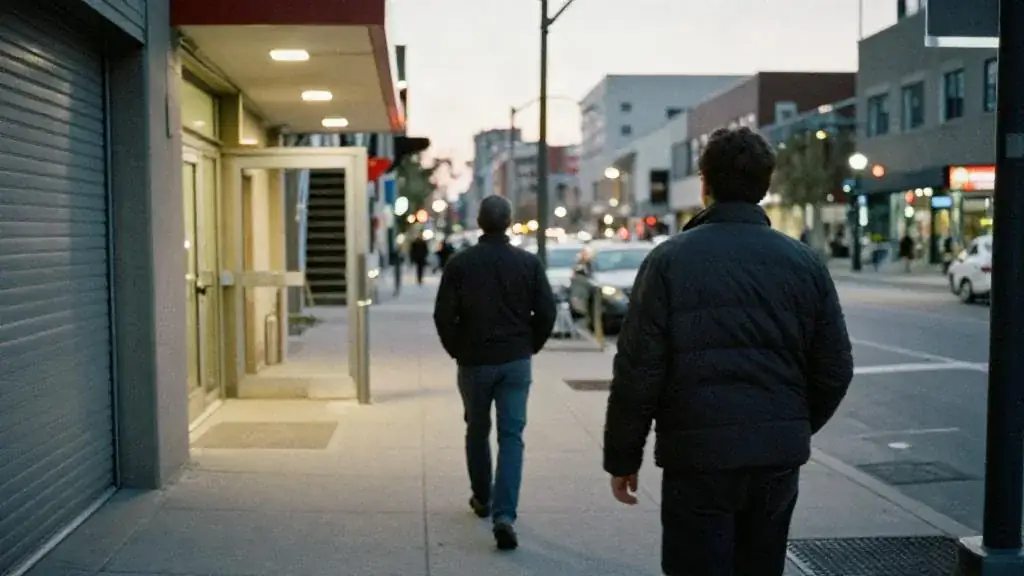
- Walk the venue as a guest, from the street, at the time of day the event happens. Note every place you had to guess.
- Write the eight beats on one page with a time for each.
- For each beat, write the one thing a guest should feel and the one thing that could go wrong.
- Assign a fix and an owner to every “could go wrong”.
- Mark the three beats you want guests to remember, and move money toward them.
Worked example: the Harbour Gala
Invitation: the foundation’s page lists the hotel, the nearest subway station, the underground parking entrance, a dress code of business attire, and the 6 p.m. start. Arrival: the hotel’s main entrance has two steps, so the step-free side entrance is marked on the invitation and signed at street level; coat check has two attendants from 5:45 to 6:30. Welcome: a greeter with an iPad checks names and points to the bar; sparkling wine is poured and waiting on a table at the top of the stairs so nobody queues for a first drink. Cocktail hour: two strolling magicians work the foyer from 6:00, one per hundred guests, which is thinner than the one per 40 to 60 we would use for a longer reception but enough for 55 minutes with pass-arounds flowing.
Transition: at 6:55 the MC announces dinner, foyer lights come up, and staff guide guests to the ballroom; the magicians move inside and work the tables until 7:20, covering the gap before the first plate. Dinner and program: no speaking during plate service; the CEO speaks between the main course being cleared and dessert. Peak: the mentalist set at 8:25, then the paddle raise at 8:45 with house lights up so spotters can see. Departure: the MC thanks guests at 9:30, coat check is back to two attendants, the rideshare code is on the screen and on a card at coat check, and the step-free exit is signed again. The foundation’s board chair stands at the door and says goodnight to donors by name, which costs nothing and is the beat most of them mention the next week.
Common mistakes
- Designing beat 7 and ignoring beat 2. The peak does not land on a guest who spent 20 minutes in a coat line.
- A still line with nothing to watch. Put the performer, the photographer or the first drink in the line.
- Speeches while plates are moving. Guests cannot hear, servers cannot work, and the speaker looks at a room of backs.
- Ending without a goodbye. The last beat is the one guests carry to the car; staff it.
- Mapping the journey for the able-bodied guest only. Lesson 5 of this module adds the accessibility layer; map both.
Worksheet
Download the worksheet, complete it for your own event (or the running gala example), and keep it in your course binder. It takes about 10 minutes.
Check your understanding
Related guides, venues and vendors
Holiday parties that people attend
Specialist · Corporate · 15 min
Dates, budgets per head, programs, and the entertainment that works for 50 to 500 colleagues.
Read more
Real-time problems: the fifteen most common
Module 10: Event Day · 15 min
Power trips, rain, no-shows, drunk guests, medical incidents, double-booked rooms, missing cake. The fix for each, in the order you do it.
Read more
Fire, pyro, candles and performers
Module 8: Legal, Safety & Risk (Ontario) · 15 min
Open flame rules, pyrotechnic permits, fire performer requirements, extinguishers, fire watch and venue approvals.
Read more