Dates, budgets per head, programs, and the entertainment that works for 50 to 500 colleagues.
Read the transcript
Holiday parties that people attend.
Dates, budgets per head, programs, and the entertainment that works for 50 to 500 colleagues.
The party people skip, and the one they do not.
Every company holiday party competes with the same thing: a Thursday evening at home in December.
People come when the date is easy, the venue is near transit, the program is short, the food is real and there is something to talk about on Monday.
Dates and booking.
In our experience the first three Thursdays and Fridays of December go first, and downtown venues that suit 100 to 300 people are often booked by September.
Early December beats late December because fewer people are travelling.
The CRA rule everyone should know.
An employer-provided social event is a non-taxable benefit to employees if it is open to all employees and the cost is 150 dollars per person or less, including taxes, with transport home and overnight accommodation excluded from that figure.
The limit is six such events a year.
Budgets per head by format.
Entertainment sits on top: DJ 900 to 2,500 dollars; four-piece band 2,500 to 6,000 dollars; close-up magician 600 to 1,500 dollars for two hours; photo booth 800 to 1,500 dollars; uplighting for 20 fixtures 600 to 1,200 dollars (typical GTA ranges, 2026).
Spread across 180 heads, a magician and a photo booth together add roughly 10 dollars to 15 dollars per person.
Programs that work.
Keep the formal part under twenty minutes in total.
The shape that works for most companies:
That is the lesson. The worksheet and the quiz are just below this video.
The party people skip, and the one they do not
Every company holiday party competes with the same thing: a Thursday evening at home in December. People come when the date is easy, the venue is near transit, the program is short, the food is real and there is something to talk about on Monday. They skip when it is a Saturday in the suburbs, the speeches run forty minutes and the bar is a ticket system. Everything in this lesson follows from that.
Dates and booking
In our experience the first three Thursdays and Fridays of December go first, and downtown venues that suit 100 to 300 people are often booked by September. Early December beats late December because fewer people are travelling. A mid-January “new year” party is a legitimate alternative: venues are cheaper, staff are rested, and attendance is often better than a December 20th date. Ask the sponsor whether they want a party before the year-end rush or a reward after it, and book accordingly.
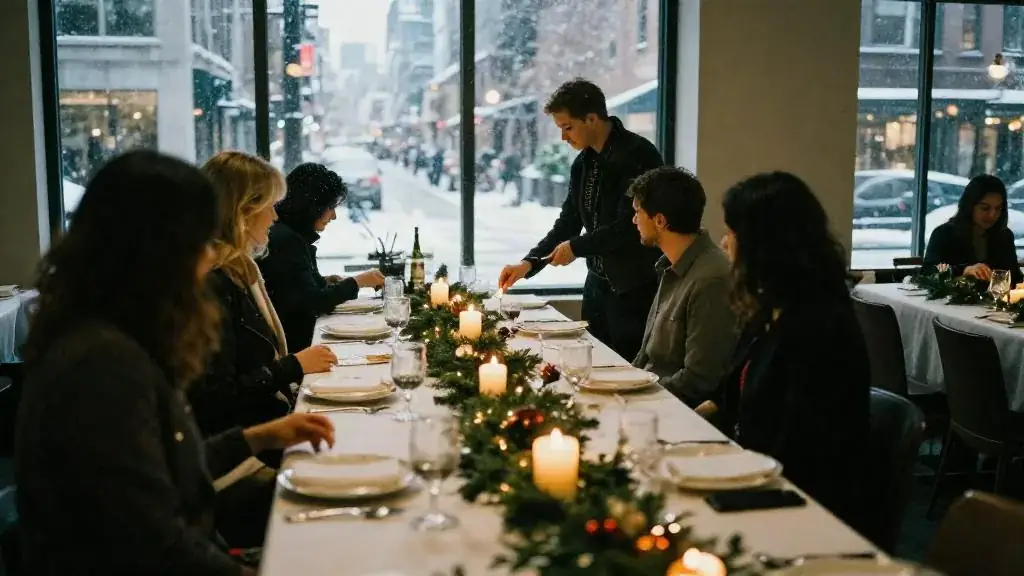
Weeknights also help the budget. Many venues price Thursday below Saturday and some waive room rental against an F&B minimum. Confirm the minimum, the 18 per cent service charge and HST at 13 per cent before you tell anyone a number.
The CRA rule everyone should know
An employer-provided social event is a non-taxable benefit to employees if it is open to all employees and the cost is $150 per person or less, including taxes, with transport home and overnight accommodation excluded from that figure. The limit is six such events a year. If the cost goes over $150 per person, the whole amount becomes a taxable benefit, not just the excess. HR and finance know this rule; a planner who knows it too, and who builds the per-head number with HST and service charge inside the $150, is a planner they trust. Ask the sponsor at the first meeting whether they are designing to the threshold, and if they are, work out the per-head figure with the event budget calculator before you tour venues.
Budgets per head by format
| Format | What is included | Typical GTA range, 2026, per head before entertainment |
|---|---|---|
| Office or restaurant reception | Passed canapés, house bar for three hours, playlist | Roughly $60–$110 including service and HST, in our experience |
| Banquet hall dinner | Plated or buffet dinner at $65–$120 per plate before tax and service, open bar, DJ | Roughly $120–$200 all-in, in our experience |
| Downtown hotel dinner | Plated dinner at $95–$180 per plate before tax and service, open bar, program | Roughly $170–$300 all-in, in our experience |
| Activity-based party | Venue with a built-in activity (bowling, curling, games), food stations, bar | Roughly $90–$160 all-in, in our experience |
Entertainment sits on top: DJ $900–$2,500; four-piece band $2,500–$6,000; close-up magician $600–$1,500 for two hours; photo booth $800–$1,500; uplighting for 20 fixtures $600–$1,200 (typical GTA ranges, 2026). Spread across 180 heads, a magician and a photo booth together add roughly $10 to $15 per person.
Programs that work
Keep the formal part under twenty minutes in total. The shape that works for most companies:
- Reception, 60 to 75 minutes. Food circulating from the first minute; roaming entertainment (one close-up performer per 40 to 60 guests) so that nobody stands alone with a drink.
- Welcome from the most senior person, three minutes, no slides.
- Dinner or substantial stations. Nothing on stage during service.
- One recognition moment: years of service, a team award, a thank-you. Ten minutes, with an MC who has the names and pronunciations.
- A short stage act, 20 to 30 minutes, placed right before the dance floor opens or before the late-night food. A mentalist or comedy magician works across departments in a way a band cannot, because the room is watching the same thing.
- Dance floor or games until the end; late-night food an hour before the hard out.
Entertainment by headcount
At 50 people, the party is one room and one conversation; a single close-up magician and a good playlist carry it, and a stage show feels oversized. At 150 to 200, you need both circulation entertainment during the reception and one shared moment on stage; a DJ with an MC, a photo booth and a 25-minute stage act is the standard kit. At 500, the room fragments into departments; plan zones (a lounge, a games area, the dance floor, a quiet area with seating) with entertainment in each, a strong MC and a live band or a DJ with live elements. Use the entertainment hours planner to lay performers against the program, and the entertainment finder for corporate-experienced acts; listings owned by the site founder carry a visible disclosure and no ranking preference.

Worked example: a 180-guest tech-company holiday party
A downtown software company with 180 staff wanted a Thursday in the first week of December, close to Union Station, and asked us to stay under the $150 CRA threshold per head, all-in, excluding the taxi credits HR was issuing separately. We priced an event-venue reception with heavy stations rather than a plated dinner: venue and F&B at roughly $95 per head before service and HST came to roughly $126 with the 18 per cent service charge and HST, which left room for two close-up magicians during the 75-minute reception, a photo booth and a DJ, spread across 180 heads at roughly $19. We landed at about $145 per head and documented the calculation for finance. The program was a four-minute welcome, a ten-minute recognition segment with an MC, a 25-minute comedy mentalism set at 8:45 before the dance floor opened, and late-night sliders at 10:15 for an 11 p.m. finish. Attendance was 164 of 180, which the HR lead called the best in years, and the Monday conversation was the mentalist.
Common mistakes
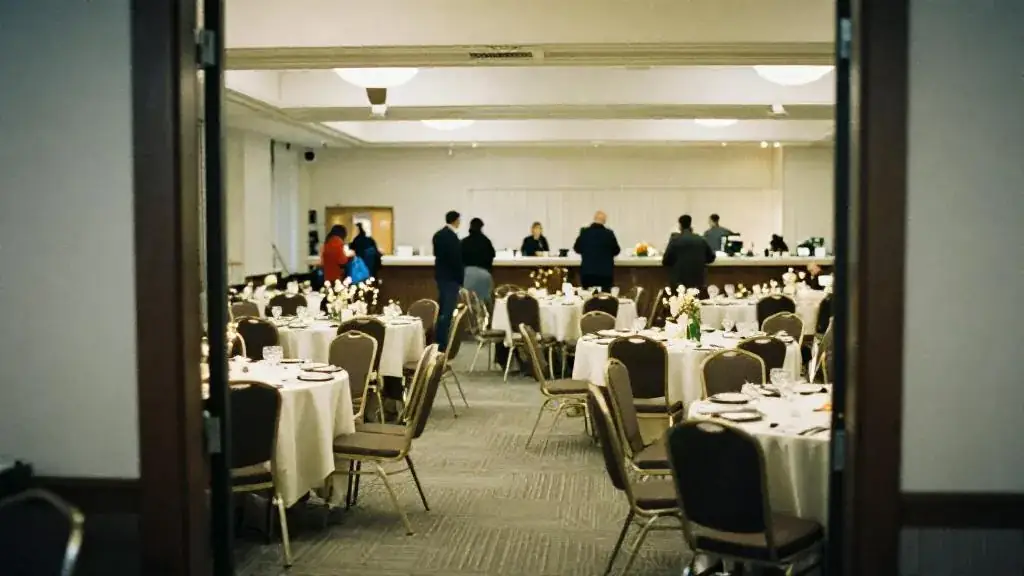
- Saturday nights, suburban venues, and dates after December 15.
- Forgetting that the $150 CRA figure includes HST and service charge, and that exceeding it makes the whole cost taxable.
- Forty minutes of executive speeches with slides.
- Entertainment during dinner service.
- A dance floor with no circulation entertainment before it; people leave before it opens.
Worksheet
Apply this lesson to a real or practice event using the worksheet, then mark the lesson complete to track your progress toward the certificate.
Related guides, venues and vendors
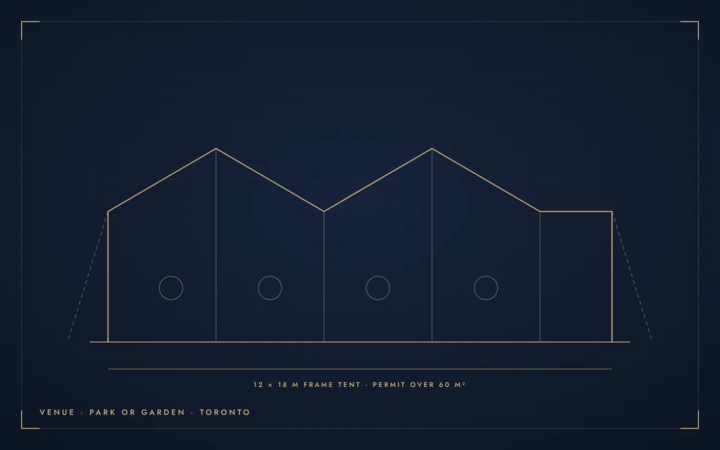
Toronto Botanical Garden
North York, Toronto · 150–300 guests
Near transit · Outdoor space
The Garden is a registered charity, and its event building is LEED Silver certified.
Read more
Château des Charmes
Niagara · up to 250 guests
In-house catering · Outdoor space
Château des Charmes is a winery on the St. Davids Bench in Niagara-on-the-Lake, founded in 1978.
Read more
Holiday party planning timeline
Corporate Holiday Parties
June to December: what to book when for a corporate holiday party.
Read more