Session design, breakouts, AV house rules, registration platforms, sponsors and entertainment between sessions.
Read the transcript
Conferences: program, AV and registration.
Session design, breakouts, AV house rules, registration platforms, sponsors and entertainment between sessions.
The program is the product.
A conference is sold on the program, judged on the logistics and remembered for the moments in between.
Attendees forgive a slow registration line if the sessions were good.
Designing the program.
Start with the attendee's day, not the speaker list.
A full-day conference runs roughly 8 a.m. to 5 p.m. with registration and coffee first, a plenary opening, breakout blocks, lunch, more breakouts, a closing plenary and a reception.
AV house rules.
Hotels and conference centres commonly have an in-house or exclusive AV provider, and the venue contract will say whether you may bring your own.
Read that clause before you price anything.
Registration.
Choose a registration platform for three things: how the attendee experience looks on a phone, how the data exports, and how check-in works on the day.
Most platforms will take payment, issue tickets with codes, and print badges on site; ask about per-ticket fees, payment processing fees and whether HST is handled properly on the invoice.
Sponsors and the spaces between.
Sponsors buy attention, not logos.
Give them the moments that already have attention: the coffee break, the lunch, the reception, the lanyard, the charging station.
That is the lesson. The worksheet and the quiz are just below this video.
The program is the product
A conference is sold on the program, judged on the logistics and remembered for the moments in between. Attendees forgive a slow registration line if the sessions were good. They never forgive a great keynote they could not hear. This lesson covers the four systems that make a conference work: the program, the AV, registration and the sponsor and entertainment layer that ties the day together.
Designing the program
Start with the attendee’s day, not the speaker list. A full-day conference runs roughly 8 a.m. to 5 p.m. with registration and coffee first, a plenary opening, breakout blocks, lunch, more breakouts, a closing plenary and a reception. The rules that keep energy up:
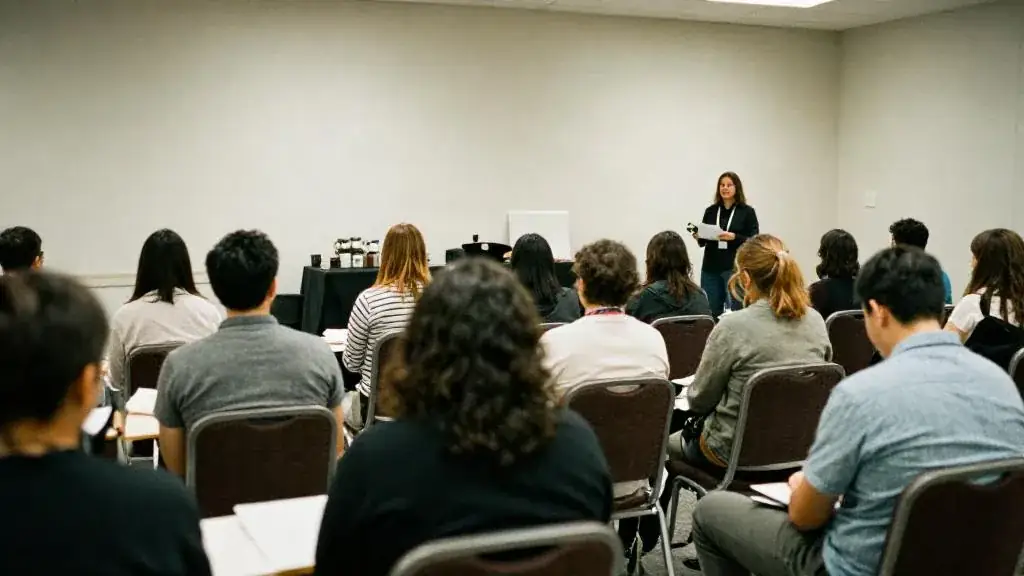
- Plenaries at the start and the end, when everyone is in one room. Keynotes 30 to 45 minutes; panels 40 minutes with a moderator who has rehearsed the questions.
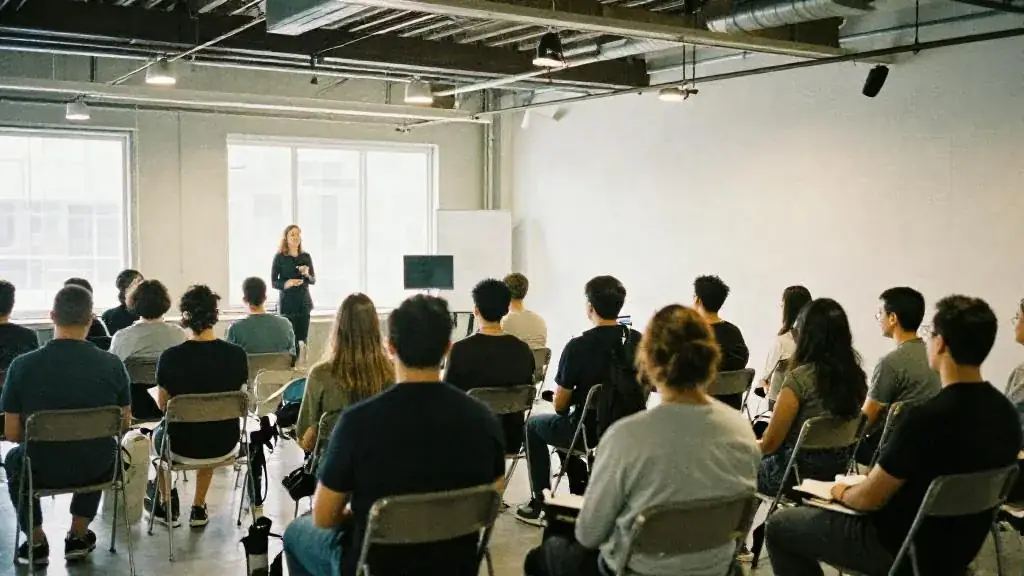
- Breakouts in blocks of 45 to 60 minutes with 15-minute transitions. Three or four concurrent tracks is enough for most events under 500 people; more tracks means emptier rooms.
- Coffee breaks of 30 minutes, not 15. The hallway is where the value is.
- Lunch of 60 to 75 minutes; a sponsored lunch talk is acceptable only if it is short and the food is already on the tables.
- Nothing of substance after 4 p.m. except the closing; put the reception immediately after so people stay.
Room sizes follow the Ontario Building Code densities for planning: 0.75 m² per person for theatre seating, 1.85 m² for classroom, 0.95 m² for seated dining. The posted occupant load set by the fire authority is a legal maximum; check it against each breakout room in the venue capacity calculator before you assign tracks to rooms.
AV house rules
Hotels and conference centres commonly have an in-house or exclusive AV provider, and the venue contract will say whether you may bring your own. Read that clause before you price anything. Ask for the AV quote as a separate document, and ask specifically about labour hours, overtime after a set time, rigging fees for anything hung from the ceiling, charges for using the house sound system or patching into it, internet bandwidth pricing, and the service charge and HST on top. Ask the same questions of an outside provider if the contract allows one, and compare like with like.
| Room | Minimum kit | Who runs it |
|---|---|---|
| Plenary | Two screens or one wide screen, projector or LED, lectern mic, two wireless handhelds, two lapels, confidence monitor, countdown timer, stage wash, recording feed | Technical director plus audio operator plus graphics operator |
| Breakout | Screen, projector, lectern mic, one wireless handheld for questions, clicker, laptop with the day’s decks preloaded | One technician floating across two or three rooms, plus a room host |
| Registration and foyer | Signage screens, background music, charging points | Registration lead |
Collect every presentation 48 hours ahead, in one format, and load it on the house machine. A speaker plugging in their own laptop is the single most common cause of a dead ten minutes on stage.
Registration
Choose a registration platform for three things: how the attendee experience looks on a phone, how the data exports, and how check-in works on the day. Most platforms will take payment, issue tickets with codes, and print badges on site; ask about per-ticket fees, payment processing fees and whether HST is handled properly on the invoice. Collect only what you need: name, organization, email, dietary and accessibility requirements, and session choices if you need to size rooms. Under PIPEDA that is the principle: collect what you need, say why, get consent, protect it and delete it when done. Put the photography notice in the registration wording and honour opt-outs with a different badge colour or lanyard.
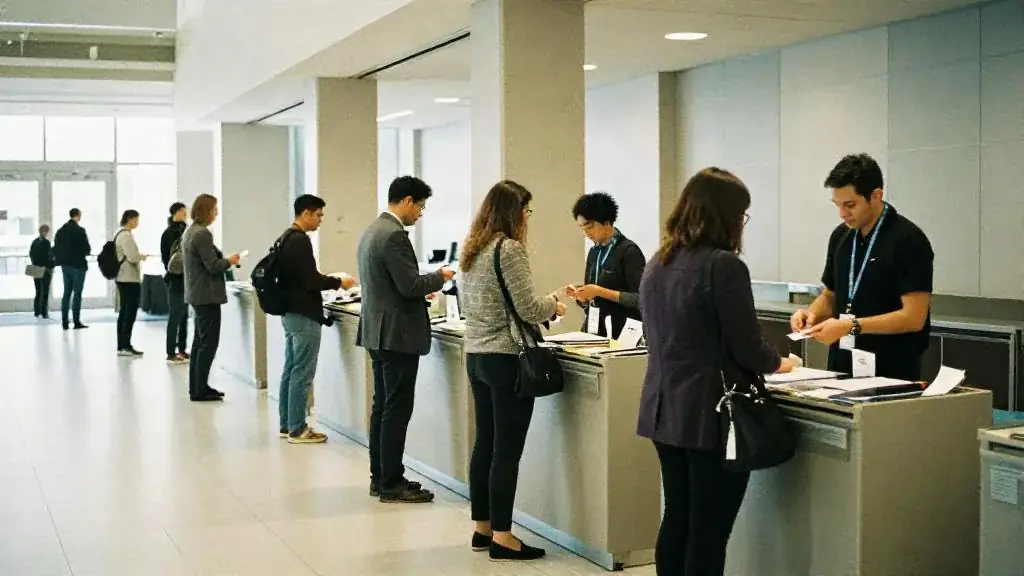
On the day: one check-in station per roughly 75 to 100 attendees arriving in the same 30 minutes, a separate line for speakers and sponsors, and a problems desk away from the main flow. AODA applies: a step-free route from accessible parking and transit to the rooms, accessible washrooms, reserved seating with companion seats, captions or ASL on request and a quiet space.
Sponsors and the spaces between
Sponsors buy attention, not logos. Give them the moments that already have attention: the coffee break, the lunch, the reception, the lanyard, the charging station. A sponsored break with a close-up magician working the foyer under the sponsor’s banner delivers more conversations than a booth in a corner. Between sessions, entertainment should be short, movable and quiet enough not to delay the next block: strolling magic, a caricaturist, a musician in the foyer. Save the stage act for the reception, 20 to 30 minutes before the bar is fully busy. Use the sponsorship deck template to package the opportunities and the run of show template for the plenary room.
Worked example: the tech company’s all-hands day
The software company from our holiday-party example asked us to turn its annual all-hands into a one-day internal conference for the same 180 people, at a downtown hotel with one ballroom and three meeting rooms. Program: registration and coffee from 8:15; plenary at 9:00 with the CEO for 30 minutes and a product keynote for 30; two breakout blocks of 50 minutes with three tracks each; a 70-minute lunch; a closing plenary with a 25-minute external keynote at 3:15; reception from 4:30. The hotel’s exclusive AV partner quoted the plenary kit with two technicians; we accepted that and negotiated that the breakout rooms use house projectors with one floating technician, which cut the AV cost noticeably. Decks were collected on the Monday. The closing keynote was followed, not preceded, by a 20-minute mentalist act that used the company’s own product themes, and the reception that followed held 150 people until 6 p.m. Registration was internal, so we used a simple form with dietary and accessibility fields and a quiet room on the mezzanine.
Common mistakes
- Pricing a venue without reading the AV exclusivity clause.
- Fifteen-minute coffee breaks and no transition time between breakouts.
- Speakers using their own laptops on stage.
- Too many tracks for the headcount; empty rooms discourage speakers and attendees.
- Collecting personal data the event does not need and keeping it afterwards.
Worksheet
Apply this lesson to a real or practice event using the worksheet, then mark the lesson complete to track your progress toward the certificate.

Related guides, venues and vendors
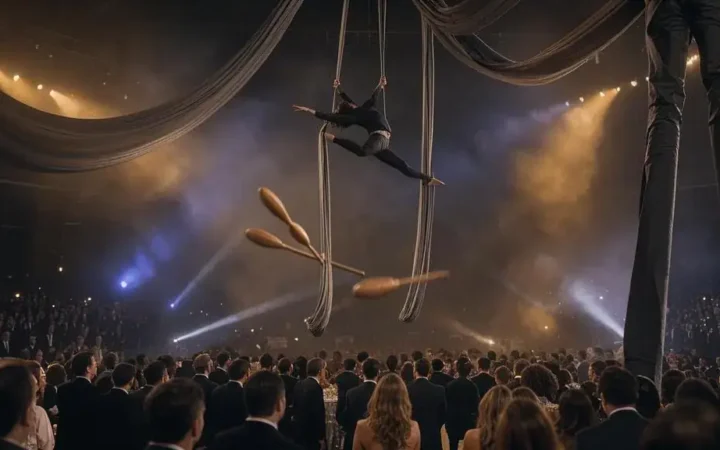
Circus Universe
Circus & Aerial Acts, Entertainment, Fire, LED & Glow Acts, Jugglers, Roaming Acts, Stilt Walkers · Roaming from $550 · aerial from $1,200 · fire from $900
Toronto circus entertainment company: aerialists, fire and LED performers, stilt walkers, jugglers, acrobats, contortion, strongmen, clowns, walkabout characters and full circus productions.
Read more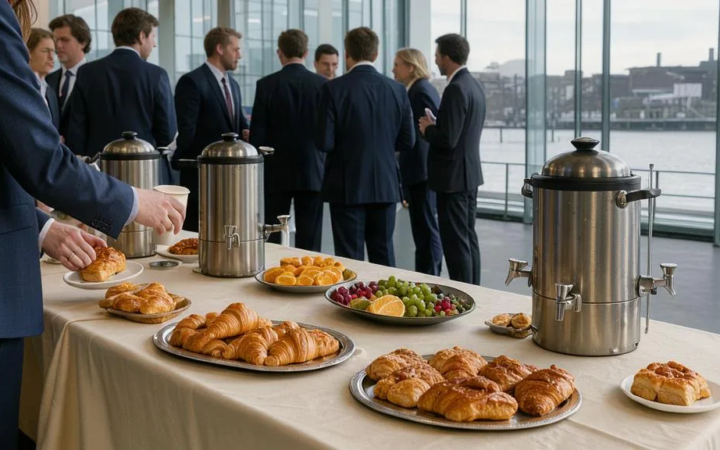
Conference food & drink
Conferences & Conventions
Catering for breaks, lunch and the reception at a Toronto conference: formats, timings, dietary planning, the service charge and Ontario alcohol rules.
Read more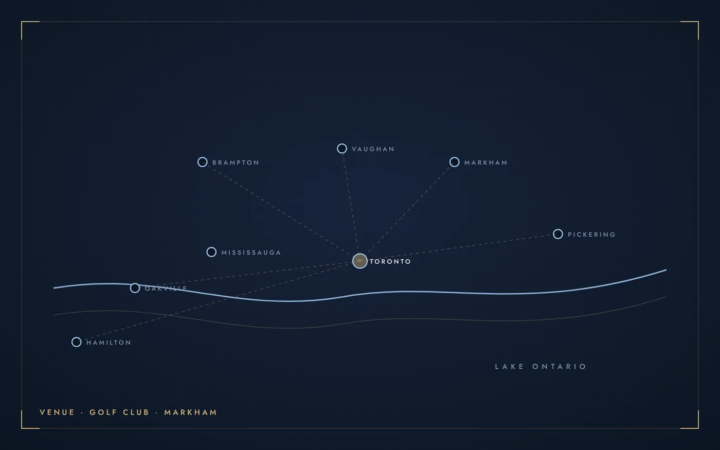
Angus Glen Golf Club
Markham · up to 800 guests
In-house catering · Free parking
Angus Glen is a golf club in north Markham with a clubhouse conference and banquet centre.
Read more