Booth layout, staffing, lead capture, sales entertainment and measuring booth ROI.
Read the transcript
Trade shows and booth activations.
Booth layout, staffing, lead capture, sales entertainment and measuring booth ROI.
A booth is a sales call with foot traffic.
Trade shows are expensive per hour of attention.
The booth fee, the build, the travel, the staff time and the shipping all exist so that a buyer stops for ninety seconds.
Booth layout.
Most GTA show floors sell booths in 10 by 10 ft units, so a 10 by 20 is the common step up for a company that wants more than a table.
The layout rules that matter:
Staffing.
Two people on the floor at all times for a 10 by 20, three if there is a demo, with shifts no longer than four hours; standing on concrete is tiring and tired staff look at their phones.
Brief every staffer the evening before: the one message, the three qualifying questions, how to capture a lead and how to end a conversation politely.
Lead capture.
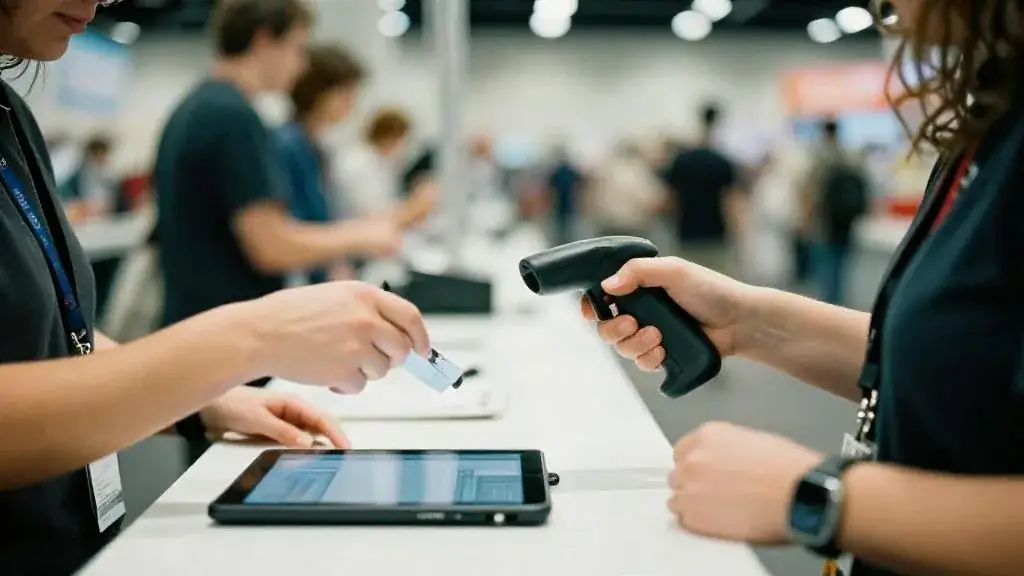
Most shows rent badge scanners or a lead-capture app tied to the registration data; price it against a simple form on a tablet.
Whatever the tool, the capture has to record three things in under thirty seconds: who they are, what they need and what the next step is.
Sales entertainment.
A trade-show magician or mentalist is one of the few booth tactics that reliably stops traffic, because people see a crowd and join it.
The act works when the performer has been briefed on the product, weaves the company's message into the routine, and hands the crowd to the sales team at the end of each set rather than walking away with it.
That is the lesson. The worksheet and the quiz are just below this video.
A booth is a sales call with foot traffic
Trade shows are expensive per hour of attention. The booth fee, the build, the travel, the staff time and the shipping all exist so that a buyer stops for ninety seconds. Everything in booth planning is about raising the number of people who stop, the quality of the conversation when they do, and whether the sales team can follow up. The planner’s job is to build the machine; the sales team’s job is to work it.
Booth layout
Most GTA show floors sell booths in 10×10 ft units, so a 10×20 is the common step up for a company that wants more than a table. The layout rules that matter:
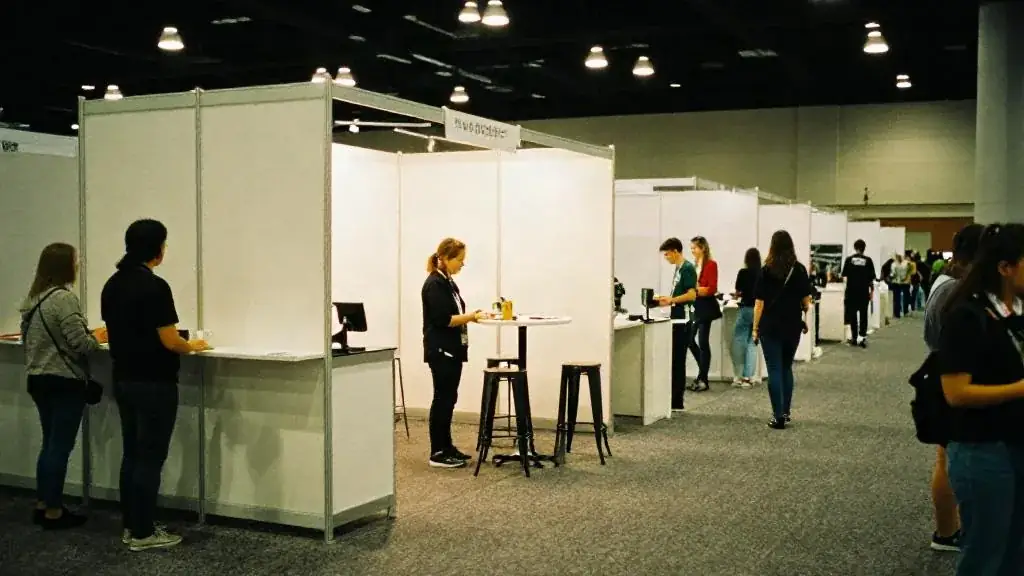
- Keep the front open. A table across the front is a barrier; put counters at the sides or back.
- One message, readable from 6 m, at eye height or above. Nobody reads a paragraph on a banner.
- A reason to stop in the first 2 m: a demo screen, a product in hand, a performer, a coffee.
- A place to talk: two stools and a high table where a sales conversation can happen without blocking the aisle.
- Storage out of sight: a lockable cabinet for coats, bags, lead devices and giveaways.
- Power and internet ordered from the show’s official contractor well before the deadline; late orders usually cost more, and show rules often prohibit running your own cables across aisles.
Read the exhibitor manual front to back. It sets the height limits, the rules on hanging signs, the hours when forklifts move, the union labour rules in some venues, the move-in and move-out windows and the drayage (material handling) fees. Those fees are routinely the surprise item in a trade-show budget. Put every one of them in the budget sheet.
Staffing
Two people on the floor at all times for a 10×20, three if there is a demo, with shifts no longer than four hours; standing on concrete is tiring and tired staff look at their phones. Brief every staffer the evening before: the one message, the three qualifying questions, how to capture a lead and how to end a conversation politely. No chairs behind the counter, no eating in the booth, no closed circles of colleagues talking to each other. Name a booth captain for each shift who owns the lead count.
Lead capture
Most shows rent badge scanners or a lead-capture app tied to the registration data; price it against a simple form on a tablet. Whatever the tool, the capture has to record three things in under thirty seconds: who they are, what they need and what the next step is. Qualify on the spot with a rating (hot, warm, cold) so that the sales team is not calling 400 people with the same script on Monday. PIPEDA applies: tell people what you will do with their information, get consent, keep it secure and delete what you do not use. A draw for a prize is a legitimate way to collect cards, but say what entering means.
Sales entertainment
A trade-show magician or mentalist is one of the few booth tactics that reliably stops traffic, because people see a crowd and join it. The act works when the performer has been briefed on the product, weaves the company’s message into the routine, and hands the crowd to the sales team at the end of each set rather than walking away with it. Book for 20 to 30 minutes per set, with 15 minutes between sets, across the busiest hours; a close-up performer in a booth is typically priced per day rather than per hour, so ask for a show-day rate. Use the entertainment finder to find performers who list trade-show experience; listings owned by the site founder carry a visible disclosure and no ranking preference.
Giveaways are the other draw. The useful rule: one thing people will carry around the floor (and advertise you with), one thing they will keep on a desk, and nothing they will throw away at the hotel.
Measuring booth ROI
| Measure | How to count it | Why it matters |
|---|---|---|
| Total cost | Booth fee, build, drayage, power, internet, staff travel and time, entertainment, giveaways, shipping, HST on all of it | The denominator; most companies undercount staff time |
| Leads captured | Count by rating per day and per shift | Tells you which hours and which staff performed |
| Qualified meetings booked | Follow-ups confirmed within two weeks | The number sales cares about |
| Cost per qualified lead | Total cost divided by hot and warm leads | Compare to other channels |
| Pipeline and closed revenue | Tracked in the CRM for 6 to 12 months with the show as source | The only real ROI |
Run the numbers in the event ROI calculator before you commit and again after the show, and compare the two.

Worked example: the tech company at a Toronto trade show
The 180-person software company took a 10×20 booth at a two-day industry show in a Toronto convention centre. The planner read the exhibitor manual and found drayage, electrical and the mandatory carpet were not in the sales team’s budget; they added a noticeable sum. We built an open-front booth with one line of copy, a demo screen on the back wall, a high table and a lockable cabinet. Staffing was three per shift in four-hour blocks. A trade-show mentalist performed four 25-minute sets each day, each ending with a routine built on the product’s three selling points and a hand-off to the booth captain. Leads were captured on the show’s scanner with a three-level rating added by hand. Result: a much higher lead count during the performed hours than the open hours, a known cost per qualified lead, and a sales team that could see which shift produced what. The CRM carried the show as a source for the next year.
Common mistakes
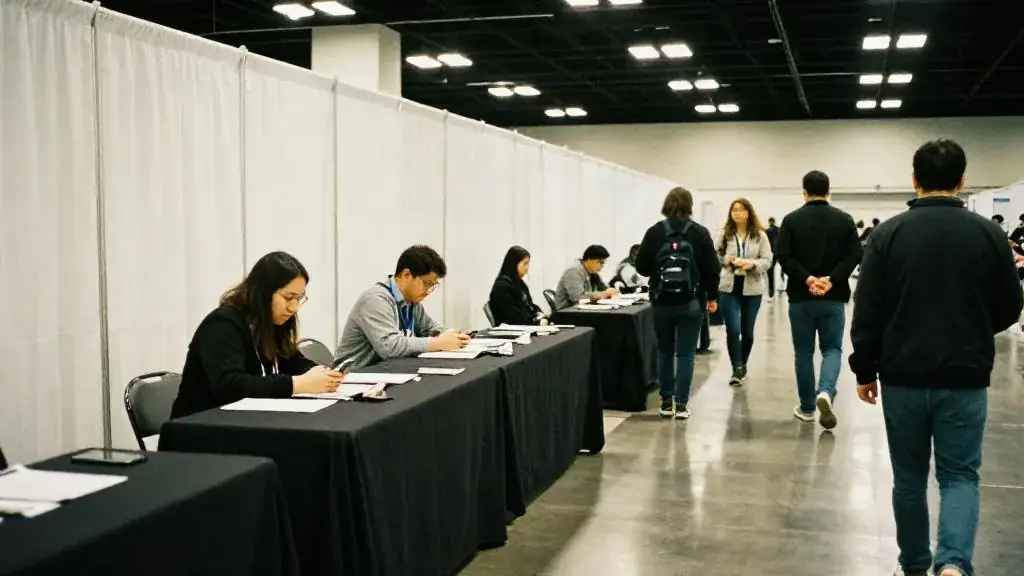
- A table across the front and staff sitting behind it.
- Missing the contractor deadlines for power, internet and drayage.
- Entertainment that gathers a crowd and then releases it without a hand-off.
- Leads scanned but not rated; everyone gets the same follow-up.
- Measuring the show by how busy it felt rather than by qualified leads and pipeline.
Worksheet
Apply this lesson to a real or practice event using the worksheet, then mark the lesson complete to track your progress toward the certificate.
Related guides, venues and vendors

Related articles & tools
Team Building
Articles, tools and Academy lessons for team building in Toronto and the GTA, in the order planners use them.
Read more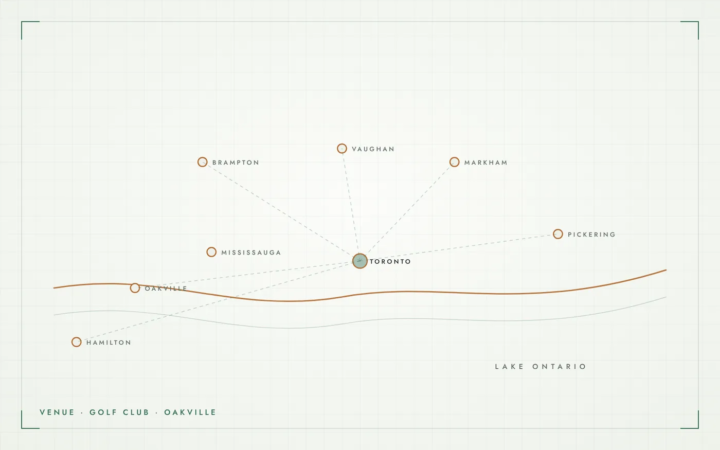
Glen Abbey Golf Club
Oakville · 150–300 guests
In-house catering · Free parking
Glen Abbey is a ClubLink-operated golf club in Oakville.
Read more
Trade show checklist
Trade Shows & Booth Activations
The printable exhibitor checklist from space contract to the 30-day ROI review. Progress saves in your browser.
Read more