Program shape, sponsorship, the ask, and spectacle before the ask.
Read the transcript
Galas and award nights.
Program shape, sponsorship, the ask, and spectacle before the ask.
What a gala is for.
A gala or award night has one job that the dinner is built around: a moment where money is raised or achievement is recognized in front of the room.
Everything on the program either builds toward that moment or protects it.
The program shape.
The order below is the version that works in our experience for a 200- to 400-seat gala with a fundraising ask.
Award nights use the same shape with awards in place of the ask, grouped into two or three short blocks rather than twenty consecutive presentations.
Spectacle before the ask.
The stage act is not decoration.
A 20- to 45-minute mentalist, illusionist or comedian placed immediately before the ask does two things: it brings every eye to the stage, and it leaves the room in a good mood and facing forward when the auctioneer stands up.
Sponsorship.
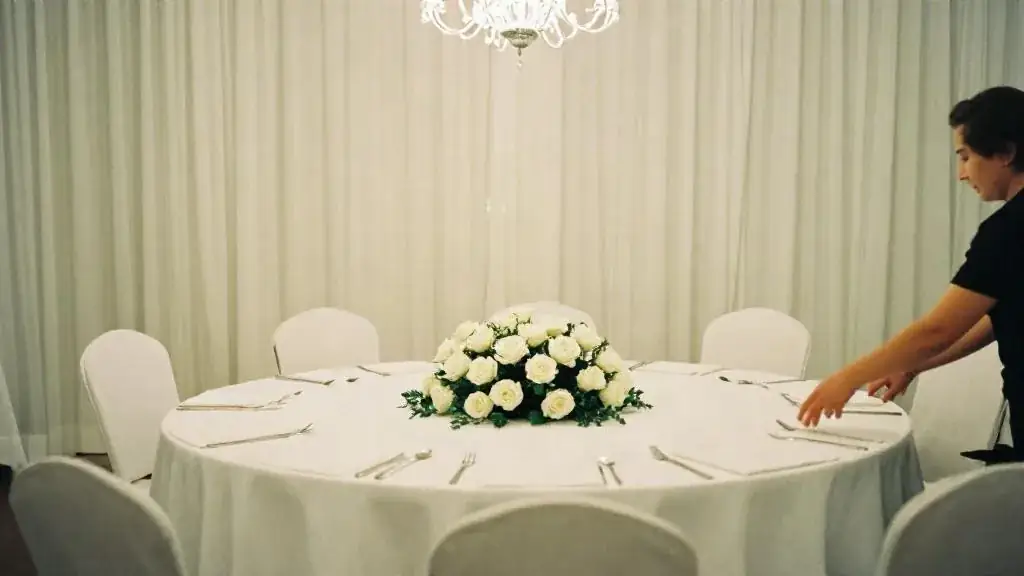
Table sponsors are the easiest revenue in the building: a company buys a table of ten at a premium, gets its name in the program and on the table, and fills the seats with clients.
Above that, build three or four tiers with real benefits (presenting sponsor on the stage screen and in the MC script; reception sponsor on the cocktail signage; entertainment sponsor introduced before the act).
Compliance in the room.
That is the lesson. The worksheet and the quiz are just below this video.
What a gala is for
A gala or award night has one job that the dinner is built around: a moment where money is raised or achievement is recognized in front of the room. Everything on the program either builds toward that moment or protects it. Get the shape right and the room gives; get it wrong and the room leaves before the ask because the salad was late.
The program shape
The order below is the version that works in our experience for a 200- to 400-seat gala with a fundraising ask. Award nights use the same shape with awards in place of the ask, grouped into two or three short blocks rather than twenty consecutive presentations.
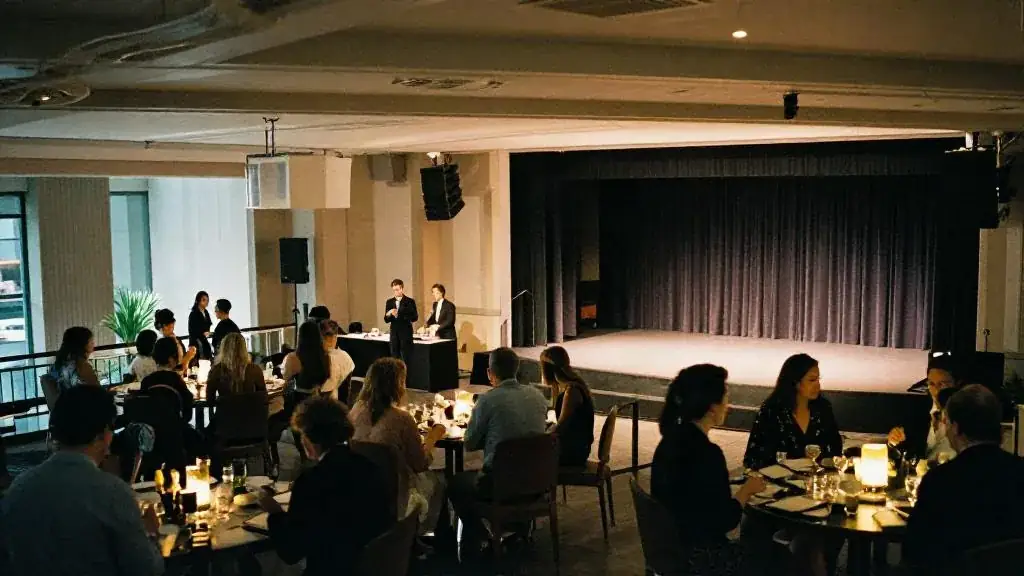
- Cocktail reception, 60 minutes. Silent auction open, roaming entertainment at one performer per 40 to 60 guests, sponsor signage where people stand.
- Seating and welcome, five minutes. MC introduces the chair; one short thank-you to the presenting sponsor.
- First course and main served with nothing on stage. Video or speeches during service divide the room’s attention and slow the kitchen.
- Program block, 25 to 35 minutes: a mission story (video or a live testimonial, under five minutes), the stage act, then the ask, with the auctioneer or chair leading a paddle raise.
- Dessert, coffee, auction close, prize draws if licensed, and dancing or a lounge for those who stay.
The ask has a hard time limit from the kitchen’s side and from human nature: the paddle raise needs to finish before 9 p.m. or the room is already thinking about coats. Build the program backwards from that.
Spectacle before the ask
The stage act is not decoration. A 20- to 45-minute mentalist, illusionist or comedian placed immediately before the ask does two things: it brings every eye to the stage, and it leaves the room in a good mood and facing forward when the auctioneer stands up. The act must be briefed on the cause, the sponsor names and the hard out, and the MC must introduce it; nobody walks on stage unannounced. A stage illusionist or mentalist for 30 to 45 minutes runs $1,500 to $5,000 (typical GTA range, 2026); an aerial duo adds rigging, a certified point rated for the dynamic load (typically 1,000 lb or 450 kg working load, engineer-confirmed), a ceiling of at least 4.5 to 5 m and venue approval. Send the performer tech rider to the venue before you sign the act.
Sponsorship
Table sponsors are the easiest revenue in the building: a company buys a table of ten at a premium, gets its name in the program and on the table, and fills the seats with clients. Above that, build three or four tiers with real benefits (presenting sponsor on the stage screen and in the MC script; reception sponsor on the cocktail signage; entertainment sponsor introduced before the act). The sponsorship deck template lays this out. Remember the honesty rule of sponsorship: every benefit you promise has to show up on the night, and someone on your team should photograph each one for the sponsor report.
Compliance in the room
| Item | Rule |
|---|---|
| Raffles and 50/50 draws | Need a lottery licence (charitable or religious organizations only); under $50,000 in prizes licensed by the municipality, over $50,000 by the AGCO. Apply well ahead; check current requirements and fees. |
| Live and silent auctions | Not lotteries; no lottery licence needed. |
| Alcohol | A licensed hotel or hall does not need an SOP. An unlicensed venue needs an AGCO Special Occasion Permit; everyone serving must be Smart Serve certified. |
| Open flame | Venue approval; many hotels permit only enclosed candles. Indoor pyrotechnics need a licensed pyrotechnician and venue and fire department approval. |
| Accessibility | AODA: step-free route, accessible washrooms, reserved seating with companion seats, captions or ASL on request, dietary and sensory needs collected on the RSVP. |
Worked example: the Harbour Gala
The Harbour Gala is a 200-guest fundraising dinner for a Toronto hospital foundation, on a Thursday in November, in a downtown hotel ballroom of 420 m² with a 4.9 m ceiling and two pillars on the north wall, set with 20 rounds of ten. The original envelope was $25,000; table sponsors raised it to $40,000. The hotel’s F&B minimum is $18,000, roughly $24,000 all-in with the 18 per cent service charge and HST. The planner’s flat fee is $4,500.
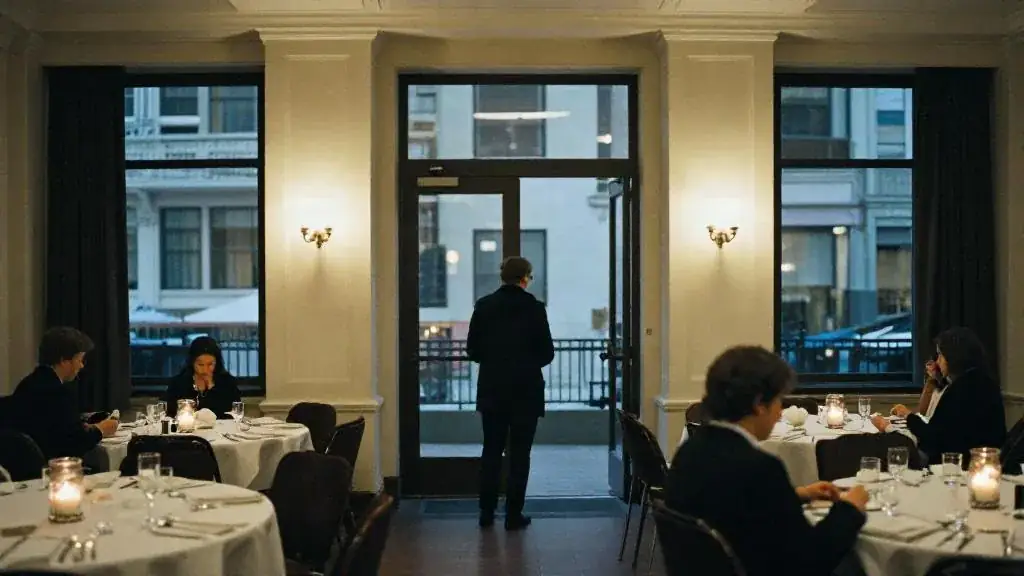
The program: cocktails 6 to 7 with two strolling magicians working the reception and the 25-minute gap before the first plate; dinner 7 to 9 with nothing on stage during service; a mentalist set right before the ask; the paddle raise complete before 9 p.m. We placed the stage at the south end so that the pillars did not block sightlines from the sponsor tables, and we checked the 20-round layout against the room’s posted occupant load and the 1.0 to 1.1 m² per seat comfort density with the venue capacity calculator. The foundation chose a silent auction and a live auction of three items rather than a raffle, which kept the night outside lottery licensing. The hotel is licensed, so no SOP. The mentalist was briefed on the foundation’s story and closed his set by handing the room to the auctioneer, who was already standing at the side of the stage.
Numbers to remember
- Paddle raise finished before 9 p.m.; program block 25 to 35 minutes; stage act 20 to 45 minutes, placed right before the ask.
- Nothing on stage during service.
- Raffles: municipal lottery licence under $50,000 in prizes, AGCO above; auctions need none.
- Hotel F&B: add the 18 per cent service charge, then 13 per cent HST on food, drink and the service charge.
- Aerial acts: rated rigging point, 4.5 to 5 m minimum ceiling, venue approval and an insured rigger.
Worksheet
Apply this lesson to a real or practice event using the worksheet, then mark the lesson complete to track your progress toward the certificate.
Related guides, venues and vendors
Hilton Toronto/Markham Suites Conference Centre & Spa
Markham · up to 1,184 guests
In-house catering
This is an all-suite Hilton hotel with 502 guest rooms and an attached conference centre.
Read more
Coach House at Oakville Museum (Erchless Estate)
Oakville · up to 28 guests
Outdoor space
The Coach House was built around 1899 on the Erchless Estate, home of the Chisholm family, and is now part of the…
Read more
Hockey Hall of Fame
Downtown, Toronto · up to 1,000 guests
Near transit
The Esso Great Hall is a former Bank of Montreal building constructed in 1885 and now displays the Stanley Cup.
Read more