Open flame rules, pyrotechnic permits, fire performer requirements, extinguishers, fire watch and venue approvals.
Read the transcript
Fire, pyro, candles and performers.
Open flame rules, pyrotechnic permits, fire performer requirements, extinguishers, fire watch and venue approvals.
Fire is a venue decision first.
Everything in this lesson starts with the same sentence: ask the venue, in writing, before you promise the client.
Open flame of any kind inside a building needs the venue's approval, and the venue's answer is shaped by their own fire inspection history, their insurer and their sprinkler system.
Candles, sparklers, fog and the small stuff.
Fire performers.
Fire eaters, fire dancers and fire-spinning acts are a different category from candles because the flame moves and the fuel is on a person.
They need the venue's approval and often the fire department's, and they need a fire watch: a person whose only job during the act is to stand by with extinguishers and a fire blanket, watch the performer and the audience, and act.
Pyrotechnics.
Indoor pyrotechnics, including gerbs, airbursts and stage flashes, need a licensed pyrotechnician, certified by Natural Resources Canada under the Explosives Act, plus venue approval and fire department approval.
This is not a job for a DJ with a cold spark unit bought online.
Extinguishers and the fire watch.
Know where the venue's extinguishers are. Walk them on the venue tour and note them on the /tools/venue-tour-checklist/.
For any approved open flame beyond enclosed candles, place a dedicated extinguisher within reach of the element, and know its class.
That is the lesson. The worksheet and the quiz are just below this video.
What you will be able to do
- Plan open flame and pyro legally
- Brief fire performers and venues
- Arrange fire watch where required
Fire is a venue decision first
Everything in this lesson starts with the same sentence: ask the venue, in writing, before you promise the client. Open flame of any kind inside a building needs the venue’s approval, and the venue’s answer is shaped by their own fire inspection history, their insurer and their sprinkler system. Many hotels permit only enclosed candles, where the flame is below the rim of a glass or holder. Some permit none. A few heritage and loft venues permit nothing that produces smoke, including fog machines, because the detectors will trip and the building will evacuate.
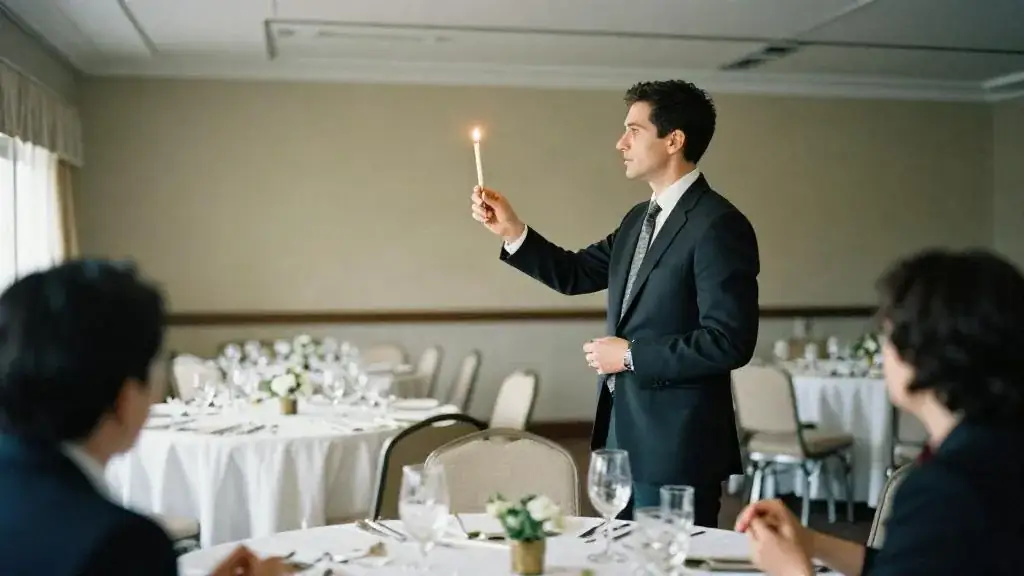
This is not legal advice. Fire code enforcement is local, and the fire department has the final say on anything they are asked about. The planner’s role is to find out early, document the answer and brief every vendor who might bring a flame.
Candles, sparklers, fog and the small stuff
| Element | Usual venue position | What to ask and do |
|---|---|---|
| Enclosed candles (votive, hurricane, lantern) | Commonly permitted in hotels and halls | Confirm “enclosed” means flame below the rim; ask about table count and placement near linens |
| Open taper candles | Often refused; some venues allow with a fire watch | Ask explicitly; offer LED alternatives before the client falls in love with tapers |
| Sparklers, sparkler send-offs | Usually outdoors only, if at all; many venues refuse | Confirm location, disposal buckets of sand, and who supervises |
| Fog, haze, cold spark machines | Depends on detector type; cold spark units are frequently treated as pyro by venues | Ask whether the detector zone can be isolated; get the venue’s written approval for the specific device |
| Chafing fuel, flambé stations | Normally permitted for catering | Still confirm; keep extinguisher within reach of the station |
| Fire performers | Case by case; venue and often fire department approval | See the section below |
| Indoor pyrotechnics | Licensed pyrotechnician and venue plus fire department approval | See the section below |
Fire performers
Fire eaters, fire dancers and fire-spinning acts are a different category from candles because the flame moves and the fuel is on a person. They need the venue’s approval and often the fire department’s, and they need a fire watch: a person whose only job during the act is to stand by with extinguishers and a fire blanket, watch the performer and the audience, and act. The performer usually supplies the safety person and the equipment; you confirm it in the contract rather than assume it.
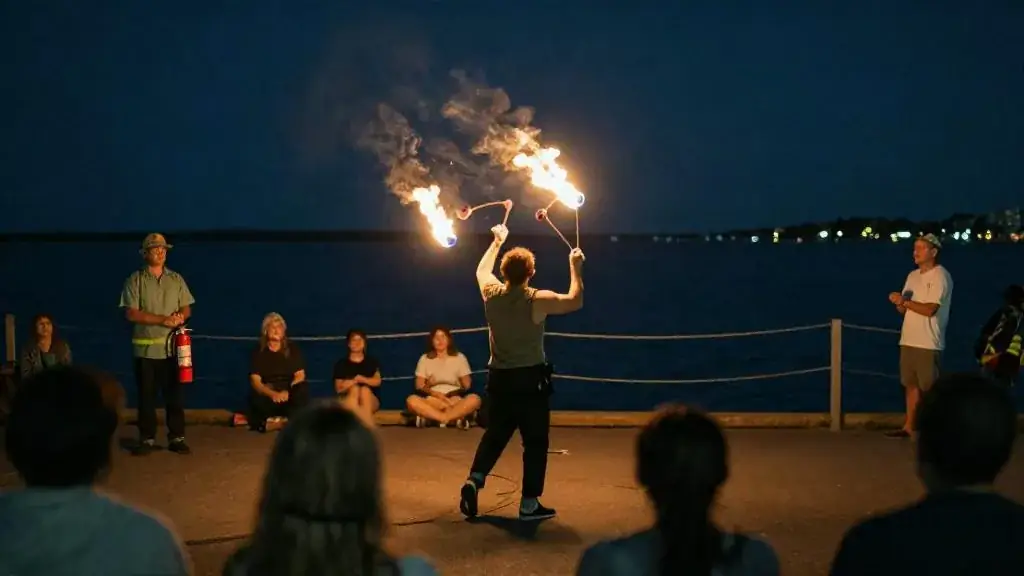
Brief the venue with the performer’s safety plan, which should name the fuel, how and where it is stored (sealed, away from the performance area and the audience), the size of the performance area, the clearance to the nearest guest, ceiling height and what is overhead, the extinguisher types on hand and who holds them, and how the fuel is removed from the building afterward. Ask the performer for their insurance certificate; a venue will ask you for it. The /tools/performer-tech-rider-template/ has a fire section that collects all of this in one page.
Outdoors is simpler, not simple. Wind, dry grass, overhead branches and a crowd that drifts closer all need a plan. Mark the performance area, assign staff to the perimeter and put the act early in the night while the crowd is sober.
Pyrotechnics
Indoor pyrotechnics, including gerbs, airbursts and stage flashes, need a licensed pyrotechnician, certified by Natural Resources Canada under the Explosives Act, plus venue approval and fire department approval. This is not a job for a DJ with a cold spark unit bought online. The pyrotechnician handles the regulatory filings, the product and the firing; your job is to get them talking to the venue and the fire department early, usually weeks in advance, and to make sure the program leaves them the time they need for set-up and a demonstration if the fire department asks for one.
Budget for the pyrotechnician’s time, the product, the fire department’s involvement if they charge for it (check the current fee with the city) and the venue’s own fire watch requirement. If the client wants pyro for a 30-second moment, show them a confetti cannon or a lighting cue first. Often the moment survives and the risk disappears.
Extinguishers and the fire watch
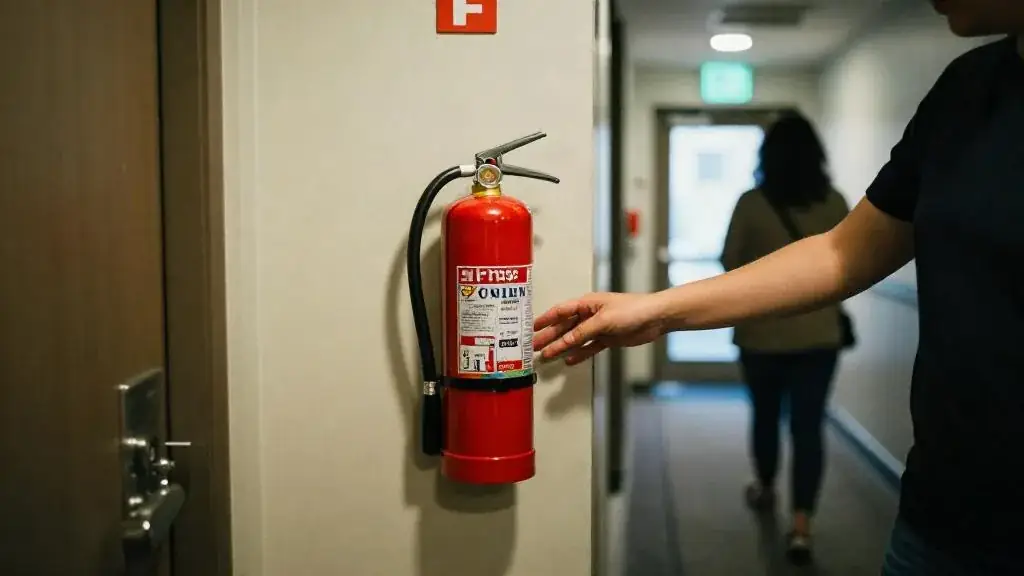
- Know where the venue’s extinguishers are. Walk them on the venue tour and note them on the /tools/venue-tour-checklist/.
- For any approved open flame beyond enclosed candles, place a dedicated extinguisher within reach of the element, and know its class.
- Assign the fire watch by name. One person, no other duties during the act, briefed on the extinguisher, the blanket and the evacuation route.
- Keep aisles and exits clear. Open flame near an exit is an easy refusal for an inspector.
- Write the flame elements into the emergency plan (next lesson) so security and the venue know what is in the room.
Worked example: the Harbour Gala
The design brief calls for candlelit tables, and the foundation’s board chair would like a “big reveal” when the fundraising total is announced after the paddle raise. You ask the hotel’s banquet manager in writing. Enclosed candles are permitted; tapers are not. Cold spark machines are treated as pyrotechnics by this hotel and require the fire department, so a 30-second reveal would need a licensed pyrotechnician, approvals weeks ahead and a cost that competes with the mentalist’s fee. You propose instead a lighting cue: the uplighting shifts from amber to the foundation’s blue, the AV team drops the total on the screens, and the MC calls it. The board chair gets a reveal, the hotel gets a quiet night, and the $40,000 budget stays intact.
The mentalist’s set before the ask involves no flame; you confirm it on his rider anyway. The two strolling magicians work the 25-minute gap before first plate with cards and coins. Twenty rounds of ten, each with three enclosed votives, is 60 small flames in a room with 200 people; you note on the run of show that catering staff extinguish them as plates are cleared and that your assistant walks the room during the paddle raise to check nothing has tipped.
Common mistakes
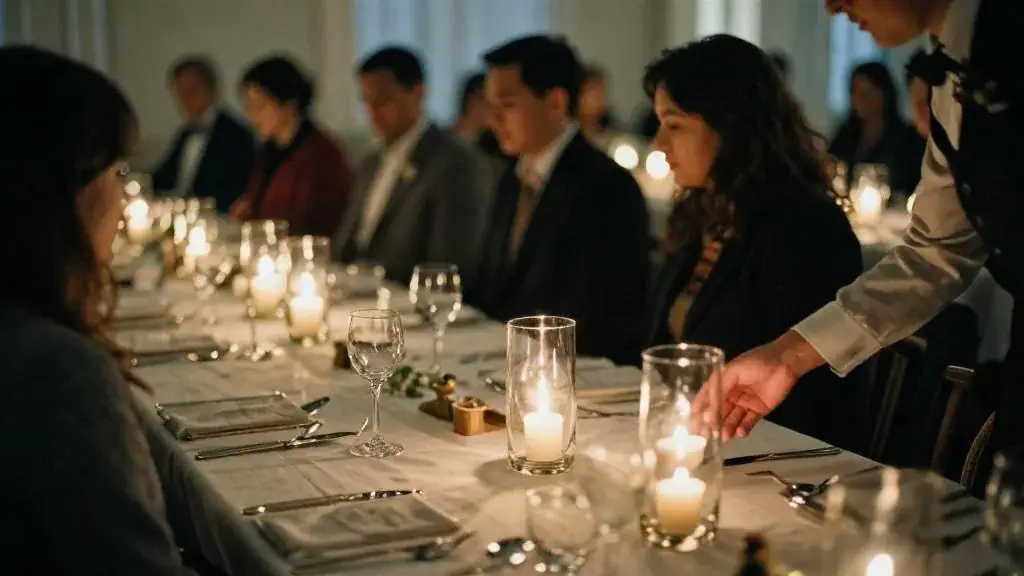
- Promising candles before asking the venue. The client picks tapers, the hotel says no, and you are the one who looks careless.
- Treating cold spark units as harmless because they are marketed that way. Many venues treat them as pyro; ask.
- Letting a fire performer self-approve. The venue and often the fire department need to see the safety plan first.
- Assigning the fire watch to someone who also has to run the bar. One job.
- Forgetting fuel storage and removal. The act is five minutes; the fuel is in the building all night.
Worksheet
Download the worksheet, complete it for your own event (or the running gala example), and keep it in your course binder. It takes about 10 minutes.
Check your understanding
Related guides, venues and vendors

Bar: packages, permits and Smart Serve
Module 5: Vendors & Entertainment · 15 min
Open, consumption and toonie bars; AGCO Special Occasion Permits; Smart Serve; last call and safe rides. The bar calculator in practice.
Read more
Engagement design
Specialist · Virtual & Hybrid · 15 min
Segments under 20 minutes, chat moderation, polls, breakout rooms and remote entertainment.
Read more
The master timeline
Module 7: Logistics & Operations · 15 min
Backward-planned milestones from the date, by scale. Use the timeline generator and learn how to re-plan when dates move.
Read more