Timing, wording, digital vs print, reminders, and how to get RSVPs back on time.
Read the transcript
Invitations, RSVPs and response rates.
Timing, wording, digital versus print, reminders, and how to get RSVPs back on time.
Timing.
The RSVP deadline sits 7 to 10 days before the venue's guarantee date, because a third of people reply late and you need time to chase.
Wording that gets answers.
An invitation has six jobs: who is hosting, what it is, when (date, doors, end time), where (with a map link and parking or transit note), what to wear, and how to reply by a date.
Add dietary and accessibility questions to the reply form, and the ticket or donation link if there is one.
Digital or print.
Digital is free, trackable and chaseable; print signals importance and sits on a fridge.
Weddings and galas commonly send both: a printed invitation with a QR code to the reply form.
Getting RSVPs back on time.
Send the invitation on a Tuesday or Wednesday morning.
Reminder one week before the deadline to non-responders only.
Response rates to expect.
In our experience: weddings 85 to 95 percent of invitees reply, with 75 to 85 percent attending; a corporate holiday party draws 60 to 80 percent of staff, higher when the date is early December and the venue is near transit; a free community event sees 40 to 60 percent of registrants show up, which is why free events overbook; a paid conference sees 85 to 95 percent of paid registrants attend.
That is the lesson. The worksheet and the quiz are just below this video.
What you will be able to do
- Time invitations by event type
- Write wording that gets responses
- Run a reminder sequence
Timing
| Event | Save-the-date | Invitation | RSVP deadline |
|---|---|---|---|
| Wedding | 6–9 months out (more for destination) | 8–10 weeks out | 3–4 weeks out |
| Gala / fundraiser | 3–4 months out, with sponsorship packages | 6–8 weeks out | 2 weeks out |
| Corporate holiday party | Calendar hold in September | 4–6 weeks out | 10 days out |
| Conference | Registration opens 4–6 months out | Early-bird ends 8 weeks out | Registration closes 1 week out |
| Kids’ party | None | 3 weeks out | 1 week out |
The RSVP deadline sits 7–10 days before the venue’s guarantee date, because a third of people reply late and you need time to chase.

Wording that gets answers
An invitation has six jobs: who is hosting, what it is, when (date, doors, end time), where (with a map link and parking or transit note), what to wear, and how to reply by a date. Add dietary and accessibility questions to the reply form, and the ticket or donation link if there is one. Keep the design readable on a phone, because that is where most invitations are opened.
Digital or print
Digital is free, trackable and chaseable; print signals importance and sits on a fridge. Weddings and galas commonly send both: a printed invitation with a QR code to the reply form. Corporate events are almost entirely digital with a calendar invitation attached. Whatever the channel, the reply must be one tap.

Getting RSVPs back on time
- Send the invitation on a Tuesday or Wednesday morning.
- Reminder one week before the deadline to non-responders only.
- Reminder on the deadline day: “replies close tonight”.
- Personal messages (text or a call) to the holdouts who matter: the sponsor’s table, the head table, the keynote.
- Close the list, then plan for the 5–10 percent who did not reply and will arrive anyway.
Response rates to expect
In our experience: weddings 85–95 percent of invitees reply, with 75–85 percent attending; a corporate holiday party draws 60–80 percent of staff, higher when the date is early December and the venue is near transit; a free community event sees 40–60 percent of registrants show up, which is why free events overbook; a paid conference sees 85–95 percent of paid registrants attend.
Worked example
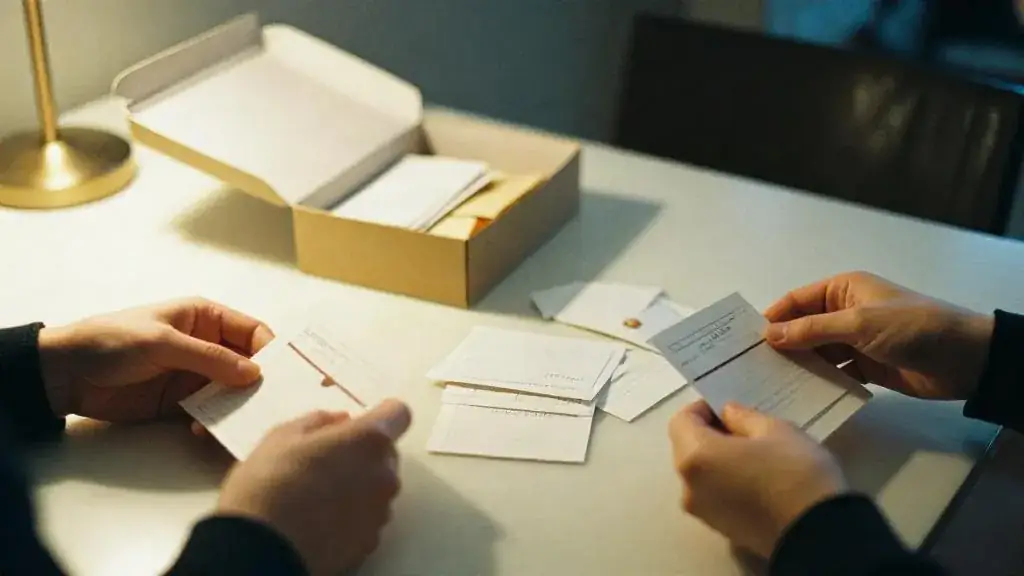
The Harbour Gala sent sponsorship packages in August, a save-the-date in early September, printed invitations with a QR reply in late September, and closed RSVPs on October 30 for a November 13 event with a guarantee due November 6. Reminders went out October 23 and 30; the development officer phoned 14 major donors personally. Final: 194 confirmed, 203 attended.
Common mistakes

- An RSVP deadline the same day as the venue guarantee.
- No end time on the invitation.
- A reply form that asks for a password.
- Dietary needs collected after the seating chart is done.
- No plan for the walk-ins.
Ontario rules that apply
An invitation feels personal, but the moment it promotes something people pay for, Canadian law starts to care how you send it. CASL (Canada’s Anti-Spam Legislation) governs commercial electronic messages, and an email selling gala tickets or conference passes is one. You need consent to send it, either express (the person opted in) or implied (for example, an existing business relationship or a recent inquiry). Every message must identify the sender, give a working mailing address, and carry an unsubscribe link that is honoured promptly; the law allows no more than ten business days. A purely social invitation from a couple to their wedding guests is not the concern here. A charity, a company or a ticketed community event is.
The reply form collects personal information, and if a business or organization is collecting it in the course of commercial activity, PIPEDA applies. Ask only for what you will use, say why you are asking, keep it secure, and delete it when the event is closed. Dietary and accessibility answers deserve particular care: they can reveal health information, so share them with the caterer and the venue on a need-to-know basis rather than circulating the full spreadsheet.
The AODA (Accessibility for Ontarians with Disabilities Act) sets accessibility standards that many organizations must meet, including providing information in accessible formats on request. In practice that means invitation text that also exists as real text, not only as an image; sufficient colour contrast; a reply form that works with a screen reader; and a line that tells guests how to request an accessible format or an accommodation.
GTA practice notes
Toronto invitations have to answer a question that invitations elsewhere often skip: how do I get there? Name the nearest subway or GO station and the walking time, the parking option and its likely cost range, and the drop-off point for rideshare. For venues outside the core, say whether there is free parking; for downtown venues, say that there is not. A guest who has to guess is a guest who arrives late or decides not to come.
Check the date against the region’s full calendar before the save-the-date goes out. The GTA marks Diwali, Lunar New Year, Ramadan and Eid, Rosh Hashanah and Yom Kippur, Vaisakhi, Christmas and many other observances, several of which move every year. Add the school March Break, long weekends, and any major sporting or civic event that will tie up downtown streets and transit that evening.
For printed invitations, build in a buffer. Canada Post delivery times vary, and a postal disruption is not unheard of, so keep the digital version ready to send the same day if the mail stalls. Many GTA hosts now send the printed piece as a keepsake and treat the email as the working invitation.
Finally, consider language. If a significant share of the guest list prefers a language other than English, a translated line on the invitation and a bilingual reply form can lift responses more than any reminder sequence.
Questions to ask before you send
- Do we have consent to email everyone on this list, and does the message carry an unsubscribe link and a mailing address?
- Does the RSVP deadline fall comfortably before the venue’s guarantee date in the BEO and contract?
- Have we stated the start time, the end time, the dress code and the transit and parking options?
- Does the reply form ask about dietary needs and accessibility, and do we know who will see those answers?
- Can a guest request an accessible format, and does the form work on a phone and with a screen reader?
- Have we checked the date against cultural and religious observances and city events?
- Who is personally calling the guests who matter most if they have not replied?
How this connects to the next lesson
The invitation tells you who is coming; the ticket page tells you who is paying. For a ticketed event the two are often the same form, and the dates in this lesson (the early wave, the reminder, the close) become the sales curve in the next. Before you move on, map your invitation dates onto a single calendar with the timeline generator, then read ticketing and pricing to see how the same calendar drives revenue.
Worksheet
Download the worksheet, complete it for your own event (or the running gala example), and keep it in your course binder. It takes about 10 minutes.

Check your understanding
Related guides, venues and vendors
Insurance: yours, theirs and the venue’s
Module 8: Legal, Safety & Risk (Ontario) · 15 min
Commercial general liability, event liability, COIs, additional insured, and host liquor liability.
Read more
Module 1 workshop: plan a 40-person birthday on paper
Module 1: Foundations · 15 min
Apply the lifecycle, the terms and the tools to a small real event. You will produce a one-page brief, a budget envelope…
Read more
The venue search: shortlisting by the numbers
Module 4: Venues · 15 min
Capacity in the right layout, curfew, bar policy, catering policy, accessibility and budget. Six filters shrink 400 GTA venues to five.
Read more