Apply the lifecycle, the terms and the tools to a small real event. You will produce a one-page brief, a budget envelope and a draft run of show.
Read the transcript
Module 1 workshop: plan a 40-person birthday on paper.
Apply the lifecycle, the terms and the tools to a small real event.
You will produce a one-page brief, a budget envelope and a draft run of show.
The exercise.
Plan a 40-person 40th birthday on paper, in 30 minutes, using only Module 1.
The constraints: a Saturday in May, a Toronto restaurant private room, the host's budget is "about 4,000 dollars", the guest of honour hates surprises and loves live music.
Step 1: the one-page brief.
Goal in one sentence: a relaxed dinner where the guest of honour is celebrated without a surprise and hears live music she likes.
Decision-maker and payer: the host (the guest of honour's partner).
Step 2: the budget envelope.
4,000 dollars minus 10 percent contingency leaves 3,600 dollars to spend.
Restaurant private rooms in Toronto typically carry an food and beverage minimum of 2,500 to 4,000 dollars for 40 on a Saturday, before 13 percent HST and 18 percent gratuity.
Questions to ask the restaurant before you commit.
Is the minimum before or after gratuity and HST, and does the bar count toward it?
Is the room private with a door, or a section of the dining room? Live music in an open section will be asked to stop.
Step 3: the draft run of show.
That is the lesson. The worksheet and the quiz are just below this video.
What you will be able to do
- Produce a one-page event brief
- Set a budget envelope with contingency
- Draft a run of show with one owner per cue
The exercise
Plan a 40-person 40th birthday on paper, in 30 minutes, using only Module 1. The constraints: a Saturday in May, a Toronto restaurant private room, the host’s budget is “about $4,000”, the guest of honour hates surprises and loves live music.
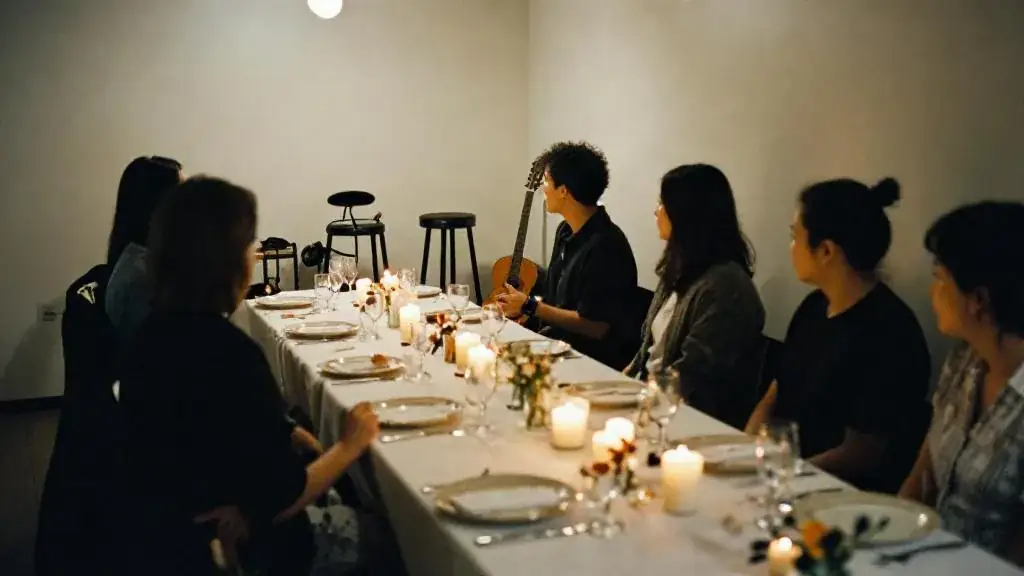
Step 1: the one-page brief
- Goal in one sentence: a relaxed dinner where the guest of honour is celebrated without a surprise and hears live music she likes.
- Family: social. Decision-maker and payer: the host (the guest of honour’s partner).
- Success measure: she says it was the best birthday; nobody leaves before cake.
- Non-negotiables: no surprise, live music, her sister’s dietary needs respected.
Step 2: the budget envelope
$4,000 minus 10 percent contingency leaves $3,600 to spend. Restaurant private rooms in Toronto typically carry an F&B minimum of $2,500–$4,000 for 40 on a Saturday, before 13 percent HST and 18 percent gratuity. A $2,400 food-and-drink spend becomes about $3,180 all-in. That leaves roughly $420 for a duo (not a trio) for the first 90 minutes, plus a cake. The envelope decides the music.
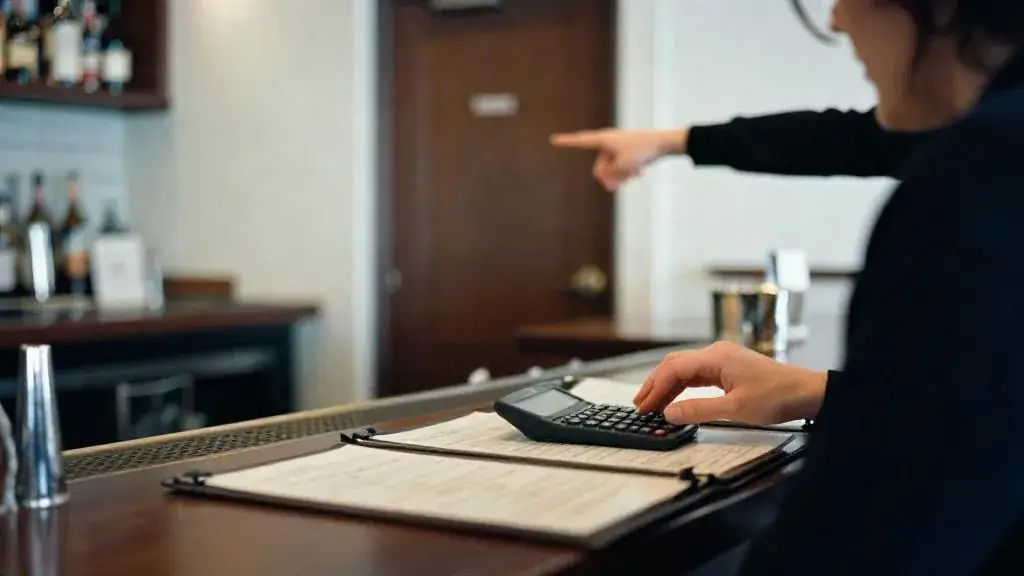
Questions to ask the restaurant before you commit
- Is the minimum before or after gratuity and HST, and does the bar count toward it?
- Is the room private with a door, or a section of the dining room? Live music in an open section will be asked to stop.
- Is there power near where the duo will stand, and is amplified music allowed at all?
- What is the latest the room can be held if the party runs long, and is there a charge?
- Can the kitchen handle the sister’s dietary needs, and will the server have the note on the night?
- Is the room step-free from the street, and is there an accessible washroom?
- Can we bring a cake, and is there a cake-cutting fee?
- What is the deposit, when is the balance due, and what is the cancellation policy?
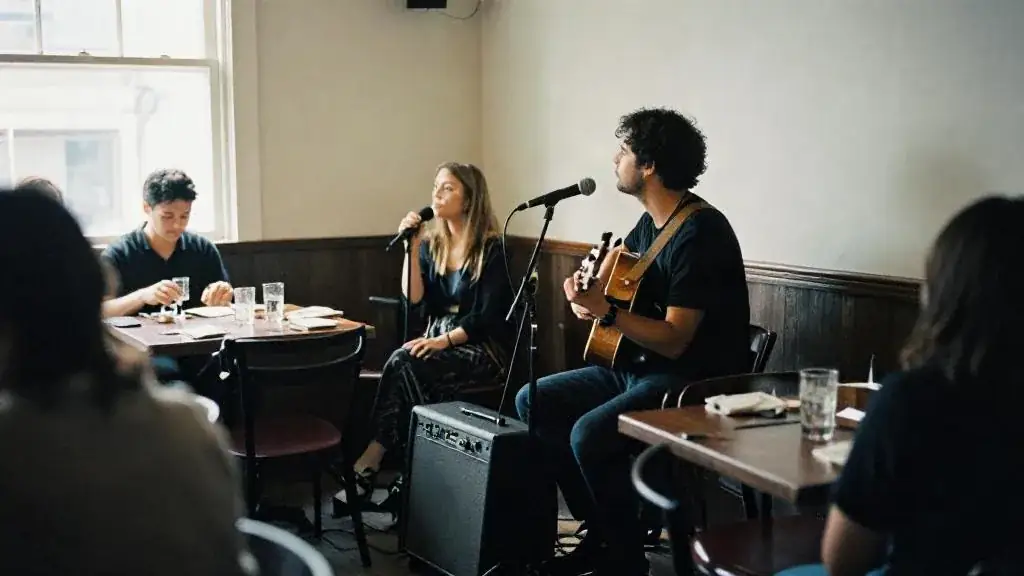
Step 3: the draft run of show
| Time | Cue | Owner |
|---|---|---|
| 18:30 | Host arrives, checks room, confirms dietary notes with the manager | Host |
| 18:45 | Duo sound-checks | Duo |
| 19:00 | Guests arrive; music starts; welcome drink | Restaurant |
| 19:45 | Seated; starters | Restaurant |
| 20:30 | Mains; duo finishes set | Restaurant / duo |
| 21:15 | Host’s three-minute toast (agreed in advance, no surprise) | Host |
| 21:20 | Cake | Restaurant |
| 22:30 | Room released | Host |
Step 4: the mini contact sheet and the kit
Even a 40-person dinner has four vendors: the restaurant manager, the duo, the bakery and whoever is bringing the guest of honour at 7 p.m. on time. Write each name with a cell number and an arrival time on one card and give a copy to the host. Add a note of which cues the host owns, because at a social event the host is the planner on the night. The kit is small: a printed run of show, the dietary note, the restaurant’s deposit receipt, a lighter for the candles if the restaurant allows an open flame on a cake (most do; many hotels do not), and cash for the duo’s balance if their contract says it is due on the day.
Working through the trade-offs
The host will ask three things. “Can we have a trio?” A trio in the GTA typically costs more than the $420 left after the food, so the honest answer is: yes, if the food spend drops to about $2,100 or the envelope grows by a few hundred dollars. “Can we add a photographer?” A professional for two hours is outside this envelope; a friend with a good phone and a shot list is the realistic version. “What if more people come?” The restaurant minimum is per room, not per person, but the per-head food cost rises, so the guest list closes at 40 and the host owns that decision. Each answer traces back to the envelope, which is the point.

What this teaches
Even a small event needs the brief before the budget and the budget before the booking. The duo exists because the envelope allowed it; the toast is in the run of show because “no surprises” was a non-negotiable. Download the worksheet and do the same exercise for an event of your own.
How this scales to the Harbour Gala
The Harbour Gala is the same exercise with more zeros. The brief names the family (public and community, behaving like corporate) and the measure (net proceeds). The envelope is split before any vendor is called, and the hotel’s minimum is grossed up for service charge and HST before it goes on the sheet, exactly as the restaurant minimum was here. The run of show has 26 cues instead of 8 and a planner owns them instead of a host, but each cue still has one owner and a time. If you can do the birthday in 30 minutes on paper, you have the method; the rest of the course adds the detail.
Checklist for the worksheet
- Brief: goal, family, decision-maker, payer, success measure, non-negotiables, all on one page.
- Envelope: total, contingency removed, spendable amount, every quote grossed up.
- Run of show: one owner per cue, arrival times for every vendor, the end time the venue agreed to.
- Contact sheet: name, cell, arrival time for each vendor, including the person bringing the guest of honour.
- Kit: paper, dietary note, receipts, cash if needed.
Worksheet
Download the worksheet, complete it for your own event (or the running gala example), and keep it in your course binder. It takes about 18 minutes.

Check your understanding
Related guides, venues and vendors
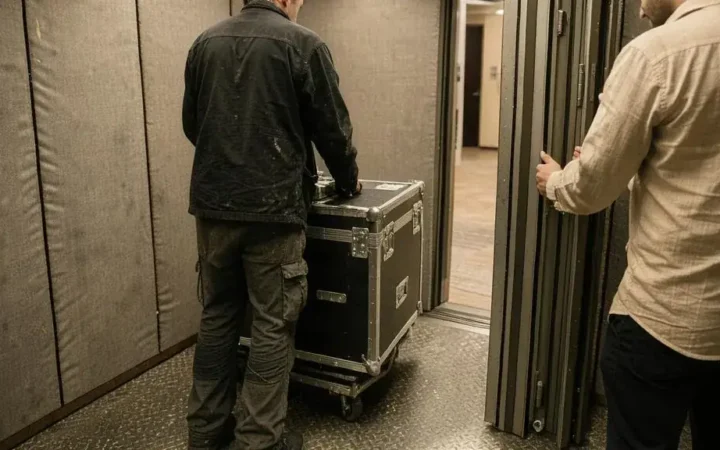
Hotels, unions and load-in rules
Module 4: Venues · 15 min
Downtown hotels and convention centres have union load-in, drayage, exclusive AV and dock schedules. Budget for them or be surprised.
Read more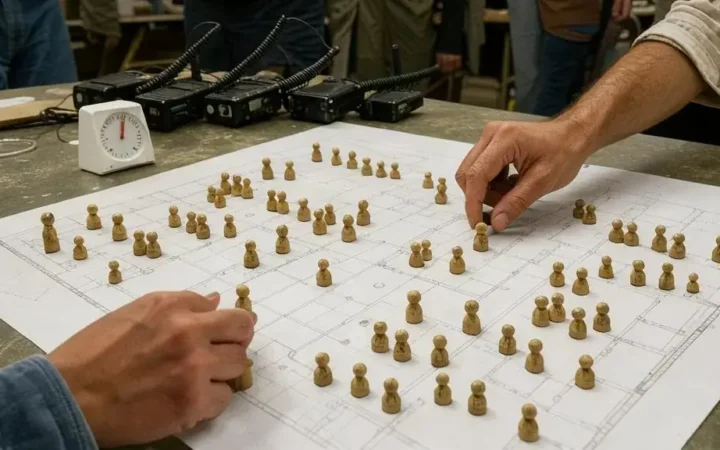
Module 10 workshop: tabletop simulation
Module 10: Event Day · 15 min
Run the gala from the run of show with injected problems every ten minutes. Decide, act, record.
Read more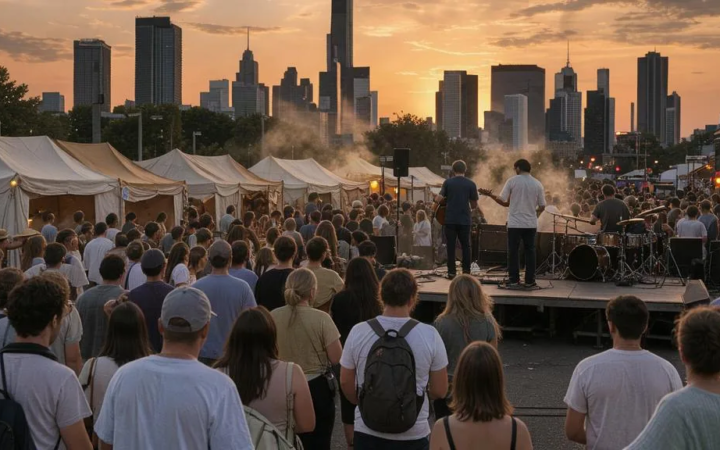
Types of events and who plans them
Module 1: Foundations · 15 min
Social, wedding, cultural, corporate and public events share one process but differ in who decides, who pays and what success means. Knowing…
Read more