Run the gala from the run of show with injected problems every ten minutes. Decide, act, record.
Read the transcript
Module 10 workshop: tabletop simulation.
Run the gala from the run of show with injected problems every ten minutes.
How the tabletop works.
A tabletop simulation is the way airlines, hospitals and emergency services practise days that have not happened yet.
You do not need a crew; you need the run of show, the risk register, a timer, and a partner or a second sheet of paper playing the role of the world.
Rules of play.
The partner reads an injection aloud at each ten-minute mark. You may ask two clarifying questions; after that the partner answers only "unknown".
You have ninety seconds of real time to say what you do first, what you do next, who you tell and what you write down. Say it out loud; silent planning is not a decision.
The injection schedule.
Use this list for the first run.
On the second run, have the partner shuffle it or write their own; the point is that you cannot predict the next one.
Worked example: the Harbour Gala, 8:10 to 8:20.
The alarm injection is the one that separates planners who have thought it through from those who have not.
The right answer is boring.
The debrief.
After the run, go back through the problem sheet with the partner and ask three questions of every line.
Was the first move safety?
That is the lesson. The worksheet and the quiz are just below this video.
What you will be able to do
- Make decisions under time pressure
- Use the risk register live
- Debrief decisions
How the tabletop works
A tabletop simulation is the way airlines, hospitals and emergency services practise days that have not happened yet. You do not need a crew; you need the run of show, the risk register, a timer, and a partner or a second sheet of paper playing the role of the world. The partner injects a problem every ten minutes of simulated time. You decide, act and record, exactly as you would on the night, and then you debrief every decision against the fix sequence from the previous lesson: safety, contain, fix, inform, record.
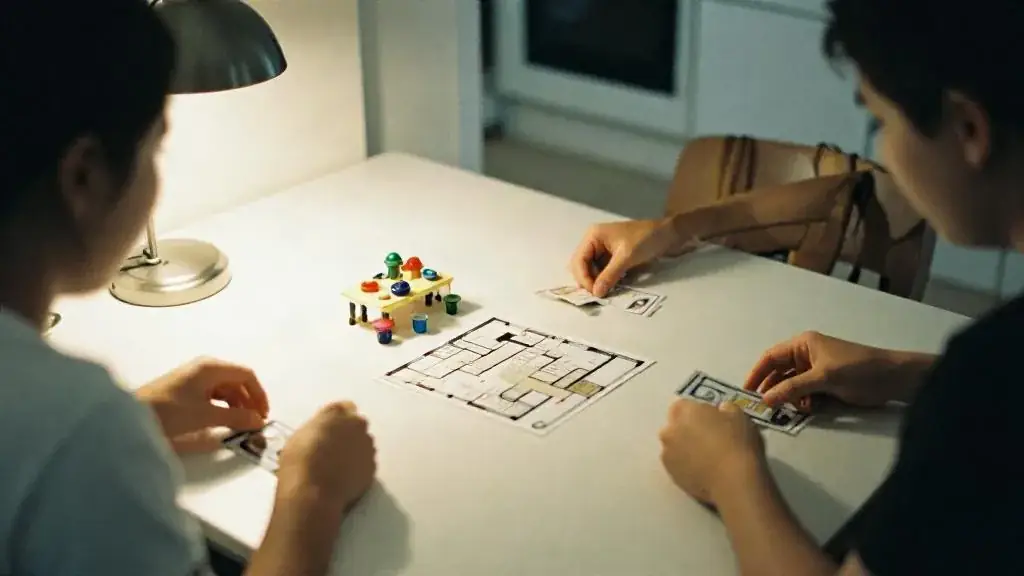
Set it up with four documents open: the run of show for the Harbour Gala, the risk register, the vendor contact sheet, and a blank problem sheet with four columns: time, what happened, what I did, what it cost. Work in simulated time. One minute of real time per five minutes of event time is a comfortable pace; you cover the 5 p.m. to 10 p.m. program in an hour.
Rules of play
- The partner reads an injection aloud at each ten-minute mark. You may ask two clarifying questions; after that the partner answers only “unknown”.
- You have ninety seconds of real time to say what you do first, what you do next, who you tell and what you write down. Say it out loud; silent planning is not a decision.
- The partner tells you the consequence. Consequences are plausible, not punishing; the point is practice, not humiliation.
- Every decision costs something: time off the cushion, money, or a vendor’s goodwill. Write it on the problem sheet.
- The program keeps moving. If you are still solving the 7:10 problem at 7:20, the 7:20 problem lands on top of it, as it would on the night.
The injection schedule
Use this list for the first run. On the second run, have the partner shuffle it or write their own; the point is that you cannot predict the next one.
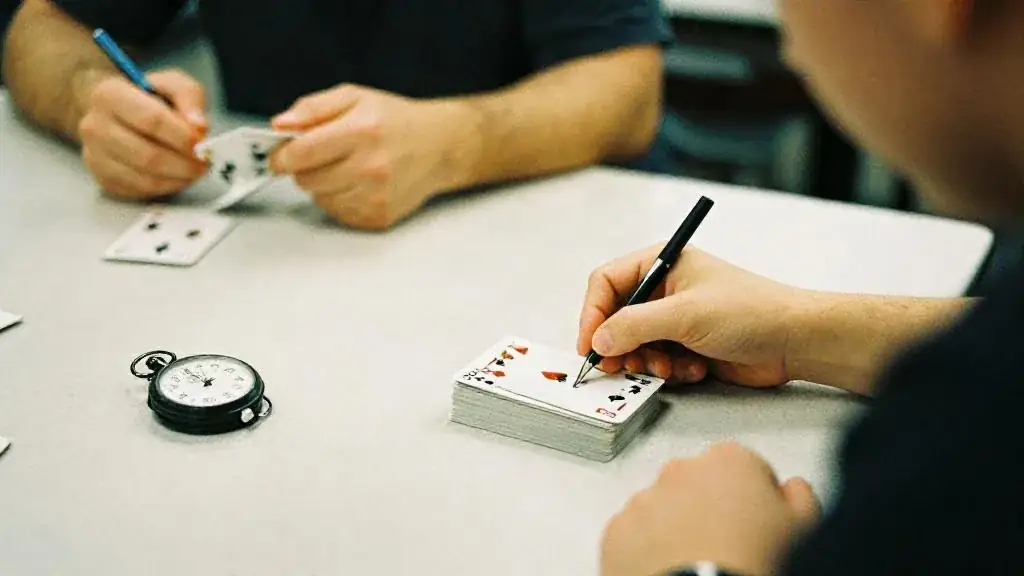
| Sim time | Injection | What the register should already say |
|---|---|---|
| 5:00 | The hotel calls: the previous meeting in the ballroom is running 45 minutes late | Load-in compression plan; which décor items are cut first |
| 5:10 | The florist’s centrepieces are 20 cm taller than the sketch | Sightline rule; who can cut or lower them |
| 5:20 | One strolling magician texts: stuck on the DVP, ETA 6:15 | Roaming ratio drops to 1 per 200 for 15 minutes; MC or photographer covers the foyer |
| 5:30 | The executive director asks for ten more seats; the sponsor “forgot” a table | Occupant load against 220 at 0.95 m² per person; kitchen tolerance; who pays |
| 5:40 | Registration iPad will not connect to hotel Wi-Fi | Printed guest list as fallback |
| 5:50 | The MC has lost her voice and is whispering | Backup MC named in the register, usually the auctioneer or the board chair |
| 6:00 | Doors open. Coat check line is 40 deep | Second coat-check station; staff from registration move once arrivals thin |
| 6:10 | A guest in a wheelchair finds the accessible washroom on this level out of order | Mezzanine washroom plan from the walk-through; signage; staff escort |
| 6:20 | A sponsor’s representative has had too much to drink before dinner | Smart Serve cut-off; host informed; ride home |
| 6:30 | The mentalist arrives and asks for a lavalier mic that was not quoted | AV add-on authority up to a set amount; client informed |
| 6:40 | Bar line is fifteen deep; one bartender is on break | Captain adds a tray pass; break schedule agreed at briefing |
| 6:50 | Table 14 has two guests with severe nut allergies not on the dietary list | Kitchen informed by the captain; plated separately; noted on the problem sheet |
| 7:00 | Foundation chair goes to the podium four minutes early and will speak for ten | Hold first plate; MC at stage edge |
| 7:10 | Stage circuit trips | AV reset; split the load; MC covers |
| 7:20 | A guest at table 3 is unwell and cannot stand | First-aider, 911 if any doubt, meet the ambulance, tell the client now |
| 7:30 | Photographer asks to break for dinner from 8:15 to 8:45 | No: the paddle raise is the shot of the night; feed them now |
| 7:40 | The band’s singer says they will finish at 9:30, not 10, “as agreed with the ED” | Contract says 10; lead confirms with the ED, not the band |
| 7:50 | Captain says clearing will take 20 minutes, not 12 | Dessert cue moved earlier; mentalist start window 8:25 to 8:30 |
| 8:00 | ED asks for the board chair to add three minutes before the ask | Taken from the band’s closing, never from the mentalist |
| 8:10 | Fire alarm sounds | Full evacuation by the walked exits; muster; count staff; re-entry only on the venue’s word |
| 8:20 | All clear. The room re-enters. Twenty minutes gone | Hard stop at 9 p.m. for the ask still holds: cut the mentalist to 12 minutes, or move the ask to 9:10 with the ED’s agreement? |
| 8:30 | A guest has been photographing a donor who opted out of photos | PIPEDA notice and opt-out plan; a quiet word; photographer told |
| 8:40 | Paddle raise. The auctioneer’s mic cuts out | Spare handheld on the lectern; battery swap; MC continues unamplified if needed |
| 9:00 | The ED, elated, asks the band to play until 10:30 | Noise bylaw is stricter after 11 p.m. but the hotel’s own cut-off and the band’s overtime rate decide; cost stated before saying yes |
Worked example: the Harbour Gala, 8:10 to 8:20
The alarm injection is the one that separates planners who have thought it through from those who have not. The right answer is boring. Everyone out, by the exits walked at 12:45. The lead’s radio call is “Fire alarm, evacuate, all positions to the Bay Street doors.” Staff count at the muster point: three positions, the venue captain, both magicians, the mentalist, the band, the photographer. The executive director is found and told in one sentence that the program will resume on the venue’s word and that the ask will still happen tonight. The lead does not negotiate with the hotel about whether it is a drill. When the all-clear comes, the decision at 8:20 is a real one: the mentalist is told his set is now twelve minutes, the auctioneer gets his full sixteen, and the ask starts at 8:52. The record reads “8:10 alarm, full evac, all staff accounted 8:14, all clear 8:19, re-seated 8:27, mentalist cut to 12 min, ask 8:52, ED informed 8:12 and 8:21.”
The debrief
After the run, go back through the problem sheet with the partner and ask three questions of every line. Was the first move safety? Did the fix cost more than it needed to? Did the right person find out at the right time? Score nothing; the value is in the two or three decisions where you hesitated. Those are the lines in your risk register that need a named owner and a written response before your next real event. Run the tabletop again a week later with a shuffled schedule. The second run is always faster and calmer, and that calm is what the client is paying for.
Common mistakes
- Solving the injection in your head and saying “I would handle it”. Say the steps.
- Pausing the clock. The night does not pause.
- Treating the alarm as a drill and losing the exercise’s most important lesson.
- Forgetting to record. A problem sheet with four entries after a twenty-injection run means you were acting, not managing.
- Running it once. The second run is where the learning lands.
Worksheet
Download the worksheet, complete it for your own event (or the running gala example), and keep it in your course binder. It takes about 21 minutes.

Check your understanding
Related guides, venues and vendors

Portfolio and testimonials
Module 11: After the Event · 15 min
Turn every event into a portfolio page and a quote. What to ask clients, when, and how to present work online.
Read more
Team building and offsites
Specialist · Corporate · 15 min
Formats by team size, GTA venues and activities, and measuring whether it worked.
Read more
Wedding budgets and the splitter
Specialist · Weddings · 15 min
Toronto averages by category, where couples overspend, and how to present a budget to two families.
Read more