The venue decides the date, the bar, the curfew, the coat check and roughly 40 per cent of the per-head cost. Choose it before you choose anything else, and choose it in June if you want a December Thursday or Friday.
Read the transcript
Holiday party venue guide.
The venue decides the date, the bar, the curfew, the coat check and roughly 40 per cent of the per-head cost.
Choose it before you choose anything else, and choose it in June if you want a December Thursday or Friday.
Venue types by headcount.
Restaurant buyouts and private dining rooms (20 to 80 people): the best value under about 120 dollars a head. King West, Queen West, Leslieville, Yorkville and the Financial District all have rooms that take 40 to 60 seated.
Event lofts and galleries (60 to 250): King West, Liberty Village, the Distillery District and the Junction. Blank rooms with character, usually unlicensed or with a preferred bar operator, often with a list of approved caterers.
Capacity math before you fall for a room.
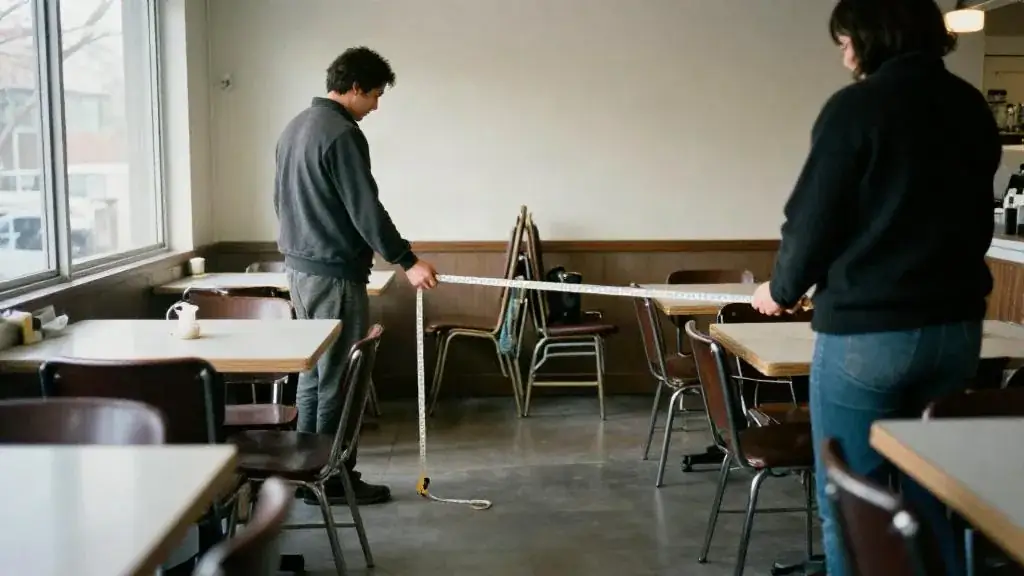
The Ontario Building Code sets occupant load at 0.95 square metres per person seated at dining tables, 0.75 square metres seated without tables, and 0.40 square metres per person standing.
The posted occupant load is a legal maximum set by the fire authority.
The December calendar.
The first three Thursdays and Fridays of December are gone at most downtown venues by late September.
Three fixes, in order of how much money they save: hold the party on a Wednesday; hold it in the second or third week of January and call it the new-year kick-off; or book a November date before the markup.
Questions to ask on the tour.
Bring the venue tour checklist.
The questions that cost companies the most when skipped:
Contract points worth reading twice.
Attrition: the guaranteed headcount you pay for even if fewer show. Guarantee at 85 to 90 per cent of your RSVP and confirm the final count at 10 to 14 days.
Deposit schedule: typically a signing deposit, a second payment in the autumn, and the balance before the event. Make sure a January date does not require the full balance before your fiscal year closes if that matters to finance.
Browse venues.
Toronto · Vaughan · Mississauga · Markham · Hotels · Restaurants with private rooms · High-ceiling rooms for stage acts
The full guide, with tables and checklists, continues below this video.
Venue types by headcount
- Restaurant buyouts and private dining rooms (20–80 people): the best value under about $120 a head. King West, Queen West, Leslieville, Yorkville and the Financial District all have rooms that take 40–60 seated. You get a chef, a licensed bar and no rentals. You lose control of the room after the agreed end time, and most rooms want a food and beverage minimum rather than a rental fee.
- Event lofts and galleries (60–250): King West, Liberty Village, the Distillery District and the Junction. Blank rooms with character, usually unlicensed or with a preferred bar operator, often with a list of approved caterers. Everything is a rental: tables, chairs, linen, glassware, lighting. Curfews around 1 a.m.; load-in is often through a freight elevator with a booking window.
- Hotels (80–800): downtown hotels and the airport corridor along Dixon Road and in Mississauga. One contract covers room, food, bar, AV and coat check. Expect an 18 per cent service charge on food and beverage, union rules on load-in, and a food and beverage minimum that climbs in December. Room blocks for out-of-town staff are a genuine advantage.
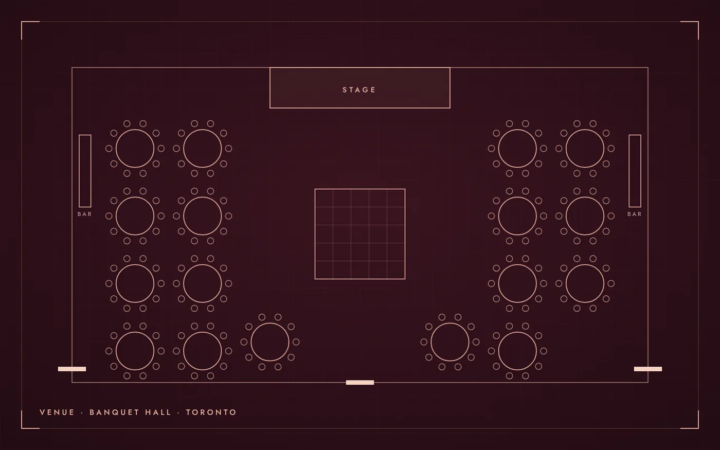
- Banquet halls (150–1,000): Vaughan, Woodbridge, Mississauga, Markham and Scarborough. In-house catering at the lowest per-plate price in the GTA (typical GTA range, 2026: $65–$120 per plate before tax and service), late curfews, big dance floors and parking. Décor and lighting are usually needed to make a hall look like your company and not a wedding.
- Breweries, distilleries and activity venues (30–300): axe throwing, curling, bowling, karaoke, arcades and brewery taprooms in Etobicoke, Scarborough and the east end. Younger teams prefer them; the program is built in; speeches are hard to stage. Check whether food is in-house or brought in.
- The office (any size): free rent, full control, no curfew. You take on everything else: catering, bar permit, furniture, cleaning, security on the lobby desk and the question of whether people actually want to stay late at work.
- Convention and exhibition space (800+): the Metro Toronto Convention Centre and Enercare Centre handle company-wide parties for large employers, with exclusive caterers and rigging-ready ceilings. Budget for show services (power, drape, carpet) that a hotel would include.
Capacity math before you fall for a room
The Ontario Building Code sets occupant load at 0.95 m² per person seated at dining tables, 0.75 m² seated without tables, and 0.40 m² per person standing. The posted occupant load is a legal maximum set by the fire authority. For a seated dinner with a dance floor and a stage, plan at 1.0–1.1 m² per seat so the room is comfortable, not merely legal. A 300 m² room is therefore a 270–300-seat dinner on paper and a 220–250-seat dinner in practice once you add a bar, a DJ, a stage and a photo moment. Run your own numbers through the venue capacity calculator.
The December calendar
The first three Thursdays and Fridays of December are gone at most downtown venues by late September. Three fixes, in order of how much money they save: hold the party on a Wednesday; hold it in the second or third week of January and call it the new-year kick-off; or book a November date before the markup. Venue minimums are often lower on Mondays to Wednesdays by a meaningful margin, and vendors are easier to find. Whatever you do, a late-booked December Friday means paying the minimum of a venue that is bigger or further away than you wanted.
Questions to ask on the tour
Bring the venue tour checklist. The questions that cost companies the most when skipped:
- What is the minimum spend, and is it quoted before or after the 18 per cent service charge and 13 per cent HST? Service charges are themselves taxable, so a $20,000 minimum becomes roughly $26,700 all-in. Ask whether the service charge reaches staff.
- What is the curfew for music and the hard out for people, and what does an extension cost?
- Is there a coat check and is it staffed? It is December. Three hundred coats with one attendant is a 25-minute line at 11 p.m.
- What AV is in the room and what is the house AV charge for a microphone, a screen and a sound feed for the DJ?
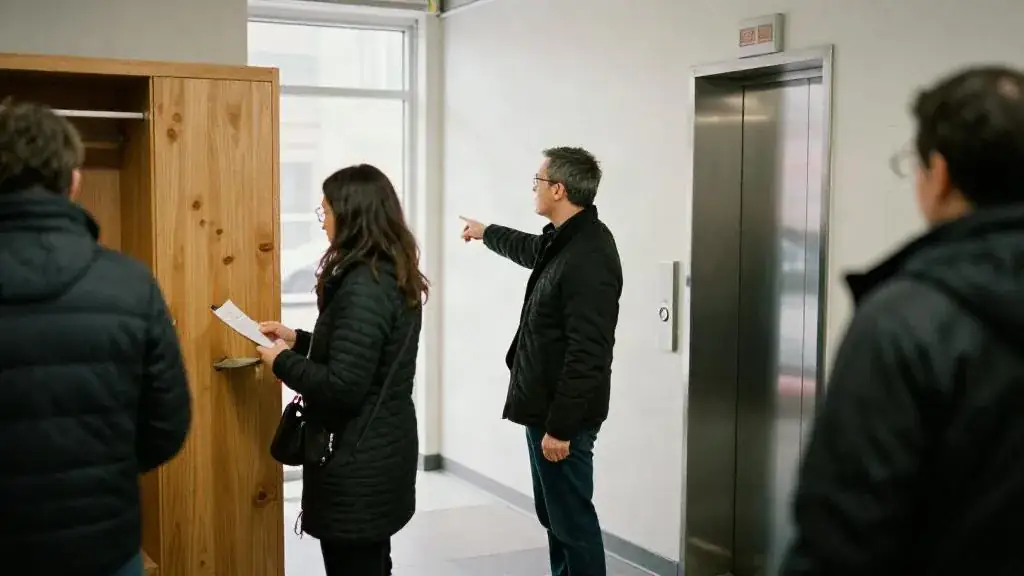
- Is there a freight elevator and a loading dock, and what is the load-in window for your DJ, performers and décor?
- How many accessible washrooms, is the route from the accessible entrance step-free, and is there a quiet space? The AODA customer-service standard applies to the venue and to your company as host.
- What is the parking and transit situation at midnight? A venue on a subway line saves you a shuttle.
- Can the room hold a stage act? Ask about ceiling height, a clear sightline from the back, and a rigging point if you want an aerialist.
Contract points worth reading twice
- Attrition: the guaranteed headcount you pay for even if fewer show. Guarantee at 85–90 per cent of your RSVP and confirm the final count at 10–14 days.
- Deposit schedule: typically a signing deposit, a second payment in the autumn, and the balance before the event. Make sure a January date does not require the full balance before your fiscal year closes if that matters to finance.
- Weather and cancellation: a December snowstorm is not force majeure at most venues. Ask what happens if the city shuts down and what the rebooking terms are.
- Exclusive vendors: many halls and hotels require their own AV, security or caterer. Know the list before you book outside entertainment.
- Insurance: some lofts require a certificate of insurance naming the venue. One-day event liability cover typically costs $150–$400.
Browse venues
Toronto · Vaughan · Mississauga · Markham · Hotels · Restaurants with private rooms · High-ceiling rooms for stage acts
Related guides, venues and vendors
Old Mill Toronto
Etobicoke, Toronto · up to 720 guests
The venue has about fifteen event rooms, from about 500 sq ft up to over 8,000 sq ft with the Brûlé rooms…
Read more
Corporate Holiday Parties
Event hub
Plan a company holiday party in Toronto: dates that are still available, budgets per head, venues, entertainment and the run of show…
Read more
Stage & close-up mentalist · Magic Magic roster
Entertainment, Mentalists
Mentalist for corporate events and private parties, performing stage and close-up mind reading across the GTA.
Read more