A proposal is a decision document. Eight sections, four pages, two venue options, a budget with HST shown, and a fee the client understands. Use the template and critique three real examples.
Read the transcript
Proposals that win.
A proposal is a decision document.
Eight sections, four pages, two venue options, a budget with HST shown, and a fee the client understands.
A proposal is a decision document.
Clients do not read brochures; they look for the two or three decisions they must make and the number at the bottom.
Structure the proposal so those are easy to find, and keep it to four pages.
The eight sections.
Understanding: restate the goal and the audience in the client's own words from discovery. This is the section that wins the job; it proves you listened.
Concept: the format and theme in one paragraph and one image.
Building it in a week.
Day one: discovery brief corrected and returned by the client. Write the Understanding section the same day while their words are fresh.
Day two: shortlist three venues from the venue guides or the matchmaker, call each for availability and a price sheet, and ask the questions from the floor-plan and BEO lesson.
The budget page.
The budget section is where proposals lose trust, so be plain.
Show categories, not line items; line items come after the client signs.
Terms that must be in writing.
Deposit amount and date, and what it is non-refundable for.
Payment schedule for your fee and for the major vendors, with dates.
That is the lesson. The worksheet and the quiz are just below this video.
What you will be able to do
- Write a proposal with the eight-section template
- Present budget, fee and terms clearly
- Handle the three most common objections
A proposal is a decision document
Clients do not read brochures; they look for the two or three decisions they must make and the number at the bottom. Structure the proposal so those are easy to find, and keep it to four pages.

The eight sections
- Understanding: restate the goal and the audience in the client’s own words from discovery. This is the section that wins the job; it proves you listened.
- Concept: the format and theme in one paragraph and one image.
- Guest journey: the eight beats, each in one line.
- Venue options: two or three, with capacity, cost range and the trade-off stated plainly.
- Entertainment and vendors: who, why, and the alternative if they are unavailable.
- Budget: by category, with contingency and HST shown separately. Never bury the tax.
- Timeline: milestones to the day.
- Fee and terms: how you charge, deposits, cancellation, what is excluded.
Building it in a week

- Day one: discovery brief corrected and returned by the client. Write the Understanding section the same day while their words are fresh.
- Day two: shortlist three venues from the venue guides or the matchmaker, call each for availability and a price sheet, and ask the questions from the floor-plan and BEO lesson. Drop one.
- Day three: entertainment and vendor enquiries with the creative brief attached. Ask each for a quote and a hold on the date. Use the entertainment finder or the directory; listings owned by the site founder carry a disclosure and no ranking preference.
- Day four: build the budget by category in the calculator, grossed up for HST and gratuity, with contingency as its own line.
- Day five: timeline from the generator, fee and terms, then lay it out in the proposal template. Read it once as the client would, looking only for the decisions and the number.
The budget page
The budget section is where proposals lose trust, so be plain. Show categories, not line items; line items come after the client signs. Show the pre-tax figure, the service charge or gratuity where it applies, the HST and the all-in for each category, because Ontario vendors quote before HST and clients compare proposals that way. Show contingency as its own line with the percentage. Show your fee as its own line. Put the all-in total in bold at the bottom and the envelope beside it, so the client can see whether the proposal fits without doing arithmetic.
Terms that must be in writing

- Deposit amount and date, and what it is non-refundable for.
- Payment schedule for your fee and for the major vendors, with dates.
- What happens if the client cancels at 90, 60 and 30 days, and what happens if the venue does.
- What is excluded: HST on vendor invoices paid directly, permits and licence fees, gratuities to staff on the night, overtime.
- Who contracts with vendors: you on the client’s behalf, or the client directly on your recommendation. This decides who is liable.
- Your disclosure policy on referral fees, in the same words as your agreement.
- Insurance: whether the client needs one-day event liability (typical GTA range, 2026: $150–$400 for a one-day $2–5 million policy) and who buys it.
Three objections and the answers
- “It’s more than we expected.” Show the split; ask which category to reduce; offer the weekday or the smaller guest list.
- “Can we skip the planner fee and you just recommend vendors?” Offer a consulting package at an hourly rate; the full fee buys execution and accountability on the day.
- “Why these venues?” Point to the trade-off column. If you cannot state a trade-off you have not done the work.
Presenting it
Walk the client through it live, in twenty minutes. Send it afterwards. A proposal sent cold is a document to be price-compared; a proposal presented is a conversation.
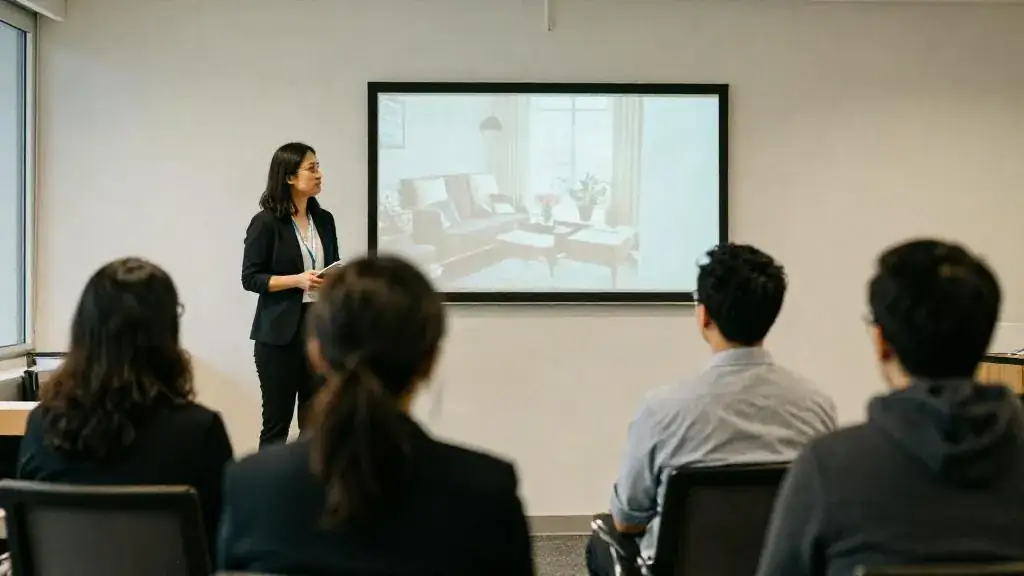
Order the twenty minutes around the decisions. Two minutes on Understanding, read aloud in their words. Three on the concept and the journey. Five on the venue options and the trade-off. Five on the budget page, pointing to the two biggest categories and the all-in beside the envelope. Three on the fee and the terms. Two to ask which decisions they can make today and which need someone else in the room. Then stop talking.
Worked example
The Harbour Gala proposal offers two venues: the downtown hotel ballroom (easy AV, parking, a $24,000 all-in minimum) and a King West loft (cheaper rental, bring-your-own caterer, $9,000 more in rentals and staffing, no rigging). The committee picks the hotel in ten minutes because the trade-off is on one line. Use the proposal template.
The budget page shows the hotel’s $18,000 minimum grossed up to about $24,000 all-in, entertainment at mid tier for two strolling magicians and a mentalist, AV beyond the hotel’s inclusions, décor, photography, print and stewardship, contingency at 10 percent, and the $4,500 planner fee as its own line, with HST shown on every category. The all-in total sits beside the $25,000 envelope and the gap is visible without a calculator, which is why the committee’s first decision in the meeting is to pursue table sponsors rather than to cut the program. The terms page names the foundation as the contracting party with the hotel and the planner as the contracting party with the entertainers, states the board’s deposit approval threshold as a milestone, and includes the referral-credit disclosure.
Common mistakes
- Opening with your own company history. Fix: open with Understanding, in their words.
- One venue, no trade-off. Fix: two or three, each with the sentence that says what you give up.
- HST hidden in the total. Fix: a column for it on every category.
- Sending the PDF and waiting. Fix: book the twenty-minute walk-through before you send anything.
- Vague exclusions. Fix: list them; the client will find them anyway.
Worksheet
Download the worksheet, complete it for your own event (or the running gala example), and keep it in your course binder. It takes about 15 minutes.

Check your understanding
Related guides, venues and vendors
Parties by age: 1st, 2–4, 5–8, 9–12
Specialist · Kids' Parties · 15 min
Length, timing, venue, entertainment and the schedule that avoids meltdowns.
Read more
Team building and offsites
Specialist · Corporate · 15 min
Formats by team size, GTA venues and activities, and measuring whether it worked.
Read more
Twenty terms you need on day one
Module 1: Foundations · 15 min
BEO, run of show, F&B minimum, attrition, COI, SOP, load-in, strike, rider, gobo. Planners speak a dialect; this lesson teaches the twenty…
Read more