One page that tells every vendor what the event feels like, who it is for and what cannot be compromised. The brief is the document that stops a florist and a DJ from designing two different events.
Read the transcript
Writing the creative brief.
One page that tells every vendor what the event feels like, who it is for and what cannot be compromised.
The brief is the document that stops a florist and a DJ from designing two different events.
One page, every vendor.
The creative brief is the page that stops the florist and the DJ designing two different events.
It is one page, shared with every vendor at the moment of booking, and it never changes without everyone being told.
The eight lines.
Event and goal in one sentence.
Audience in one sentence (from the guest profile).
Writing each line well.
The feeling line is the one vendors actually use, so test it.
Each of the three words should rule something out.
Theme or format?.
A theme (Gatsby, masquerade) is a shortcut to a brief; a format (seated dinner with a program; stations and roaming entertainment) is the real decision.
Choose the format from the goal, then decide whether a theme helps the format.
How to share it and keep it stable.
Send the brief with every booking enquiry, before the quote. Vendors who quote against the brief quote accurately.
Put the version date in the footer. "Creative brief v2, 14 August."
That is the lesson. The worksheet and the quiz are just below this video.
What you will be able to do
- Write a one-page creative brief
- Choose a theme or format that serves the goal
- Set non-negotiables and nice-to-haves
One page, every vendor
The creative brief is the page that stops the florist and the DJ designing two different events. It is one page, shared with every vendor at the moment of booking, and it never changes without everyone being told.

The eight lines
- Event and goal in one sentence.
- Audience in one sentence (from the guest profile).
- Feeling: three words. “Warm, generous, unhurried.” Not “elegant and fun”, which means nothing.
- Palette and texture: three colours and one material. Navy, ivory and brass; linen.
- Non-negotiables: what cannot be cut or changed.
- Nice-to-haves: what goes first if the budget shrinks.
- Budget tier: enough for vendors to pitch at the right level without seeing the full budget.
- Moments that must photograph well: the entrance, the head table, the reveal.
Writing each line well
The feeling line is the one vendors actually use, so test it. Each of the three words should rule something out. “Unhurried” rules out a tight 60-minute program and a DJ who talks over dinner. “Generous” rules out a cash bar and small plates. If a word rules nothing out, replace it.

Palette and texture should be specific enough that a florist, a linen supplier and a lighting technician would all arrive with compatible samples. “Navy, ivory, brass; linen” does that. “Classic with a modern twist” does not.
Non-negotiables come from discovery question six. Each one should be traceable to the goal or to a rule you cannot break: the ask before 9 p.m. (goal), an accessible stage (AODA practice), enclosed candles only (the hotel’s fire rule).
Budget tier is a word, not a number: entry, mid or premium for the event type. A DJ told “mid” for a 200-guest gala knows to pitch in the middle of the typical GTA range ($900–$2,500) rather than at the top with a full production package.
Theme or format?
A theme (Gatsby, masquerade) is a shortcut to a brief; a format (seated dinner with a program; stations and roaming entertainment) is the real decision. Choose the format from the goal, then decide whether a theme helps the format. A fundraiser that needs donors seated for an ask is a seated dinner; a holiday party that needs 300 colleagues to mingle is stations and roaming acts. Theme pages on this site cover décor, food, entertainment, dress code and invitation wording in one place, which is why they work as briefs.
How to share it and keep it stable

- Send the brief with every booking enquiry, before the quote. Vendors who quote against the brief quote accurately.
- Put the version date in the footer. “Creative brief v2, 14 August.”
- When a line changes, send the new version to every vendor with one sentence saying what changed. Do not rely on them noticing.
- Bring the brief to every site visit and every tasting. If a proposed item does not fit the feeling line, say so using the brief’s words rather than your own taste.
- Freeze it at the start of the production phase. After that, changes are change orders with a cost.
Questions to ask the client before you write it
- Show me three photographs of events you liked. What specifically did you like?
- Show me one you hated. Why?
- If we had to cut a quarter of the budget tomorrow, what would you protect?
- Is there a brand guide, a logo, a sponsor colour that must appear?
- Which moment will the photographer be asked for by your board, your family or your marketing team?
- Is there anything you have seen at another event that you want to avoid because it felt wrong for your people?
Worked example
Harbour Gala brief: “A dinner that makes 200 donors feel the hospital’s gratitude and give generously. Feeling: warm, generous, unhurried. Palette: navy, ivory, brass; linen. Non-negotiables: program under 90 minutes, the ask before 9 p.m., accessible stage. Nice-to-haves: tall florals, a photo wall. Tier: mid. Must photograph: the arrival, the paddle raise.”
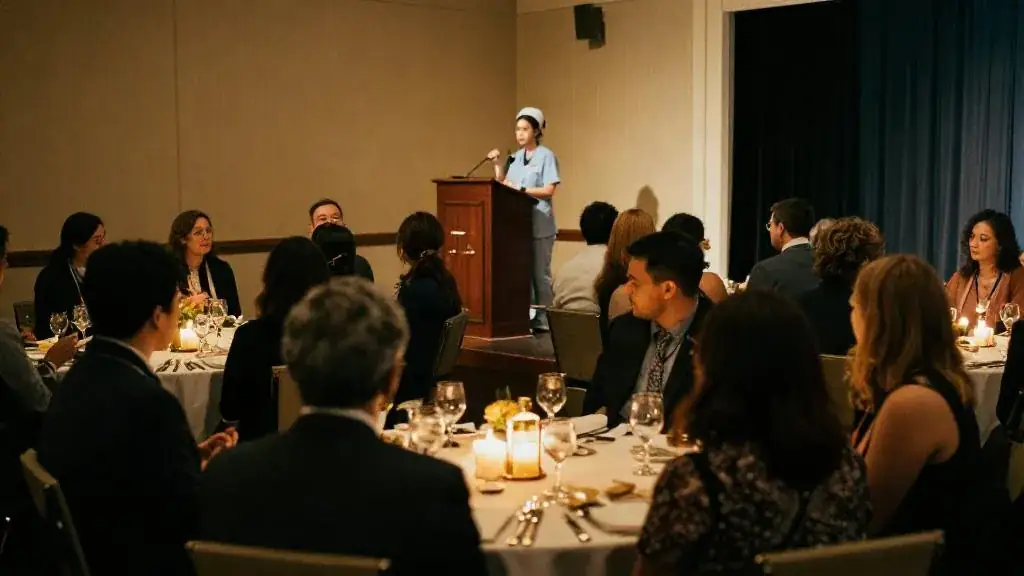
How the brief did its job. The florist first proposed tall arrangements in the hotel’s standard vases; “nice-to-haves: tall florals” told her they were first to go when the budget tightened, and she offered low arrangements with brass candleholders as the base design. The AV supplier read “unhurried” and “the ask before 9 p.m.” and proposed a single warm wash rather than a moving-light package, which also saved money. The mentalist read “must photograph: the paddle raise” and built the set so that its final reveal lands with the room facing the stage, which is where the photographer is standing. The hotel read “accessible stage” and supplied a ramp to the riser at no charge because it was asked for at booking rather than on the day. One page, four vendors, one event.
Common mistakes
- Three adjectives that rule nothing out. Fix: test each word by asking what it forbids.
- Sharing the full budget instead of the tier. Fix: vendors quote to the number they see; give them the tier.
- Changing the palette after the florist and linens are booked. Fix: freeze the brief at production and price any change.
- Choosing a theme before the format. Fix: goal, then format, then ask whether a theme helps.
- Keeping the brief in your head. Fix: one page, versioned, sent with every enquiry.
Worksheet
Download the worksheet, complete it for your own event (or the running gala example), and keep it in your course binder. It takes about 12 minutes.

Check your understanding
Related guides, venues and vendors
Wrap-up: invoices, gratuities, returns
Module 11: After the Event · 15 min
Close out within 14 days: balances, tips, rentals, lost and found, venue damage walk.
Read more
Module 8 workshop: the risk register
Module 8: Legal, Safety & Risk (Ontario) · 15 min
Build a risk register for the gala with likelihood, impact, owner and mitigation, plus the permit calendar and the emergency plan.
Read more
Entertainers, activities and safety
Specialist · Kids' Parties · 15 min
Magicians, circus skills, balloon artists, face painters; vetting, police checks and allergy planning.
Read more