Close out within 14 days: balances, tips, rentals, lost and found, venue damage walk.
Read the transcript
Wrap-up: invoices, gratuities, returns.
Close out within 14 days: balances, tips, rentals, lost and found, venue damage walk.
The fourteen-day close.
An event is not finished when the last guest leaves.
It is finished when every vendor has been paid, every rental has gone back, every lost umbrella has found its owner or the bin, and the venue has signed off on the room.
Balances and checking invoices.
Every vendor invoice gets compared to three documents: the signed contract, the problem sheet from the night, and the vendor's own quote.
Vendors in the GTA habitually quote before HST, so an invoice that is 13 percent higher than the number in your head is probably correct; an invoice with a service charge you did not see on the quote is a question, not a payment.
Gratuities.
Tips are a courtesy, not a contract term, and the client decides.
Your job is to make the decision easy and fair.
Rentals and returns.
Rental companies count on return, and the count is the one that decides what you are charged.
Be present for the pickup if the order is large, or have the venue sign the pickup slip with a count.
Lost and found and the venue walk.
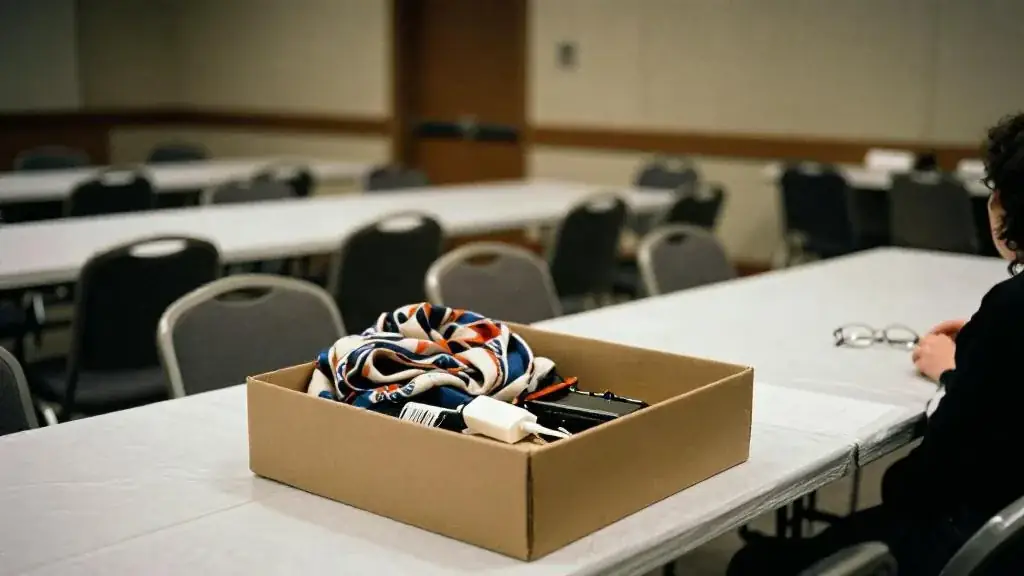
Everything left behind goes into one box with a sheet listing what it is, where it was found and when.
Phones and wallets go to the venue's security desk with a signed handover; everything else stays with you for fourteen days, after which it is donated or discarded.
That is the lesson. The worksheet and the quiz are just below this video.
What you will be able to do
- Close out an event in two weeks
- Handle gratuities fairly
- Complete the venue walk
The fourteen-day close
An event is not finished when the last guest leaves. It is finished when every vendor has been paid, every rental has gone back, every lost umbrella has found its owner or the bin, and the venue has signed off on the room. Give yourself fourteen days and work from a list, because the week after an event is when your attention is lowest and the unpaid invoice from the lighting company is the one that costs you a vendor relationship.

| By when | Task | Who |
|---|---|---|
| Night of | Venue damage walk; sign the hotel’s event summary only after you have read it; collect lost and found; confirm pickups scheduled for the morning | Lead and venue captain |
| Day 1 | Thank-you email to every vendor lead; list of balances owing with the amounts you expect; cash tip reconciliation | Lead |
| Day 2 | Survey sent (next lesson); rentals counted back by the rental company, shortages and damage reported in writing | Lead |
| Day 3 to 7 | Vendor invoices received and checked line by line against contracts and the problem sheet; disputes raised in writing | Lead and client |
| Day 7 to 14 | All balances paid; venue final invoice reconciled against the BEO; your own final invoice to the client; lost and found closed out | Client pays, lead confirms |
Balances and checking invoices
Every vendor invoice gets compared to three documents: the signed contract, the problem sheet from the night, and the vendor’s own quote. Vendors in the GTA habitually quote before HST, so an invoice that is 13% higher than the number in your head is probably correct; an invoice with a service charge you did not see on the quote is a question, not a payment. The hotel’s final bill deserves the most time. Check the guaranteed count against the plates billed, the bar consumption against the per-drink or per-hour basis you agreed, the 18% service charge against the base it should be charged on, and HST on top of everything including the service charge, because service charges are themselves taxable in Ontario. Ask, if you have not already, whether the service charge reaches the staff; the answer changes what you do about gratuities.
Pay on time. The planner who pays in seven days is the planner whose calls get returned in February when a client needs a last-minute DJ. If the client pays vendors directly, your job is a dated list of what is owed to whom, sent on day one and chased on day seven.
Gratuities
Tips are a courtesy, not a contract term, and the client decides. Your job is to make the decision easy and fair. Raise it in the final planning meeting, not after the event. Suggest a range per role and let the client set the number. In our experience, GTA practice looks roughly like this: banquet staff are usually covered by the service charge if it reaches them, and otherwise a pooled cash tip to the captain for the team; the catering captain and the AV lead often receive a separate thank-you; performers are not usually tipped in the way servers are, but a bonus for an act that went beyond the contract is remembered for years; delivery crews for rentals and florals appreciate cash on the day.

Whatever the amounts, write them down with names before the event, put the cash in labelled envelopes, hand them over in person with a sentence about what the person did well, and note the time. Tips given through you are the client’s money, and the list is your receipt.
Rentals and returns
Rental companies count on return, and the count is the one that decides what you are charged. Be present for the pickup if the order is large, or have the venue sign the pickup slip with a count. Photograph stacks of chairs and boxed linens before the truck leaves. Linen companies charge for stains that do not come out, candle wax and burns; it is worth a five-minute look at the tablecloths while they are still on the tables so that a charge for twenty stained linens on day ten is not a surprise. Report shortages the next morning in writing: “We received 200 chairs and returned 198; two were broken on the night by a guest at table 11, photographed, and we accept the replacement charge.”
Lost and found and the venue walk
Everything left behind goes into one box with a sheet listing what it is, where it was found and when. Phones and wallets go to the venue’s security desk with a signed handover; everything else stays with you for fourteen days, after which it is donated or discarded. Email the client’s guest list contact a short description of the items on day one.
The venue walk happens the night of, with the venue captain, before you sign anything. Walk the room, the foyer, the green room and the loading dock. Look at walls where banners hung, carpets under bars, and any furniture that moved. Photograph what you see, including the things that are fine. A damage charge that arrives in week two is far easier to discuss when you have a time-stamped photo of a clean wall from 11:40 p.m.
Worked example: the Harbour Gala
The walk at 11:35 p.m. finds one thing: a wax ring on the carpet under table 9 from an enclosed candle that cracked. The captain notes it, the lead photographs it, and both expect a cleaning charge. The hotel’s final invoice arrives on day five. It bills 204 plates against a guarantee of 200 and a door count of 203; the lead asks for one plate to be removed and the hotel agrees. The service charge is applied to the bar as well as the food, which matches the contract, and HST is correctly charged on the service charge. The carpet cleaning charge is $185, which the client accepts because the photo shows the cause. The $75 lavalier add-on appears on the AV invoice exactly as noted on the problem sheet.
Gratuities were set at the final planning meeting: a pooled $400 cash for the banquet team via the captain, $100 each for the AV lead and the catering captain, and a $200 bonus for the mentalist because the board asked for him by name for next year. All handed over on the night with names on the list. The last balance, the band’s, is e-transferred on day nine. The planner’s own final invoice for the remaining half of the $4,500 fee goes out on day twelve with the reconciled vendor summary attached, and is paid on day twenty. Fourteen days to close the event, three weeks to close the file.
Common mistakes

- Signing the hotel’s event summary at midnight without reading it. It is the basis of the invoice.
- Paying a vendor invoice without checking HST and service charge lines.
- Deciding tips after the event, when the client is tired and the moment has passed.
- Letting the rental company count alone.
- Closing the file before your own invoice is paid.
Worksheet
Download the worksheet, complete it for your own event (or the running gala example), and keep it in your course binder. It takes about 10 minutes.
Check your understanding
Related guides, venues and vendors
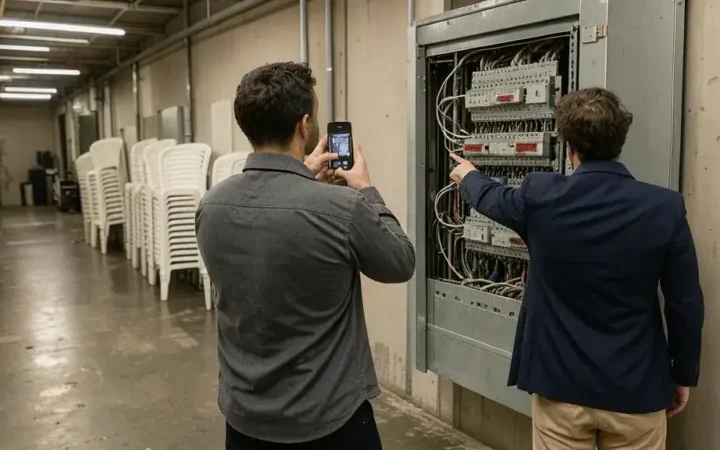
Site visits: the 25 questions
Module 4: Venues · 15 min
Walk a venue with the tour checklist. Learn what to photograph, what to measure, and which answers change the budget.
Read more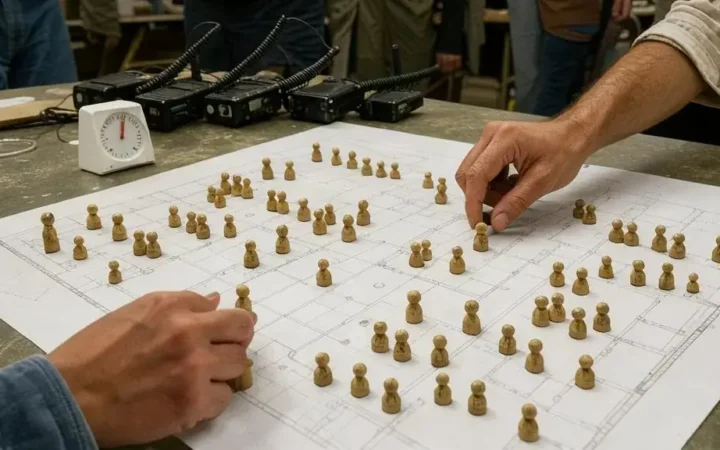
Module 10 workshop: tabletop simulation
Module 10: Event Day · 15 min
Run the gala from the run of show with injected problems every ten minutes. Decide, act, record.
Read more
The event lifecycle: six phases
Module 1: Foundations · 15 min
Discovery, concept, planning, production, execution, wrap-up. Every lesson in this course sits in one of these phases, and most failures come from…
Read more