Build a risk register for the gala with likelihood, impact, owner and mitigation, plus the permit calendar and the emergency plan.
Read the transcript
Module 8 workshop: the risk register.
Build a risk register for the gala with likelihood, impact, owner and mitigation, plus the permit calendar and the emergency plan.
What a risk register is for.
A risk register is a table of the things that could go wrong, scored by how likely and how bad, with a name beside each one and a plan.
It is not a document for the client's lawyer.
Scoring: likelihood, impact, owner, mitigation.
Keep the scale small.
Likelihood 1 to 3 (unlikely, possible, likely).
The Harbour Gala register.
Ten rows is about right for an event this size.
A festival will have forty.
The permit calendar.
The gala in a licensed hotel ballroom triggers no municipal permits and no SOP, which is itself worth writing down so nobody on the committee asks in October.
The calendar still exists, because approvals and certificates have deadlines.
Finalising the emergency plan.
Pull every row with an impact of 3 into the one-page plan.
The paddle-raise timing is not an emergency, so it stays on the run of show.
That is the lesson. The worksheet and the quiz are just below this video.
What you will be able to do
- Build a risk register
- Create a permit calendar
- Finalise the emergency plan
What a risk register is for
A risk register is a table of the things that could go wrong, scored by how likely and how bad, with a name beside each one and a plan. It is not a document for the client’s lawyer. It is the planner’s own thinking, written down so it can be shared, argued with and updated. Done properly it is also the backbone of the budget contingency: every mitigation that costs money comes from this table, and every item left unmitigated is a decision someone made on purpose.

This workshop builds three things for the Harbour Gala: the register, the permit calendar, and the final emergency plan from the previous lesson, with the register feeding both. Open the /tools/risk-register-template/ and work alongside.
Scoring: likelihood, impact, owner, mitigation
Keep the scale small. Likelihood 1 to 3 (unlikely, possible, likely). Impact 1 to 3 (inconvenience, significant cost or embarrassment, event-ending or safety). Multiply for a score of 1 to 9. Anything 6 or above gets a written mitigation and a named owner. Anything 3 or below is noted and accepted. The middle is a judgement call, which is why the client sees the table and signs off on it.
Owner means one person who will notice the risk starting to happen and act. Not “the committee”. Mitigation has two halves: what you do now to make it less likely, and what you do on the night if it happens anyway.
The Harbour Gala register
| Risk | L | I | Score | Owner | Mitigation (before / on the night) |
|---|---|---|---|---|---|
| Table sponsors fall short and envelope drops back toward $25,000 | 2 | 3 | 6 | Foundation ED | Sponsor deadline six weeks out; décor and AV scoped in two tiers so $15,000 can be cut without touching the program / nothing on the night |
| Headcount under guarantee; F&B minimum of $18,000 (about $24,000 all-in) not met | 2 | 2 | 4 | Planner | Guarantee set at 190 ten days out; hotel agrees shortfall can be made up in bar spend / confirm with banquet manager at 6 p.m. |
| Mentalist cancels within 72 hours | 1 | 3 | 3 | Planner | Two backup acts identified via /tools/entertainment-finder/ and warm-held; agreement requires 48-hour notice / MC extends with donor testimonial video if no act |
| Paddle raise slips past 9 p.m. and guests leave before the ask | 2 | 3 | 6 | Planner and MC | Run of show timed to the minute; speeches capped at 4 minutes each with the MC empowered to cut; mentalist set hard-stops at 8:40 / planner gives MC a 5-minute warning at every stage |
| Snow event on the Thursday reduces attendance | 2 | 2 | 4 | Planner | Noon decision point to delay cocktails 30 minutes; email and text to guests by 1 p.m. / hotel holds the kitchen timing |
| AV failure during paddle raise screens | 1 | 3 | 3 | AV lead | Backup laptop and second projector cabled in; auctioneer rehearsed to run the ask with no screens / switch within 60 seconds |
| Guest medical incident | 1 | 3 | 3 | Hotel duty manager | Emergency plan names AED location and trained staff / assistant calls 911, bell staff meet ambulance |
| Candle tips at a table | 2 | 1 | 2 | Banquet captain | Enclosed votives only; staff extinguish as plates clear / extinguisher at the service station |
| Guest objects to being photographed after publication | 1 | 2 | 2 | Foundation comms | Notice on ticket page and signage; grey lanyard opt-out briefed to photographer / remove image on request |
| Vendor arrives without insurance certificate and hotel refuses load-in | 2 | 2 | 4 | Planner | All certificates collected 30 days out and filed with hotel / planner carries copies on phone |
Ten rows is about right for an event this size. A festival will have forty. The discipline is the same: the top three scores get the most attention and the most money.
The permit calendar
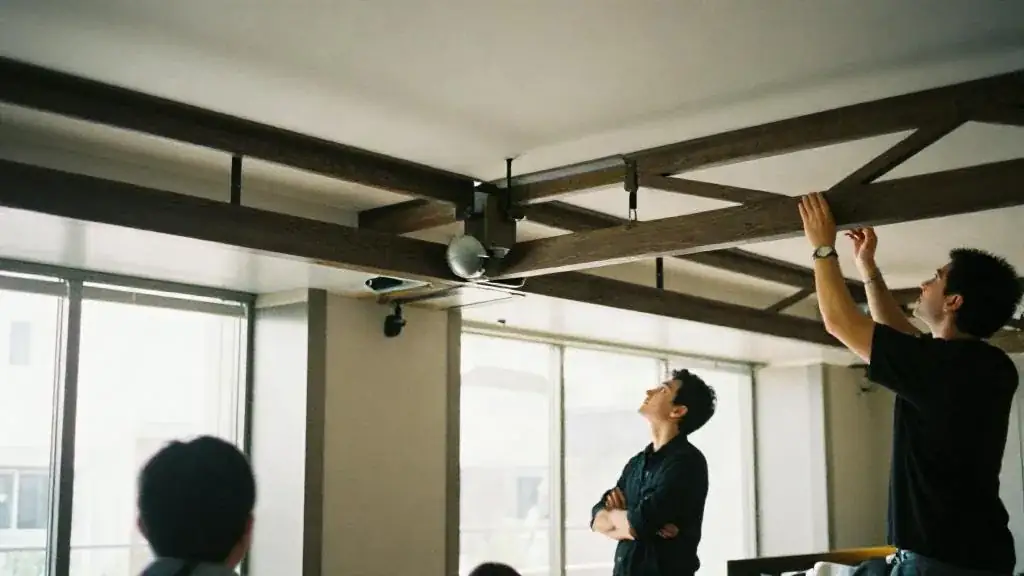
The gala in a licensed hotel ballroom triggers no municipal permits and no SOP, which is itself worth writing down so nobody on the committee asks in October. The calendar still exists, because approvals and certificates have deadlines.
- Twelve weeks out: hotel contract signed by the foundation; foundation’s insurance certificate naming the hotel delivered.
- Eight weeks out: performer and AV agreements signed; photo and image rights clauses confirmed; fire and open-flame approvals from the hotel in writing (enclosed candles yes, cold spark no).
- Six weeks out: table sponsor deadline; budget tier decision made.
- Thirty days out: all vendor COIs collected and filed with the hotel; dietary and accessibility needs collected on the ticket page, with the privacy wording live.
- Ten days out: headcount guarantee to the hotel; run of show locked; emergency plan drafted.
- Day before: emergency plan distributed to five people; photographer brief sent; copies of every certificate and approval on the planner’s phone and in the binder.
Compare this to the picnic in the park from lesson four: that calendar starts months earlier with the park booking, adds the tent permit, the noise exemption about four weeks out, and food vendor approvals, and each line carries a fee marked “confirm current with the city”. The calendar is where the two events look most different, and it is why you price them differently.
Finalising the emergency plan
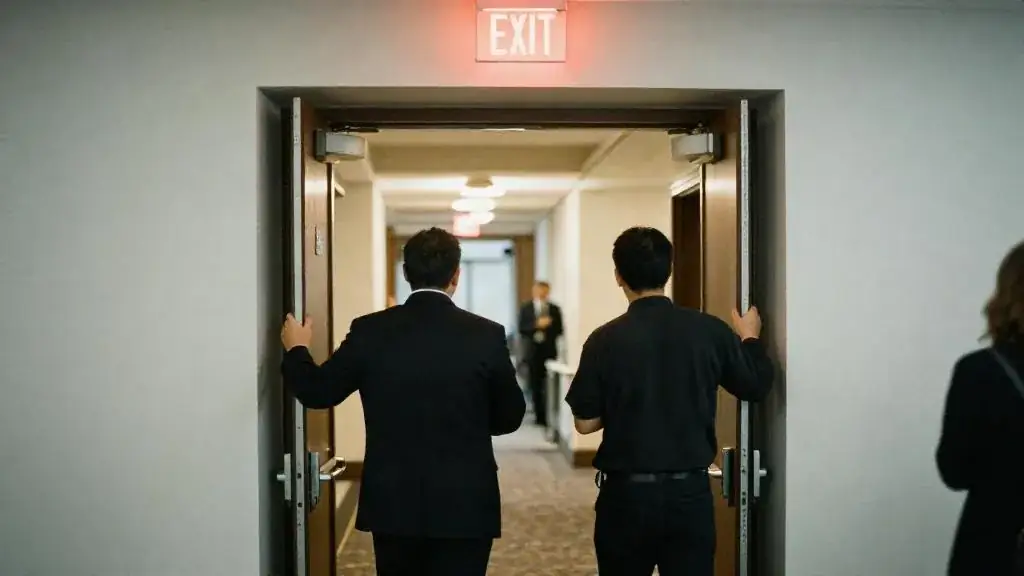
Pull every row with an impact of 3 into the one-page plan. The paddle-raise timing is not an emergency, so it stays on the run of show. The medical incident, the AV failure, the weather decision and the evacuation procedure all land on the page, each with the owner named in the register. Read the plan aloud at the 5:30 p.m. briefing with the hotel duty manager, the MC, the AV lead and your assistant. Ask one question at the end: “Who calls 911?” If more than one person answers, fix it.
Common mistakes
- Scoring everything high. If every row is a 9, the register tells you nothing. Argue the scores down honestly.
- Owners who are not in the room on the night. The executive director owns the sponsorship risk; she cannot own the AV risk.
- Mitigations with no budget. If the backup projector costs money, it is in the /tools/event-budget-sheet/ contingency line.
- Writing the register and never reopening it. Update it at the six-week and ten-day marks; cross off what has been retired.
- Treating “no permits needed” as not worth recording. Write it down with the reason, so the next planner does not have to re-check.
Worksheet
Download the worksheet, complete it for your own event (or the running gala example), and keep it in your course binder. It takes about 18 minutes.
Check your understanding
Related guides, venues and vendors
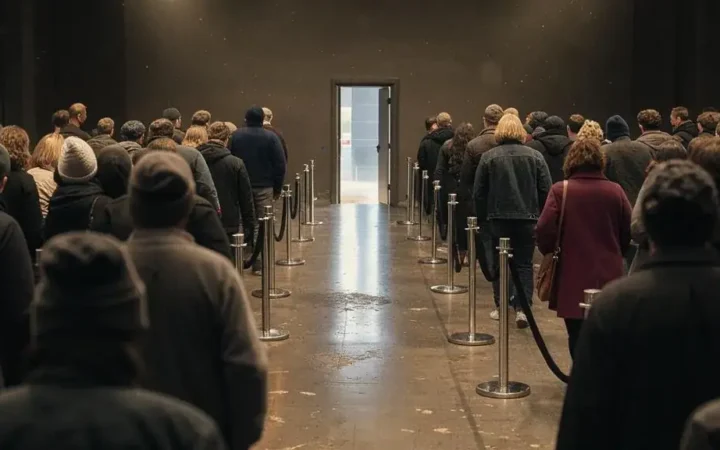
Site planning and crowd management
Specialist · Festivals & Public Events · 15 min
Site maps, egress, density, barriers, security ratios, medical and weather.
Read more
Module 11 workshop: debrief and report
Module 11: After the Event · 15 min
Produce the gala's survey, ROI report, project write-up and portfolio entry.
Read more
Hotels, unions and load-in rules
Module 4: Venues · 15 min
Downtown hotels and convention centres have union load-in, drayage, exclusive AV and dock schedules. Budget for them or be surprised.
Read more